


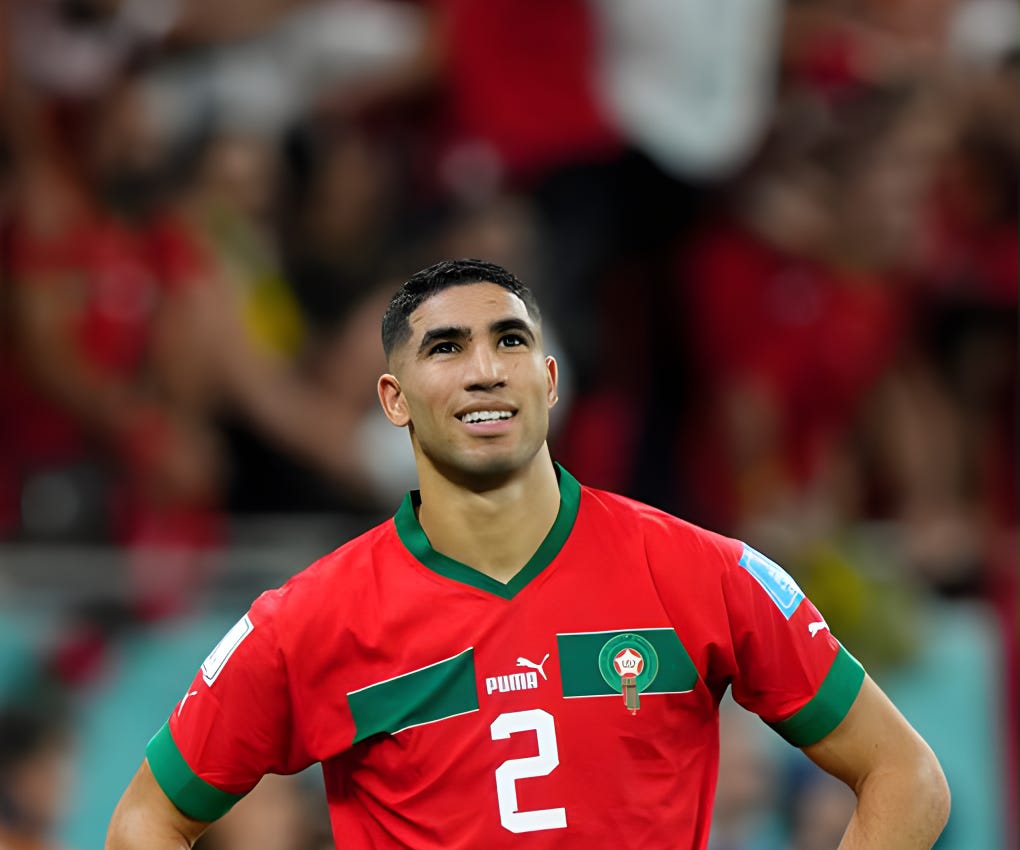

Achraf Hakimi stood on the edge of the pitch at Gillette Stadium in Boston, the noise rising around him, the floodlights cutting through the evening air.
For a moment before kickoff, he paused, then stepped forward into another night where football and everything beyond it collided.
Earlier that day, a French appeals court confirmed that the Morocco captain will stand trial over rape allegations dating back to 2023.
Hakimi denies the accusations. The Versailles appeals court ruled that the case should proceed to trial, but no date has yet been set.
The announcement was of the kind that does not stay confined to courtrooms. By the time he emerged in that World Cup setting against Scotland, the legal process had already followed him across borders, across headlines, and across expectations. It could not be ignored, certainly not by Hakimi.

Speaking up
Before the match, he addressed the moment in a brief social media statement. He spoke of waiting for the chance to respond in court and described the case as a distortion of his reality. It was the only time he spoke publicly that day.
When the match began, the stadium carried a split mood. Every touch of the ball brought reaction—some sections of the crowd voicing disapproval, others offering applause. The swaying mood of the crowd might have had nothing to do with the case.

After all, Scotland’s fans were rooting for their own side, and jeers on their part were mostly sporting rivalry.
Regardless, the sound rose and fell with Hakimi’s movement down the right flank, where he continued to operate as one of Morocco’s most important outlets.
On the pitch, Morocco stayed composed. A 1-0 victory over Scotland followed their opening 1-1 draw against Brazil, results that quietly strengthened their position in Group C.
But even as the scoreline settled the match, it could not settle the atmosphere surrounding their captain.
At full time, Morocco’s coach Mohamed Ouahbi kept his words brief. There was no attempt to expand beyond the football itself.
“Hakimi was extraordinary,” he said, before reiterating that the squad remained focused on the tournament.
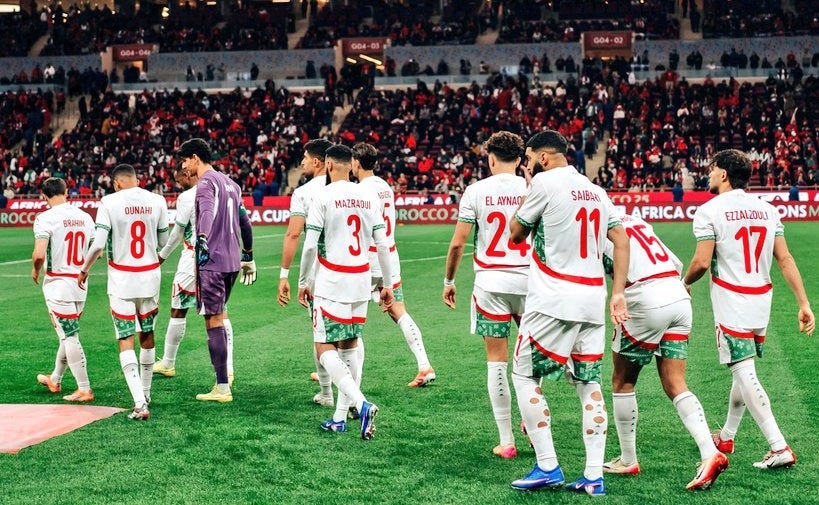
Inside the Moroccan camp, the message has been consistent since the court ruling: unity around their captain, and separation between the legal process and the tournament itself.
And one might wonder why the armband was handed over to a man with unresolved court issues in the first place.
Well, Hakimi’s presence in this team is not just functional. It is symbolic. He has been central to Morocco’s modern football identity, part of the side that reached the 2022 World Cup semi-finals in Qatar—the first African nation to do so, a campaign that reshaped how the world viewed Moroccan football. Since then, his role has evolved further.
He has become one of the defining figures in the national setup, part of a leadership core that now carries far greater expectation than before.
That evolution has continued through a period of transition—strong qualifying runs, a difficult Africa Cup of Nations campaign, and shifts in coaching leadership that have tested stability.
Now, that football journey runs alongside a legal one that remains unresolved. But what are the basic facts of the case?
Game on
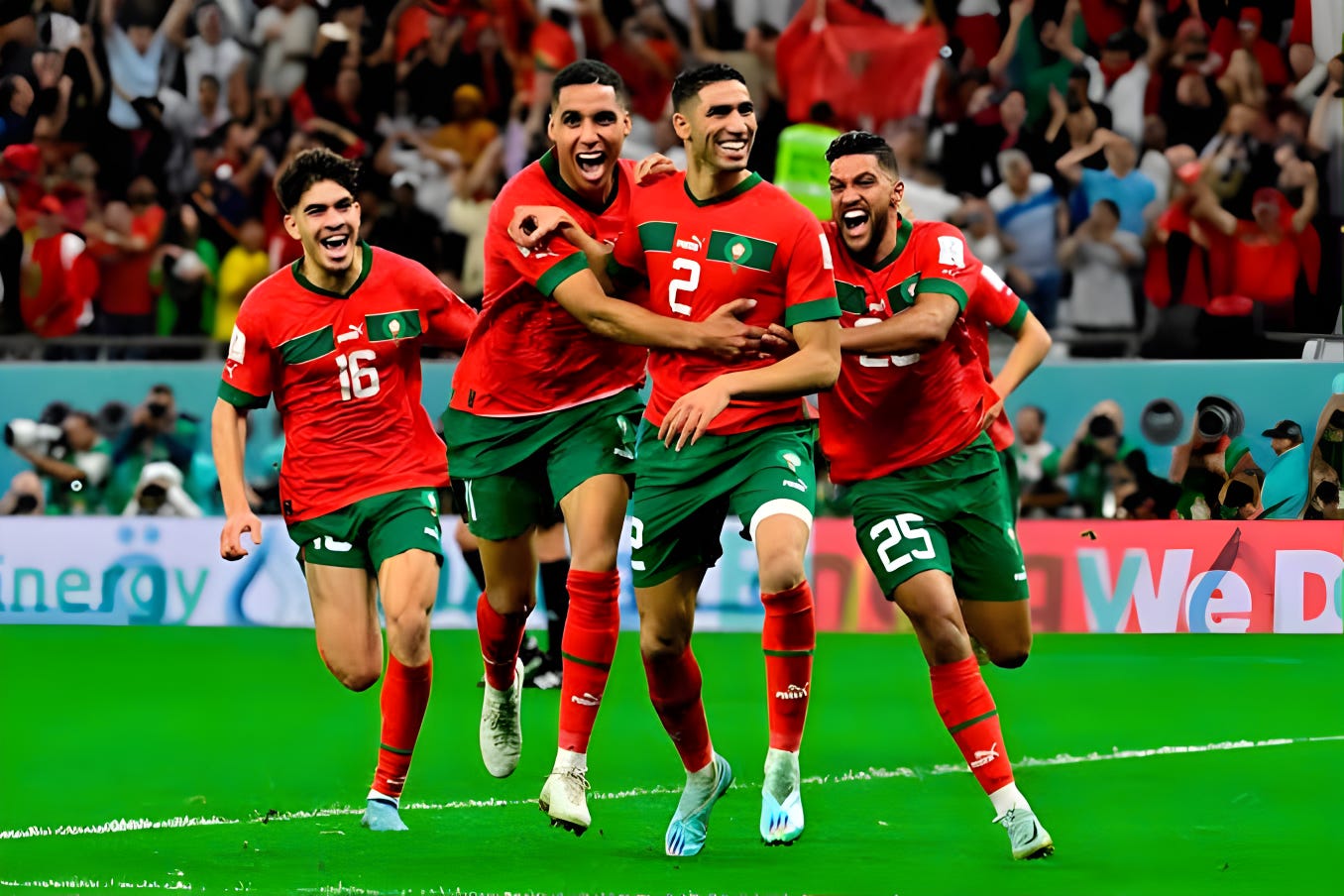
Achraf Hakimi is accused of raping a 24-year-old woman at his home near Paris in February 2023, allegations he has consistently denied.
The woman, whose identity has not been made public, reported the alleged incident after the two reportedly connected through Instagram.
Hakimi has described the accusation as “false,” consistent with the position his lawyer, Fanny Colin, previously stated: “The accusations are false. He is calm and is making himself available to the authorities.” There is no indication of a prior romantic relationship between Hakimi and the accuser.
Rachel-Flore Pardo, the accuser’s lawyer, has said the move to trial is “fully consistent with the evidence in the file.”
Now, the Versailles appeals court has ruled that the case should proceed to trial, but the timeline remains open—no date has been set. For Morocco, the immediate reality remains the tournament.

A draw against Brazil and victory over Scotland have placed them in a strong position to reach the knockout stage. Yet the narrative surrounding their captain no longer fits neatly inside the boundaries of football alone.
As the team continues its campaign, Hakimi continues to lead it—moving between pressure and expectation, between stadium noise and silence, between the demands of the pitch and the weight of what waits beyond it.
When he walked off the field in Massachusetts, the game was over. But the story around him was not. And for Achraf Hakimi, neither side of that story is standing still.
Morocco Beat Scotland To Move Closer To The Knockouts

On Day 9 of the FIFA World Cup 2026, Mexico became the first team through to the knockout stage, while the Atlas Lions moved closer to joining them with a win against Scotland. Meanwhile, Koné's World Cup is over despite successful surgery on his broken leg.
