


On Day 9 of the FIFA World Cup 2026, Mexico became the first team through to the knockout stage, while the Atlas Lions moved closer to joining them with a win against Scotland. Meanwhile, Koné's World Cup is over despite successful surgery on his broken leg.

Morocco Beat Scotland To Move Closer To The Knockouts
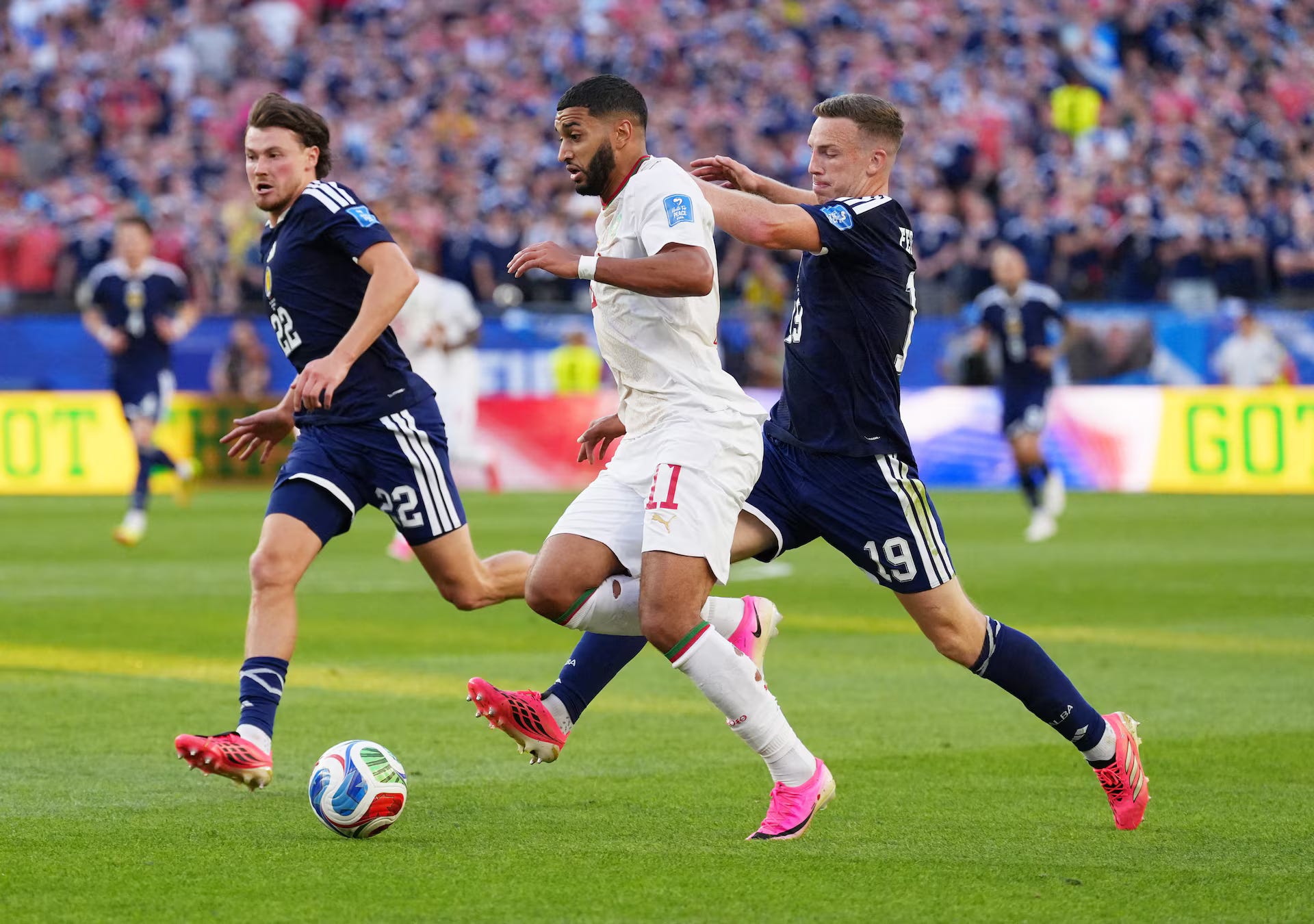
Morocco beat Scotland 1-0 in Foxborough on Friday night, Ismael Saibari scoring inside the first minute and the Atlas Lions holding on through sustained late Scottish pressure.
Scott McTominay and John McGinn both had penalty appeals waved away as Scotland chased an equaliser.
The result leaves Morocco on four points in Group C, while Scotland — who held Brazil in their opener — now need a result against the five-time champions on 24 June to keep alive their hopes of a first-ever World Cup knockout appearance. Morocco close the group against Haiti.

Mexico Become First Team Through To The Knockout Stage
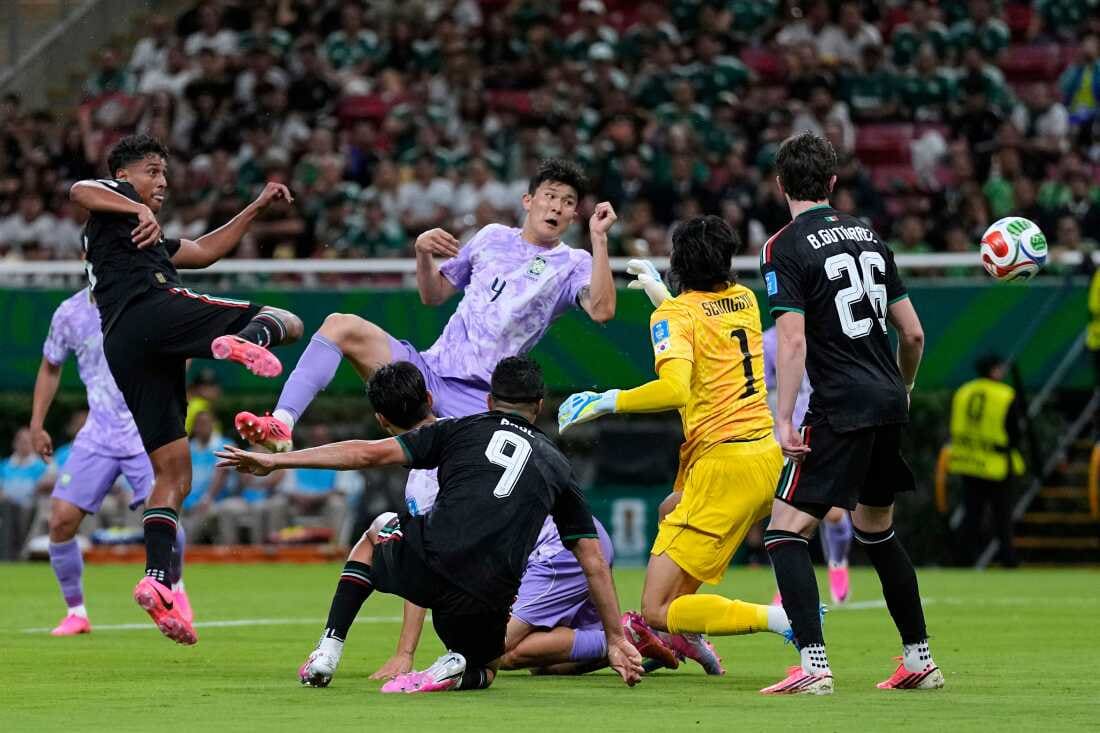
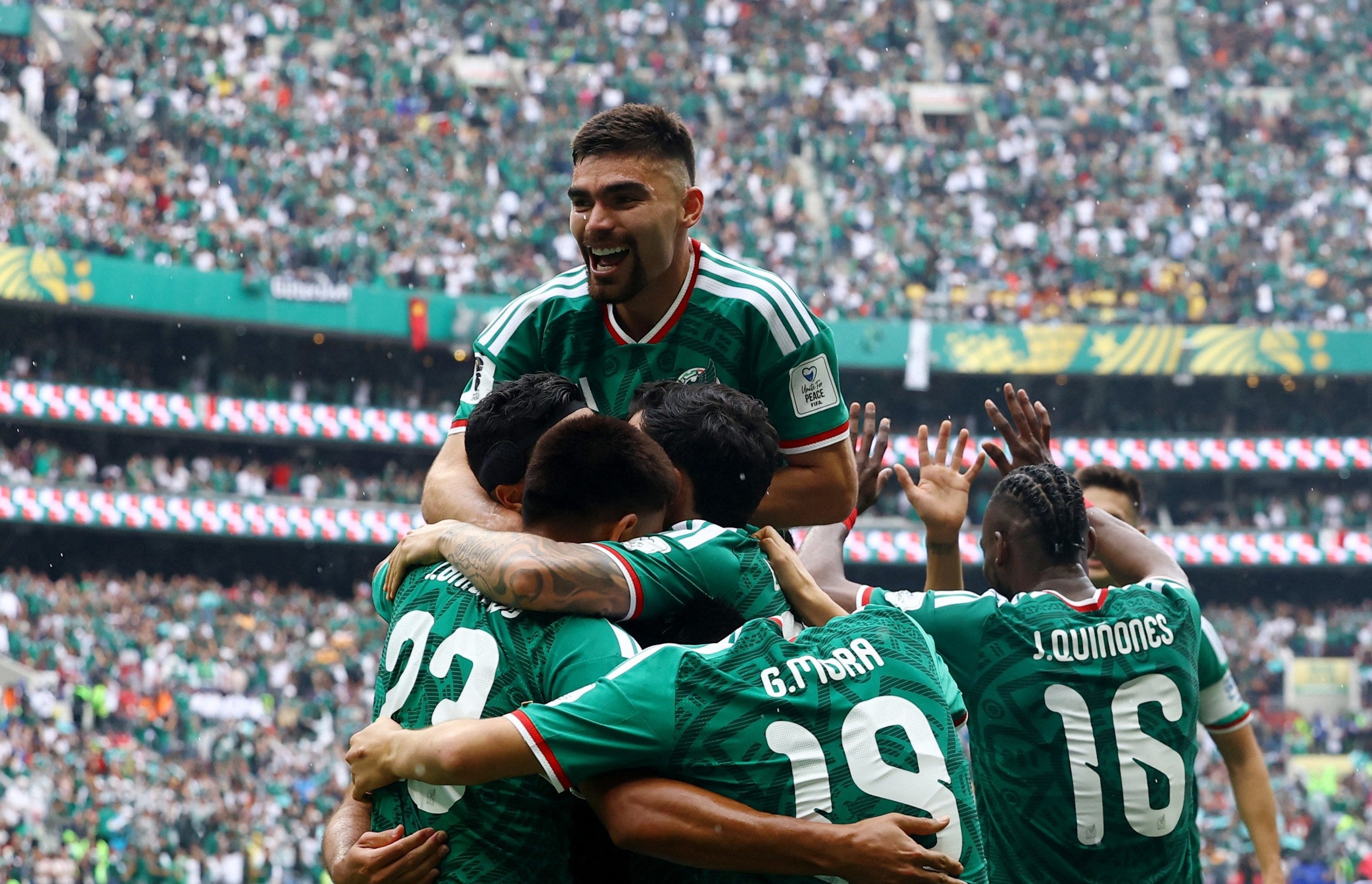
Mexico beat South Korea 1-0 in Guadalajara on Thursday to win Group A with a match to spare, the first side to confirm their place in the last 32.
Luis Romo struck three minutes into the second half after South Korea goalkeeper Kim Seung-gyu spilled a cross under pressure, and Raúl Rangel kept out a late double chance to preserve the lead.
The result sends Mexico into their round-of-32 tie at home in Mexico City. South Korea remain second, with the group’s final placings still to be settled when they meet South Africa, and Mexico face Czechia, on Wednesday.
Koné’s World Cup Over After Successful Surgery On Broken Leg
Canada midfielder Ismaël Koné has undergone successful surgery to repair a fractured tibia and fibula sustained in Thursday’s 6-0 win over Qatar, the Canadian federation confirmed on Friday.
Koné is expected to make a full recovery but will miss the rest of the tournament. He was hurt by a tackle from Qatar’s Assim Madibo, who was sent off, in a match Canada had already turned into a rout through Jonathan David’s hat-trick.
Nathan Saliba, who replaced Koné and scored Canada’s fourth, held up his teammate’s shirt in tribute.
Canada, level on four points with Switzerland, face the Swiss in Vancouver on Wednesday for the group lead.
Bafana Bafana’s Fate Still In Their Own Hands After Czechia Draw
South Africa’s 1-1 draw with Czechia in Atlanta on Thursday — Sadilek’s early goal cancelled out by a Mokoena penalty — leaves Bafana Bafana third in Group A on one point, still able to advance.
Mokoena’s booking in that match means a suspension for the deciding game, in which South Africa face South Korea on 24 June.
A win against South Korean could be enough to reach the last 32 for the first time since they hosted in 2010. Mexico have already secured top spot in the group with a game to spare.
Bafana Bafana Salvage Point As Mokoena Penalty Pegs Back Czechia
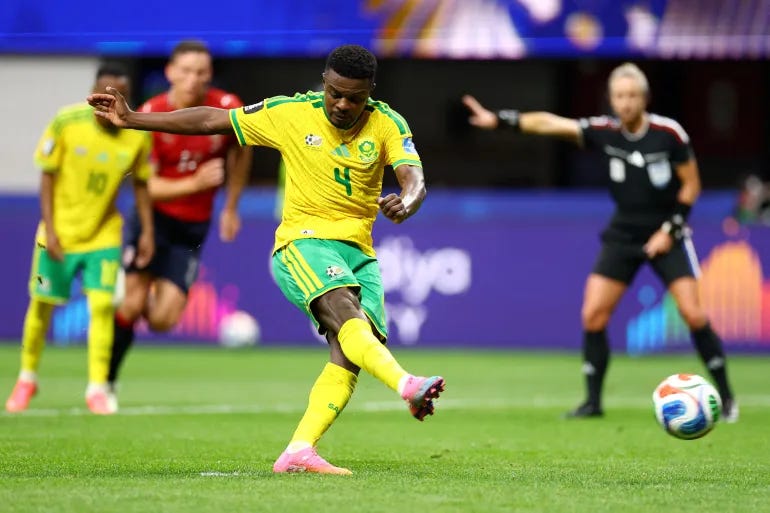
South Africa rescued a 1-1 draw with Czechia in Atlanta on Thursday after Teboho Mokoena converted a penalty in the 83rd minute to cancel out Michal Sadilek’s sixth-minute opener.
Sadilek struck early after a slick combination with Alexandr Sojka, but Thapelo Maseko’s long-range effort struck the hand of Pavel Sulc late on and Mokoena — who had been seen wiping away tears during the national anthem, thinking of his late grandfather — sent his spot-kick low past goalkeeper Matej Kovar.
Both sides now have one point from two matches, leaving their round-of-32 hopes in the balance. Mokoena will miss the South Korea decider, however, after collecting his second yellow card of the tournament.
All-Female Referee Trio Make World Cup History In Atlanta
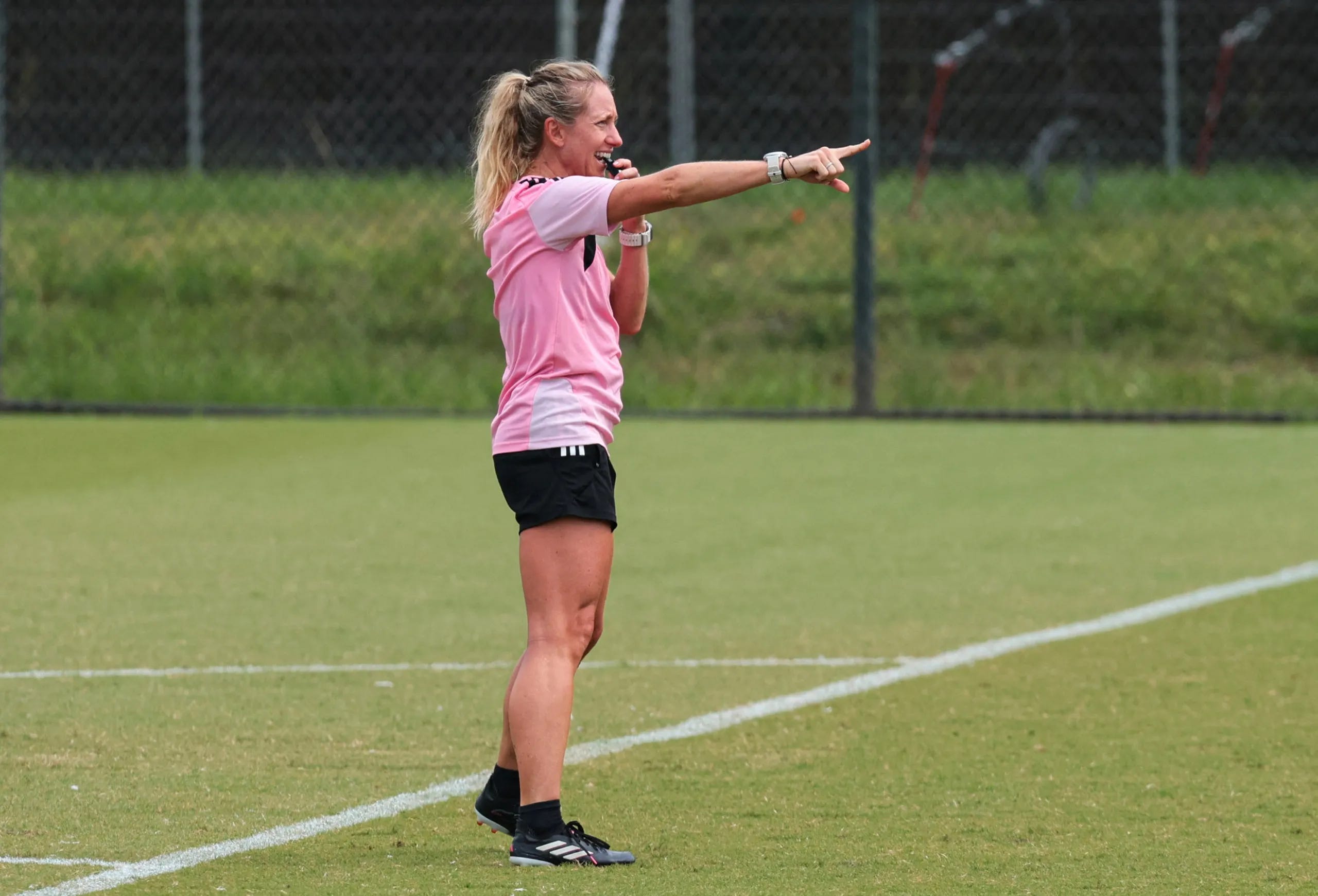
American official Tori Penso became only the second woman to take charge of a men’s World Cup match when she refereed the Czechia–South Africa Group A game in Atlanta on Thursday, assisted by her compatriots Brooke Mayo and Kathryn Nesbitt.
The trio are the only all-female on-field officiating crew appointed for the 2026 tournament, following the precedent set by France’s Stéphanie Frappart in Qatar in 2022.
Penso, 39, became the first woman to referee a Major League Soccer match in two decades in 2020 and took charge of the 2023 Women’s World Cup final between Spain and England.
Of 170 officials appointed by FIFA for the 2026 tournament, only six are women. Penso said ahead of the match that she had once thought such an appointment was impossible.
Switzerland Go Top Of Group B With Four-Goal Rout Of Bosnia
Switzerland moved to the top of Group B with a 4-1 victory over Bosnia and Herzegovina in Los Angeles on Thursday, with Johan Manzambi scoring twice to seal a comfortable win after a late red card left Bosnia with ten men.
The Swiss, who opened with a 1-1 draw against Qatar, lead the group on four points. Canada, who met Qatar in Vancouver later on Thursday, are the only side who can overtake them on the same points tally.
Bosnia, after also drawing their opener with Canada, face elimination pressure heading into the final group fixtures.
Canada Thrash Nine-man Qatar 6-0 in Historic First World Cup Win, But With a Wrinkle
Canada recorded their first victory in men's World Cup history with a 6-0 demolition of Qatar at BC Place in Vancouver on Thursday, the biggest winning margin ever recorded by a CONCACAF nation at the tournament.
Jonathan David scored a hat-trick — the first by any player on home soil since Geoff Hurst for England in 1966 — while Cyle Larin, Nathan Saliba and a Mohamed Manai own goal completed the rout.
Qatar finished the night with nine men after red cards for Homam Ahmed in the 33rd minute and Assim Madibo in the 51st.
The result was overshadowed, however, by a serious injury to midfielder Ismaël Koné. Koné was stretchered off in the second half after a challenge from Madibo left him with an apparent lower-leg injury, his left leg placed in an air cast as he was taken from the pitch.
Messi Matches Klose’s World Cup Record With Hat-trick in Argentina Win
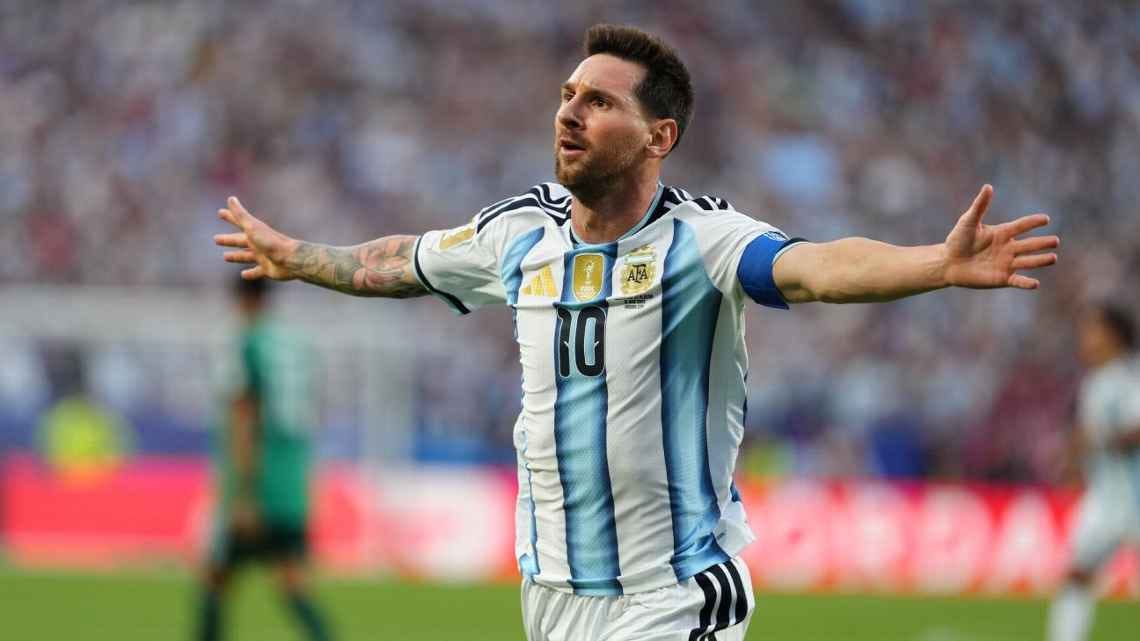
Lionel Messi scored a hat-trick as Argentina beat Algeria 3-0, matching Miroslav Klose’s all-time World Cup record of 16 goals.
The 38-year-old became the first player to appear in six World Cups, and also Argentina’s oldest World Cup scorer and the tournament’s oldest hat-trick scorer, a mark he took from Cristiano Ronaldo.
The performance, in his 200th international appearance, fell exactly 20 years after his World Cup debut against Serbia and Montenegro in 2006.
It and made him the first player to score in five consecutive World Cups. Kylian Mbappé and Erling Haaland also scored braces on the same night, for France and Norway respectively.
DR Congo Earn Historic First World Cup Point in Portugal Draw
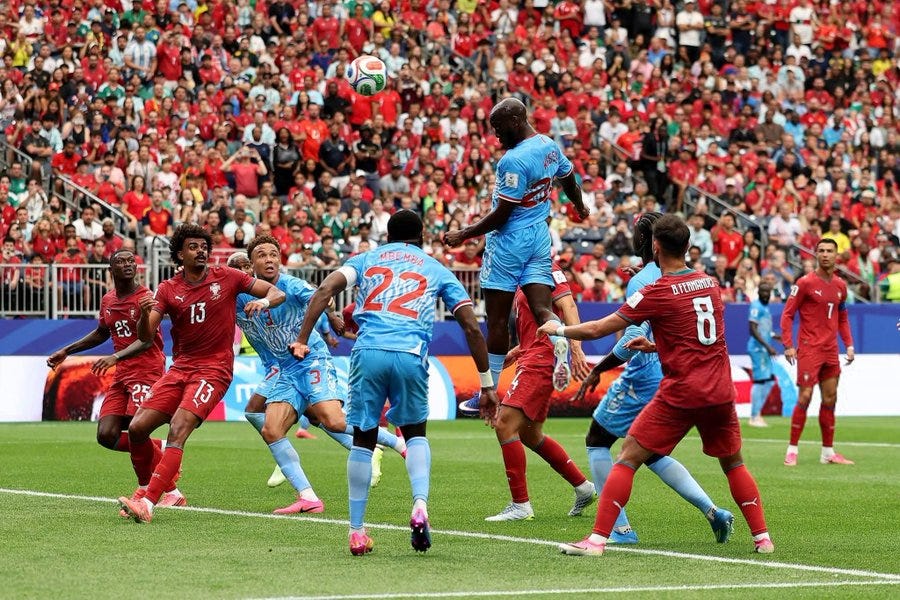
DR Congo claimed their first-ever World Cup goal and point with a 1-1 draw against Portugal at Houston Stadium, 52 years after their only previous appearance, as Zaire, in 1974.
João Neves headed Portugal ahead after six minutes from Pedro Neto’s cross; Yoane Wissa equalised with a header in first-half stoppage time, set up by Arthur Masuaku.

The result is the more striking for a squad whose preparations were disrupted by an Ebola outbreak at home, which forced the cancellation of a planned training camp in Kinshasa in favour of bases in Belgium and Spain.
Cristiano Ronaldo, playing his sixth World Cup, could not find a winner for Portugal.
Kane Double Sees England Beat Croatia 4-2 in Group L Thriller
Harry Kane scored twice as England opened their World Cup campaign with a 4-2 win over Croatia in Arlington, Texas.
His first goal came from a retaken penalty, after the video assistant referee ruled that Croatia goalkeeper Dominik Livakovic had come off his line for the original save; the penalty itself followed a challenge by Luka Modrić on Noni Madueke.
Croatia twice drew level, through Martin Baturina and Petar Musa, before Jude Bellingham restored England’s lead just after half-time and Marcus Rashford added a fourth.
The result leaves England level on points with Ghana at the top of Group L after the first round of fixtures.
Ghana’s Stoppage-time Winner Sends Black Stars Level With England
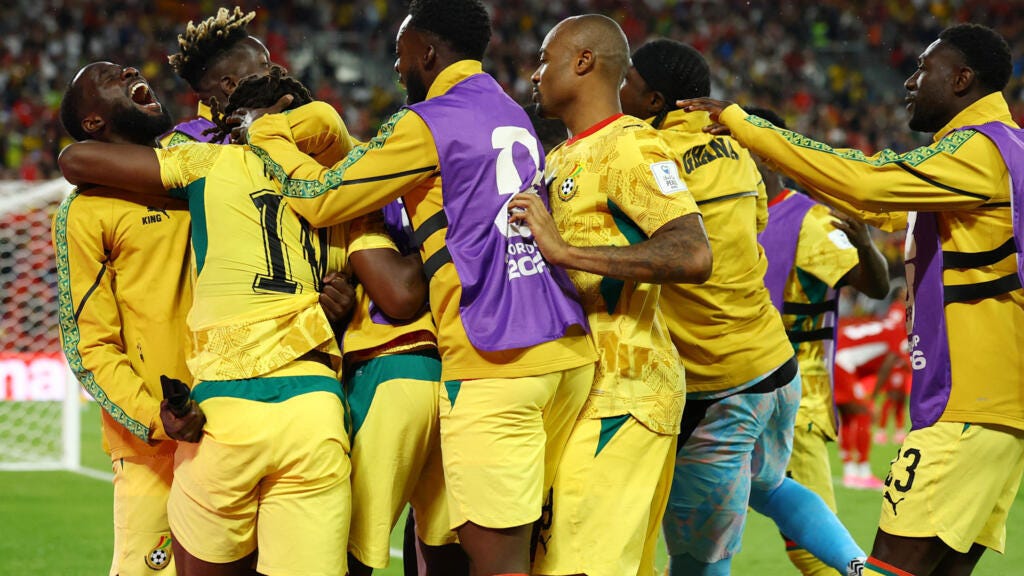
Ghana beat Panama 1-0 in Toronto with a stoppage-time winner from substitute Caleb Yirenkyi, who converted a low cross from Brandon Thomas-Asante in the 95th minute.
The result puts the Black Stars level on points with England at the top of Group L after the opening round of fixtures, with Croatia and Panama yet to register.
Panama had long spells of control and were denied a penalty when VAR ruled a challenge on Cristian Martínez inside the box had been clean.
Ghana goalkeeper Lawrence Ati-Zigi received treatment for an apparent injury in the second half but was able to continue.
FIFA Bans Themba Zwane For Three matches, Ruling Him out of Group Stage
South Africa midfielder Themba Zwane has been banned for three matches by FIFA’s Disciplinary Committee, an increase on the automatic one-match suspension that follows any red card.
The committee ruled that his sending-off against Mexico, for raising an arm into Roberto Alvarado’s face, amounted to serious foul play.
The decision, which is subject to appeal, rules the 36-year-old out for the rest of South Africa’s group campaign, including Thursday’s must-win meeting with Czechia in Atlanta.
Head coach Hugo Broos had argued after the match that the original card was “too soft” a sanction. South Africa lost their opening match 2-0 to hosts Mexico.
Senegal Collapse in World Cup Opener, As France’s Mbappé Sets New Record
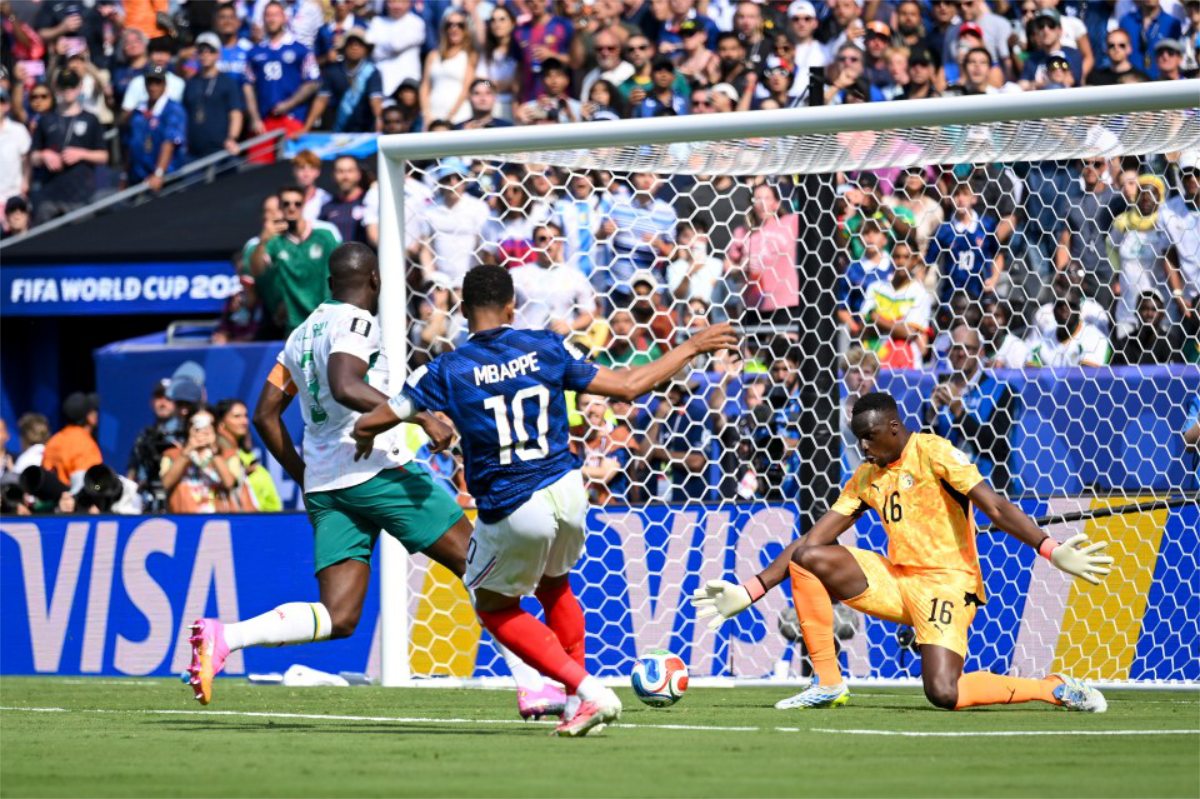
France beat Senegal 3-1 in their Group I opener on Tuesday, with two second-half goals from Kylian Mbappé taking him past Olivier Giroud as France’s all-time leading scorer.
Mbappé broke the deadlock in the 66th minute, finishing from Michael Olise’s pass, before substitute Bradley Barcola doubled the lead within two minutes of coming on, converting an Adrien Rabiot through-ball in the 82nd.
Senegal pulled a goal back through substitute Ibrahim Mbaye in stoppage time — at 18, the youngest African scorer at this World Cup — before Mbappé settled it with an immediate reply.
The goal was his 58th for France, moving him past Just Fontaine as the country’s leading World Cup scorer with 14.
Renard Back As Tunisia Coach After Sacking of Lamouchi Amid Tournament
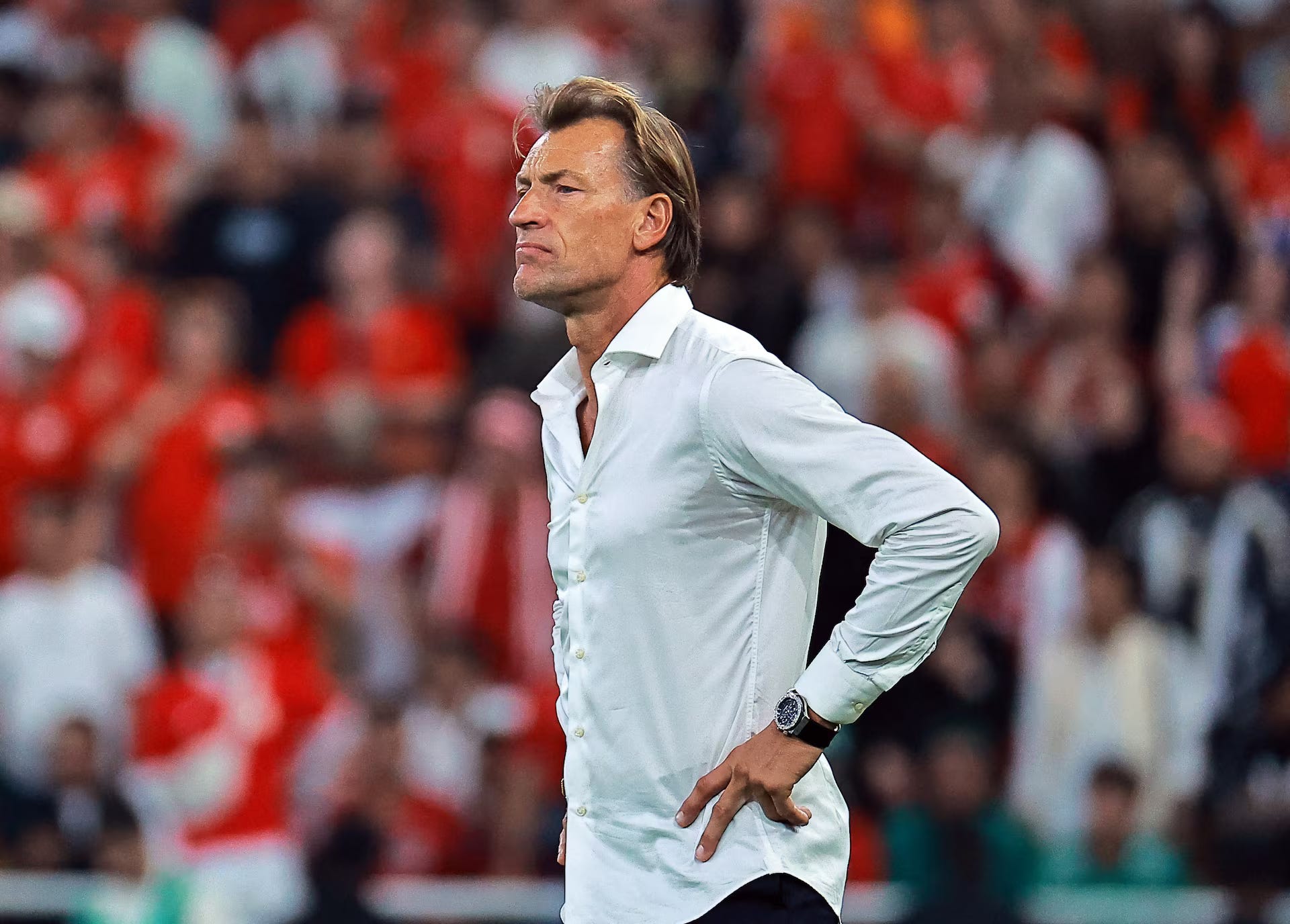
The Tunisian Football Federation has appointed Hervé Renard as head coach for the remainder of the 2026 World Cup, replacing Sabri Lamouchi a day after Tunisia’s 5-1 defeat to Sweden in their Group F opener.
Renard, who masterminded Saudi Arabia’s win over Argentina at the 2022 tournament, takes charge for Tunisia’s remaining games against Japan and the Netherlands.
The federation had first signalled an interim move to Mondher Kebaier, who coached the side from 2019 to 2022, before confirming Renard’s appointment late on Monday. Lamouchi, in the post since January, lasted five matches.
Iran say they were ordered out of US hours after World Cup opener
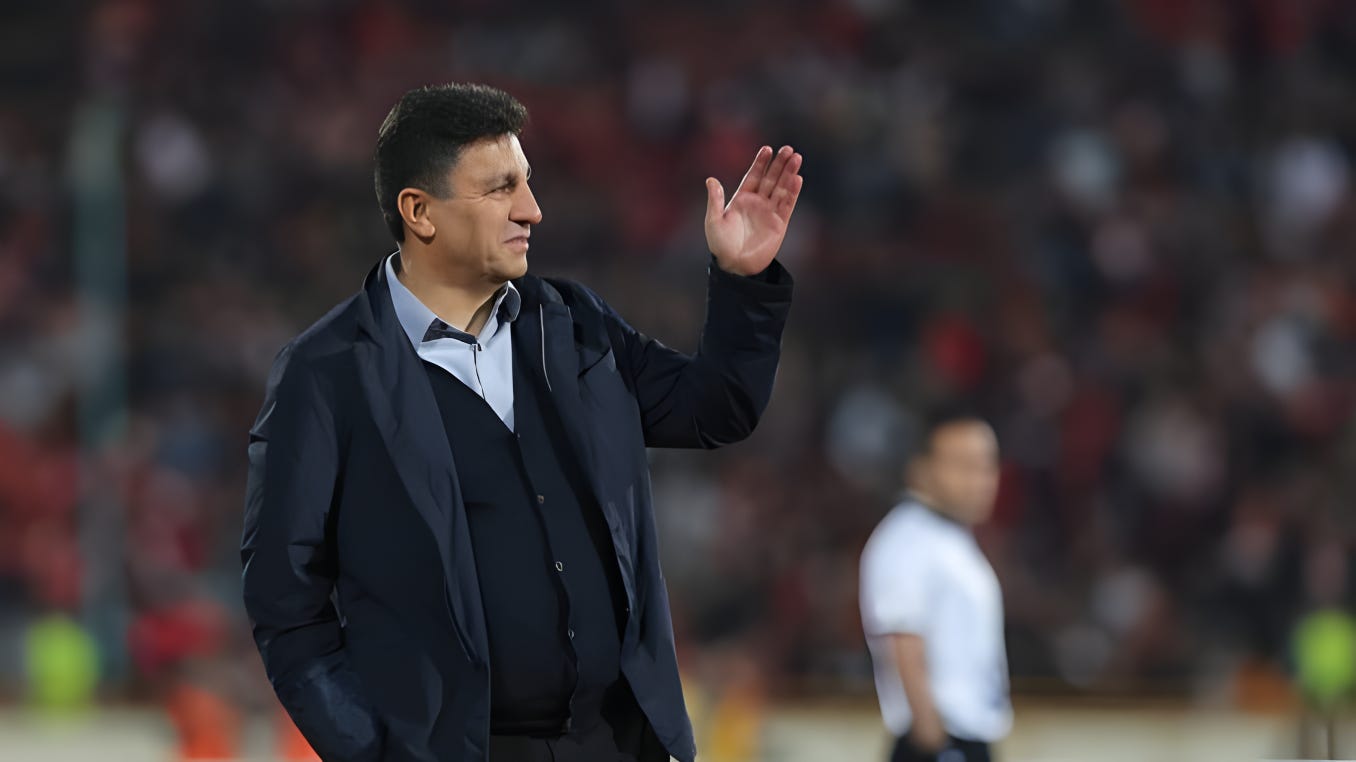
Iran coach Amir Ghalenoei said his squad was told to leave Los Angeles for their training base in Tijuana, Mexico, immediately after Monday’s 2-2 draw with New Zealand, cutting short planned recovery time.
Ghalenoei did not say who gave the order, calling the decision “very strange. Captain Mehdi Taremi said FIFA president Gianni Infantino visited the Iran dressing room after the match.
Taremi and Ghalenoei also said several of the federation’s senior staff, including its president, had been denied US visas ahead of the tournament — part of a difficult build-up Ghalenoei said had contributed to players cramping during the game.
Cape Verde claims World Cup wonder-point as Spain held to goalless
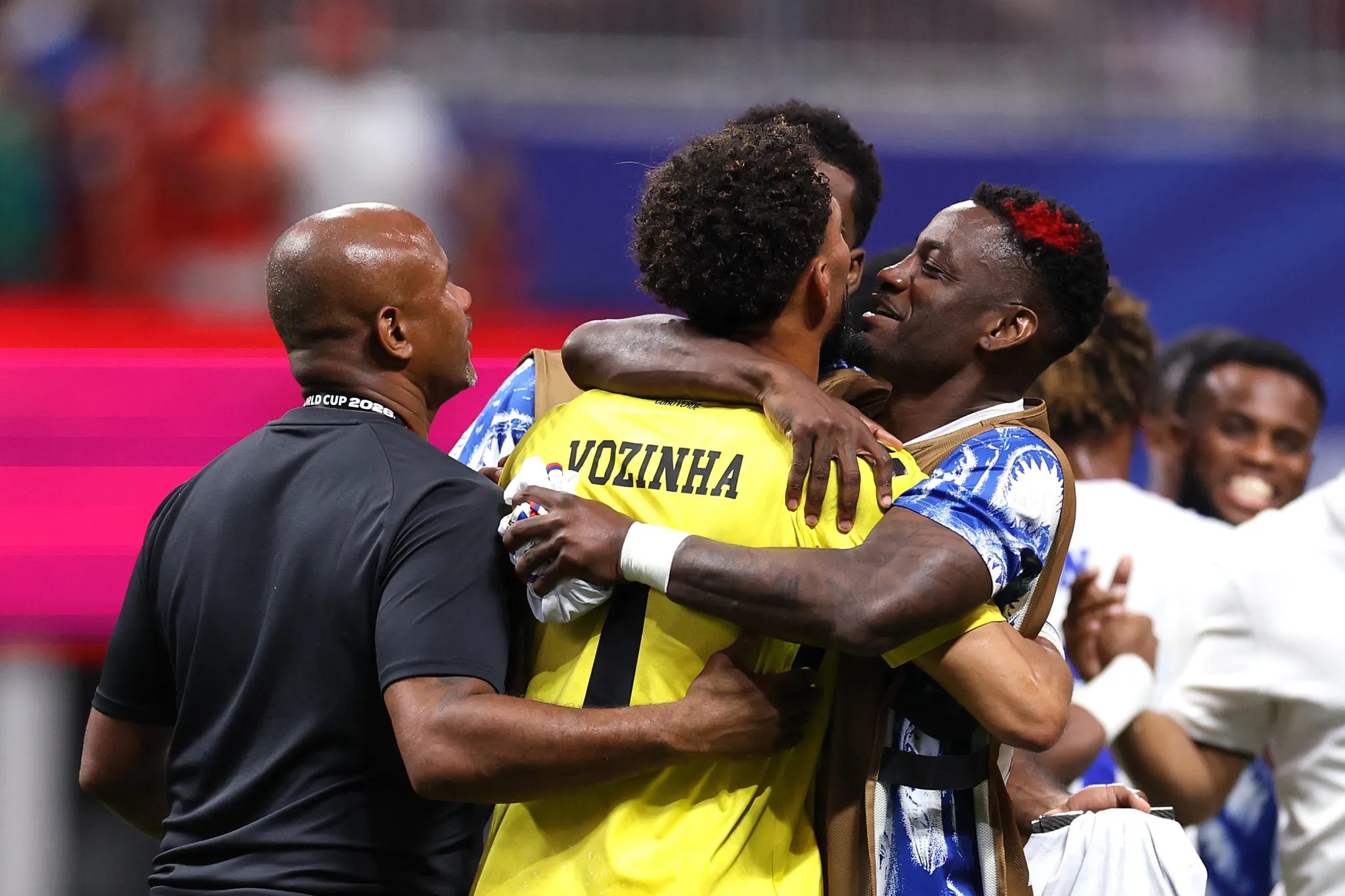
Cape Verde, the third-smallest nation by population ever to reach a World Cup, held European champions Spain to a goalless draw in their Group H opener at Atlanta on Monday.
Spain fired 27 shots without scoring — by some distance their busiest performance without a goal at the tournament.
The Spanish effort were thwarted throughout by 40-year-old goalkeeper Vozinha, who made seven saves and was the standout figure in a stubborn Cape Verdean defence.
“This means everything for our country,” said coach Pedro Leitão Brito of the surprise draw afterwards. Lamine Yamal came on for the final twenty minutes but could not break the deadlock.
Araujo Rescues a Point for Uruguay against Saudi Arabia
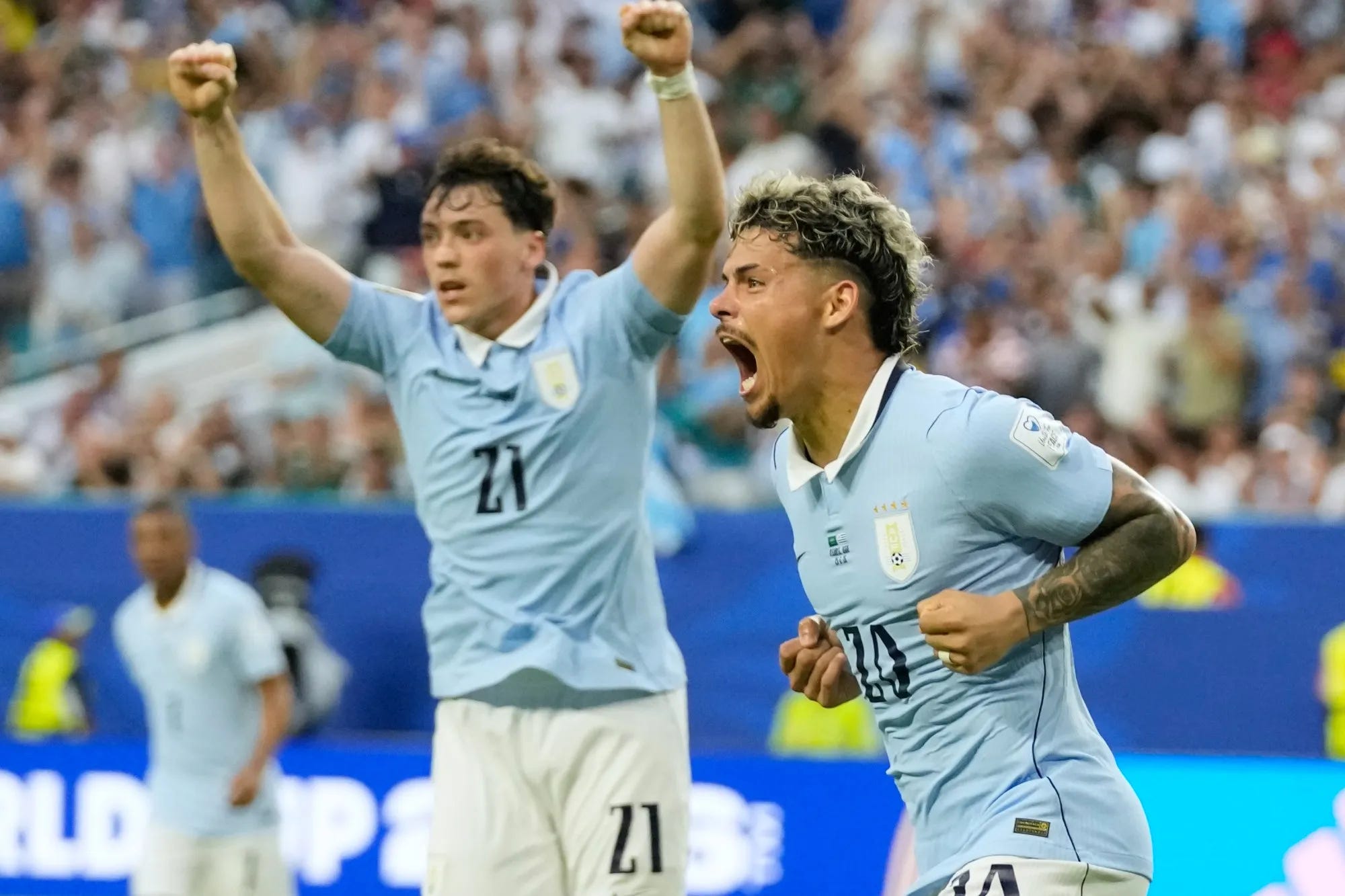
Uruguay came from behind to draw 1-1 with Saudi Arabia in Miami on Monday, with all four Group H sides now opening their campaigns with draws.
Abdulelah Al-Amri put the Saudis ahead just before the half-hour mark, reacting first to a rebound after goalkeeper Fernando Muslera had parried Mohamed Kanno’s header.
Uruguay dominated the second half but were repeatedly denied by goalkeeper Mohammed Al-Owais, who made nine saves, before Maxi Araujo forced home a close-range equaliser with around ten minutes left.
Saudi Arabia, semi-finalists in their conviction that a knockout berth is within reach for the first time since 1994, will take real encouragement from the point.
Belgium’s Lukaku Denies Egypt a Historic First World Cup Win
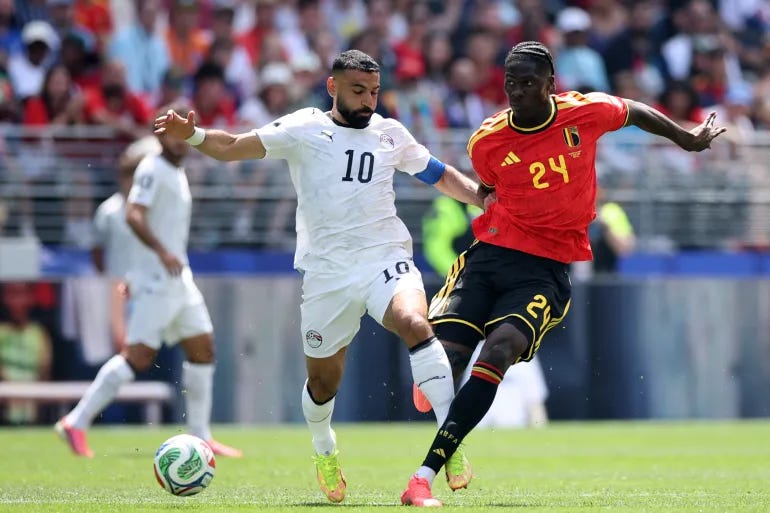
Egypt came within 24 minutes of a first-ever World Cup victory before Romelu Lukaku’s introduction off the bench forced a Belgian equaliser in a 1-1 draw at Seattle on Monday.
Emam Ashour put Egypt ahead in the first half with a strike from distance — set up by Mohamed Salah, marking his goal involvement on his 34th birthday.
Belgium’s Kevin De Bruyne hit the post with a free kick before Lukaku, on for just 22 seconds, forced Mohamed Hany into turning Thomas Meunier’s cross into his own net.
The result leaves Egypt’s wait for a first World Cup win stretching to 92 years since their 1934 debut.
Iran Holds New Zealand to a Draw in four-goal Group G Thriller
Iran twice came from behind to draw 2-2 with New Zealand in a high-tempo Group G opener at Los Angeles on Monday.
Elijah Just put the Asian and Oceanian debutants in front in the 7th minute and restored their lead in the 54th, either side of an Iranian equaliser from Ramin Rezaeian.
Mohammad Mohebbi levelled for a second time in the 64th minute to secure the point, with the match described by ESPN as among the most open of the tournament so far on either side of the ball.
FIFA Clears Official After White-Supremacist Gesture Row
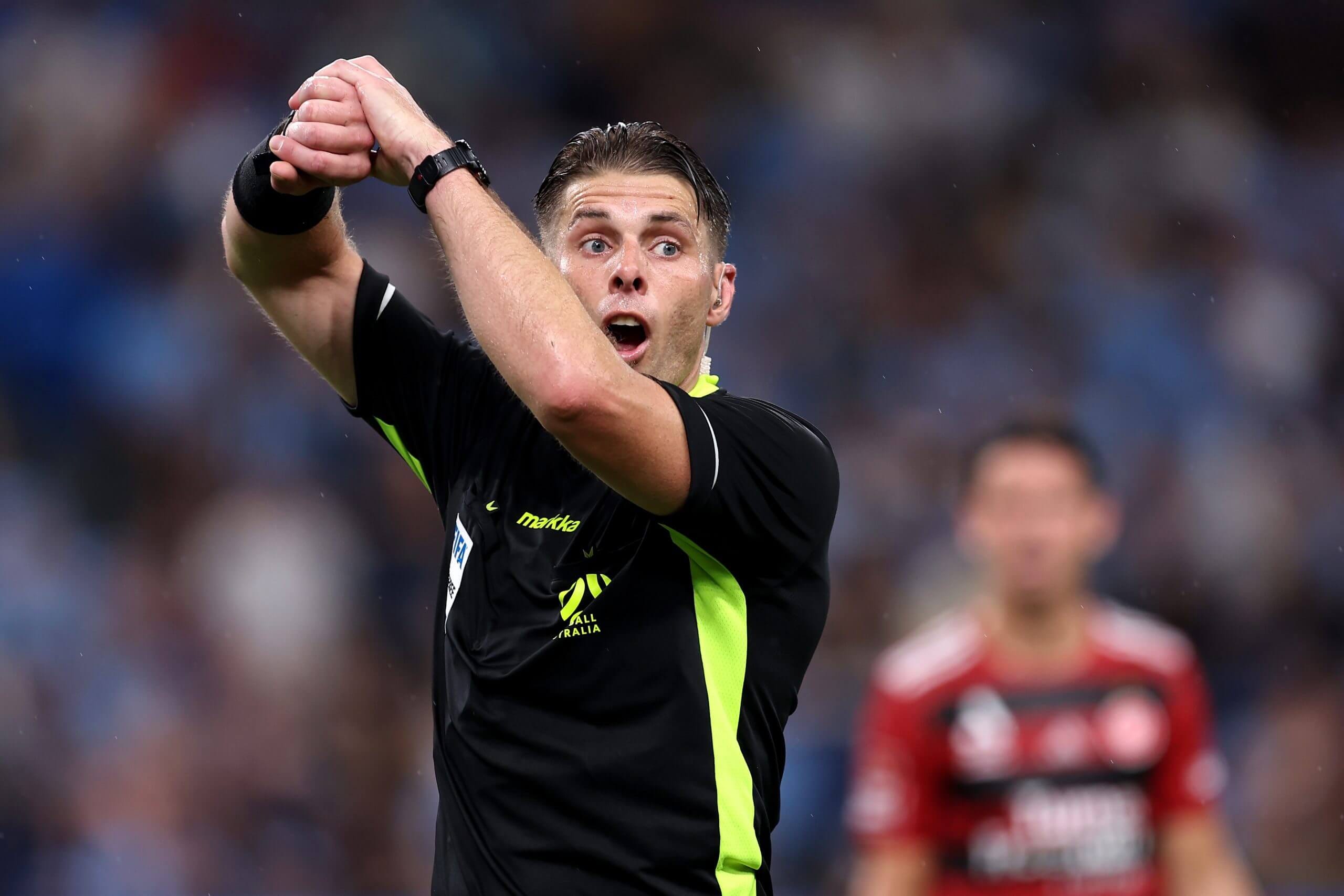
FIFA’s independent Disciplinary Committee has found no evidence of a breach of its disciplinary code by video assistant referee Shaun Evans.
The Australian official was filmed making an “OK” hand gesture during broadcast coverage of Germany’s opening match against Curaçao on Sunday.
The gesture has been adopted in some far-right circles as a white-power symbol; the reason why the Fare network, FIFA’s discrimination-monitoring partner, called for Evans’s removal from the tournament.
Evans said the movement was an involuntary, subconscious twitch and that he had not intended to communicate any message. FIFA said it had taken his statement into account in clearing him.
Partey refused Canadian entry, to miss Ghana’s World Cup opener
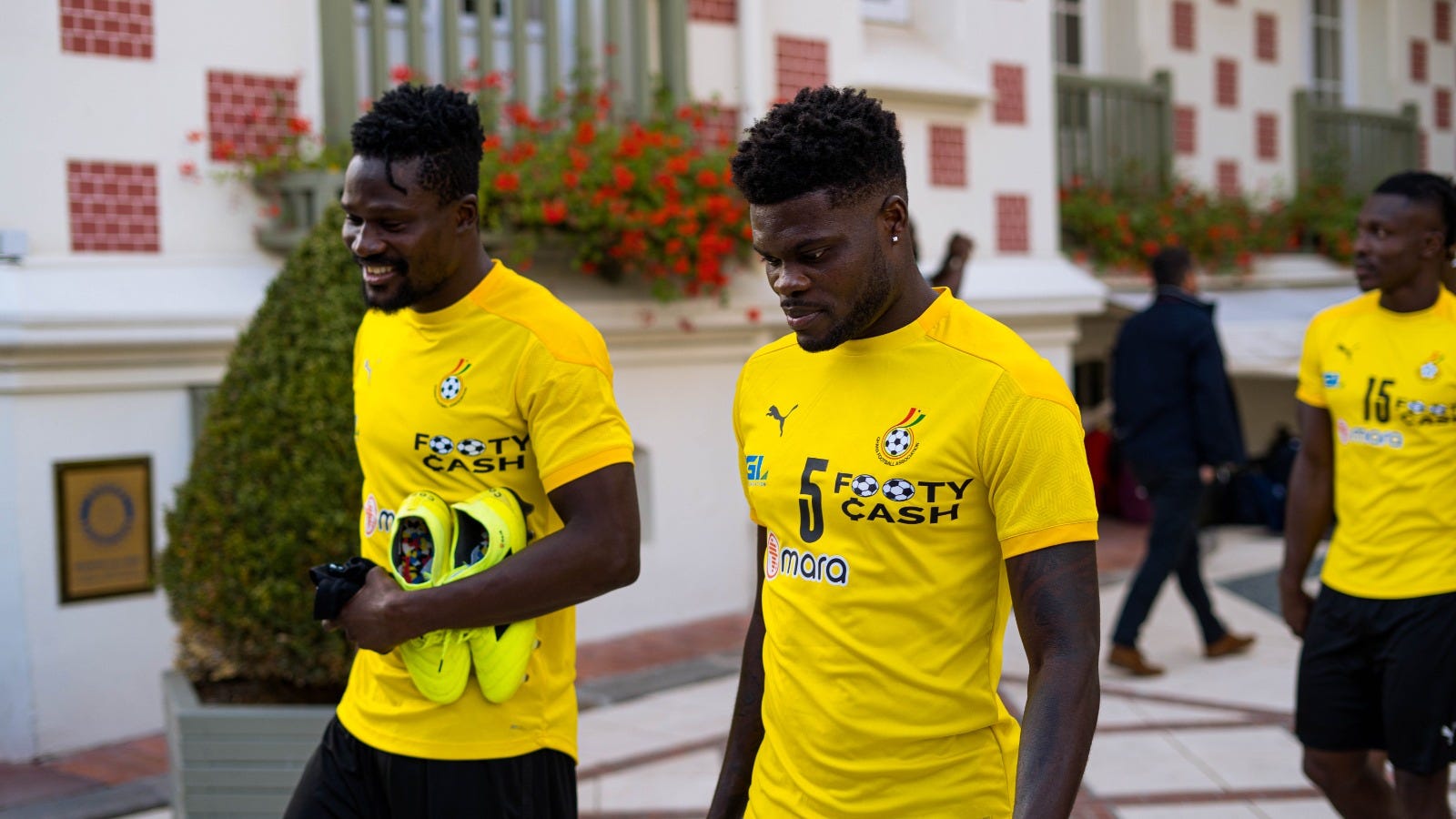
Ghana midfielder Thomas Partey will miss the Black Stars’ opening Group L match against Panama in Toronto on Wednesday 17 June after the Canadian government refused his visa application.
FIFA confirmed the Villarreal player would be unable to travel from Ghana’s base in the United States to Canada, adding that it plays no part in host nations’ immigration decisions and that the host government determines who is admitted.
Partey, 32, is on bail in the United Kingdom facing seven counts of rape and one of sexual assault, all of which he denies; his trial has been listed for 2027.
Because Ghana’s remaining group fixtures — against England on 23 June and Croatia on 27 June — are staged in the United States, he is expected to be available for both.
Substitute Larin Earns Canada a Historic first World Cup point
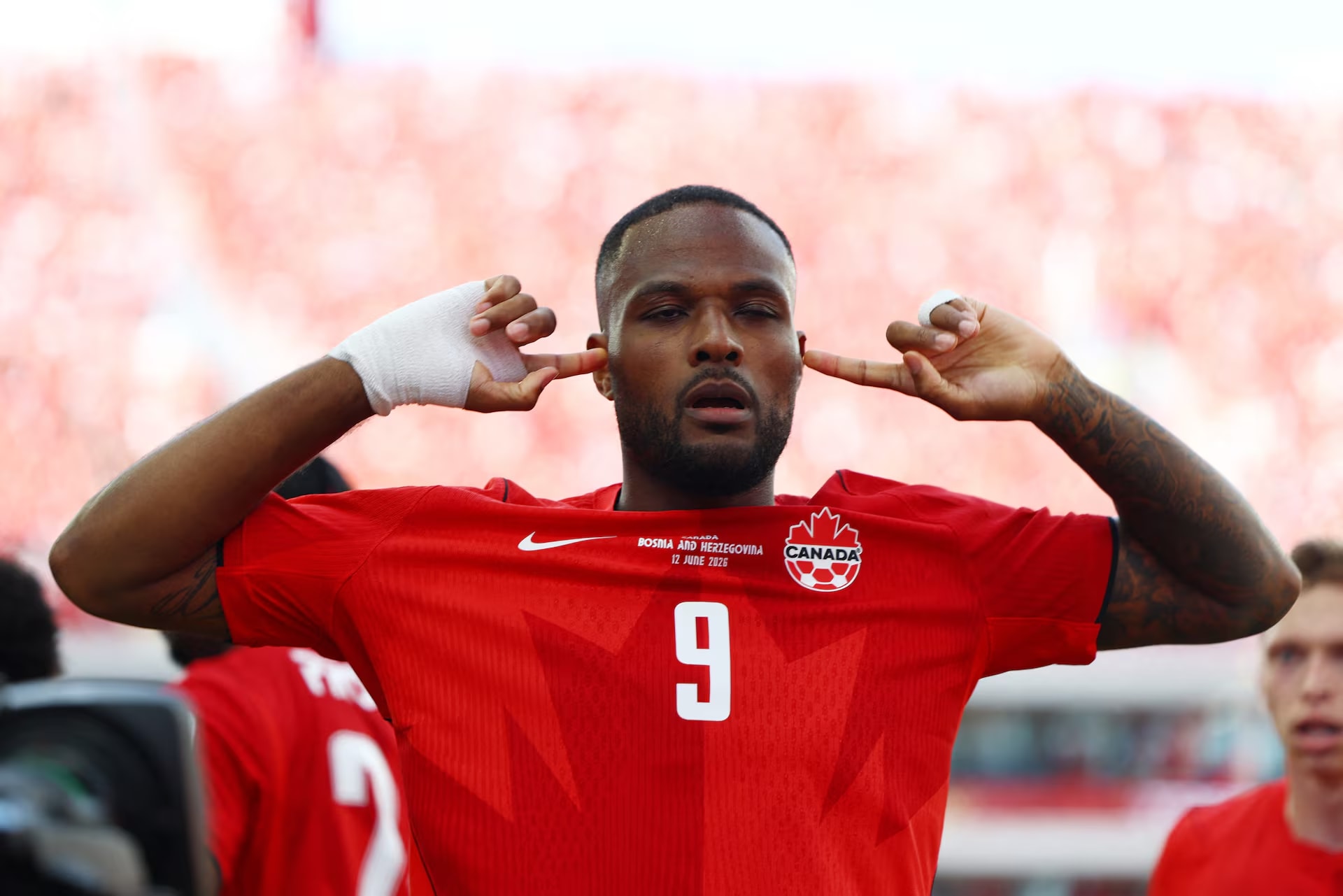
Canada claimed the first World Cup point in their history as substitute Cyle Larin rescued a 1-1 draw with Bosnia & Herzegovina in their Group B opener at BMO Field, Toronto, on Friday.
Larin, on the pitch barely two minutes, finished from inside the box in the 78th minute after a pass from fellow replacement Promise David, cancelling out Jovo Lukić’s first-half header.
Bosnia had led since the 21st minute, when Lukić met a corner flicked on by Sead Kolasinac and headed in from close range for his first international goal.
Co-hosts Canada, without the injured Alphonso Davies, dominated possession but were repeatedly frustrated — Jonathan David among those to waste clear openings, with two further efforts cleared off the line — until Larin’s intervention.
The result gave Canada their first point in three World Cup appearances, having lost all three matches in both 1986 and 2022, and made Larin only the second Canadian ever to score at the tournament.
Morocco face Brazil as Africa’s Standard-bearers Open Group C
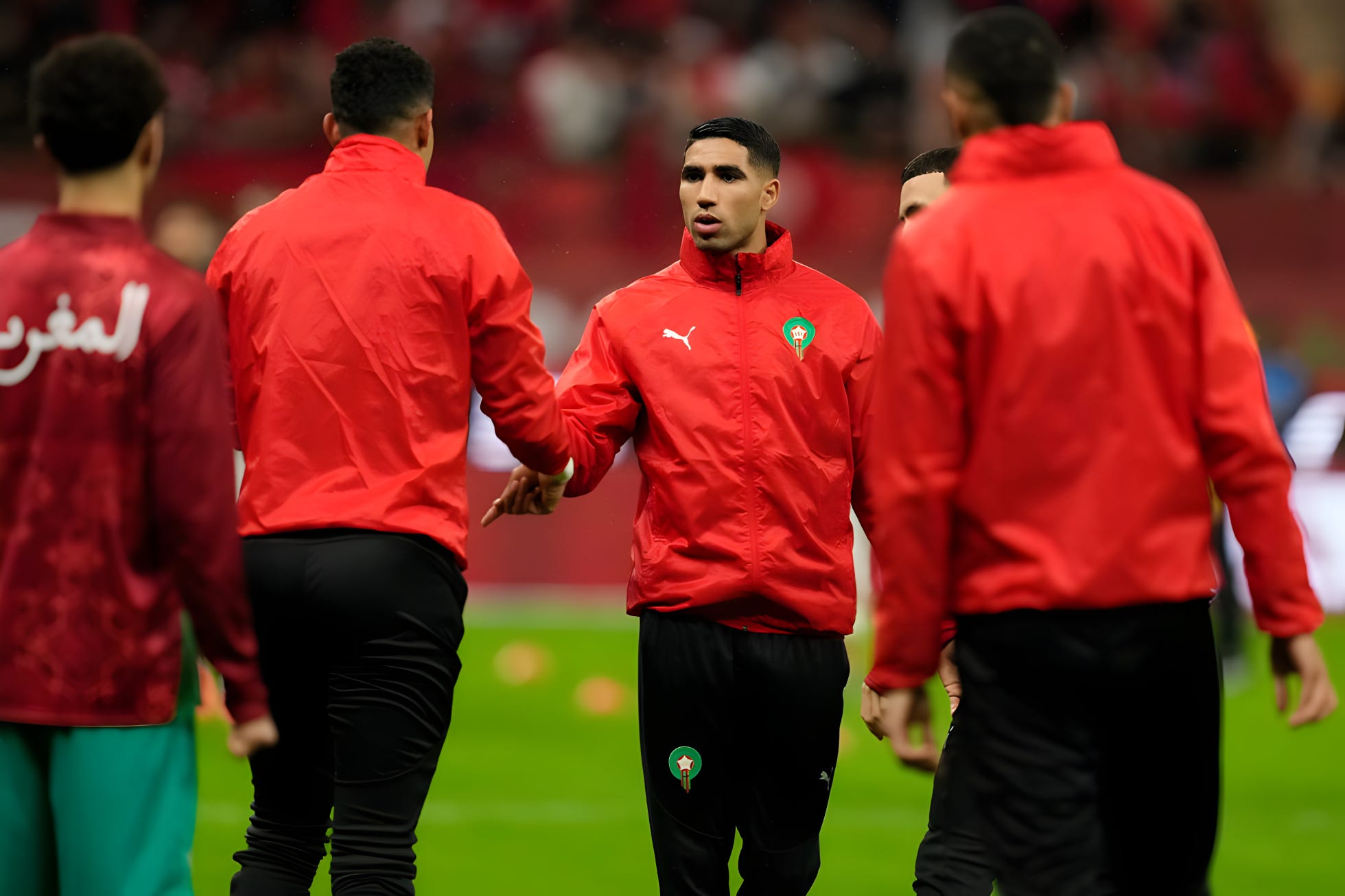
Morocco, the first African side to reach a World Cup semi-final, begin their 2026 campaign against Brazil in Group C at the New York/New Jersey Stadium on Saturday 13 June.
The Atlas Lions — built around Achraf Hakimi, goalkeeper Yassine Bounou and forward Ayoub El Kaabi — carry the continent’s hopes against a Brazil side under Carlo Ancelotti that arrives among the tournament favourites.
The sides last met competitively at France ‘98, when Brazil won 3-0. Morocco’s run to the last four in 2022 has reshaped expectations since.
Picture: Morocco supporters in full voice, or Hakimi leading the side out — fan-and-flag atmosphere suits the “continent’s hopes” framing better than a posed team shot.
FIFA defends Guadalajara Attendance Figure Amid Empty Seats
FIFA has defended the official attendance for South Korea’s 2-1 win over Czechia at the Estadio Akron in Guadalajara, after rows of empty seats were visible during the opening-day fixture. The governing body recorded a crowd of 44,985 at the 45,664-capacity venue, the second-smallest at the tournament.
Reporting by The Athletic indicated the number of vacant seats well exceeded the shortfall implied by that figure, with gaps noted around premium areas. FIFA said its published numbers reflect tickets scanned and spectators within the stadium footprint rather than visual assessments of seat occupancy, and that some ticketed fans were on the concourses during play.
Picture: A wide stand-level view showing patches of empty seating, or a generic ticketing/turnstile motif — illustrates the gap between figure and footage without lifting a rights-encumbered match image.
Mexico defeats South Africa in World Cup opening match. One referee’s revenge. FIFA’s president on the defensive. A jersey ruled too political. This is Day 1 of the World Cup, all in one place.
Mexico vs South Africa: Full-time Update
Mexico opened the FIFA World Cup 2026 with a 2-0 win over South Africa in their Group A tie at the Estadio Azteca, goals from Julián Quiñones and Raúl Jiménez sealing a comfortable night for the co-hosts.
Quiñones struck in the ninth minute, pouncing on a defensive error to score the tournament’s first goal — fitting form from the man who took the 2025-26 Saudi Pro League Golden Boot with 33 goals for Al-Qadsiah, ahead of Cristiano Ronaldo. Jiménez doubled the lead, opening his own World Cup account at a fourth tournament. Mexico controlled possession and tempo throughout, while South Africa rarely threatened.
The night unravelled for Bafana Bafana with two red cards — to Themba Zwane and Sphephelo Sithole — reducing them to nine men. Mexico finished with ten themselves after César Montes was dismissed late on, but the result was long settled. Three red cards made it the most ill-tempered World Cup opener on record.
It was also Mexico’s first win in a World Cup opening match at the eighth attempt.
Friday (Day 2): Canada v Bosnia and Herzegovina — Toronto (BMO Field); USA v Paraguay — Los Angeles (SoFi Stadium).
Mexico takes lead in opening match
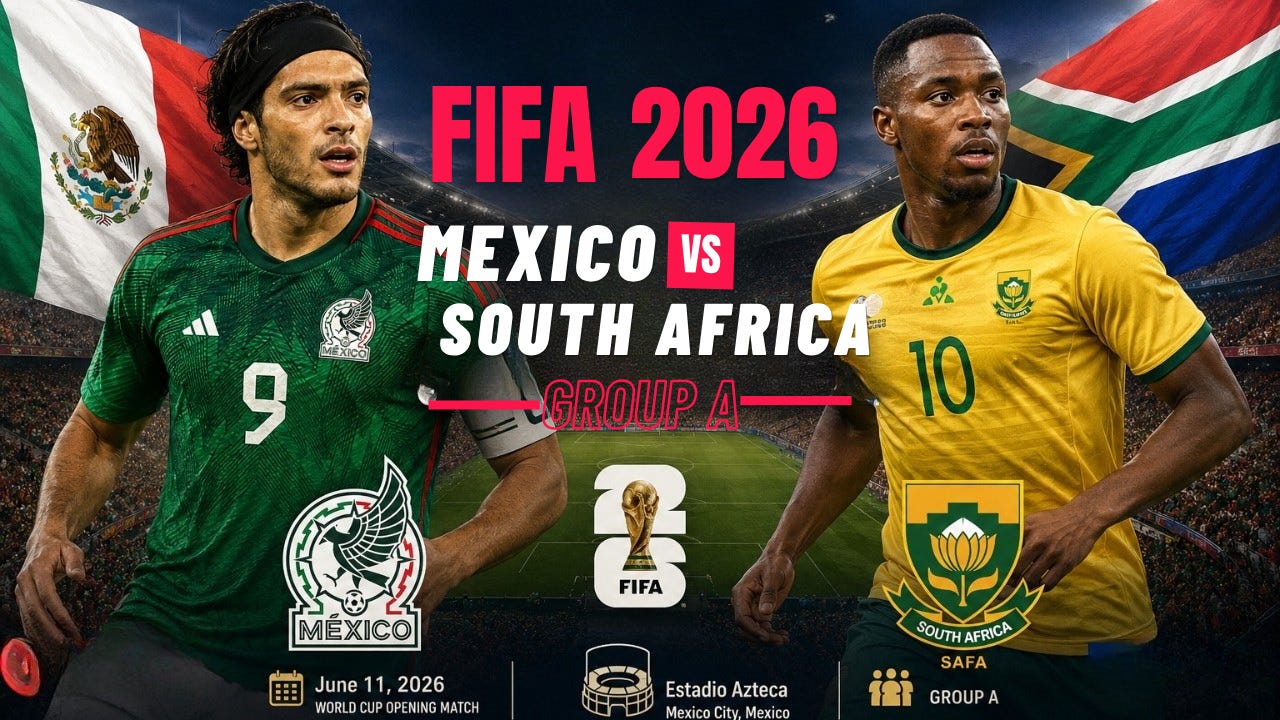
Mexico have taken an early lead against South Africa in their Group A encounter at the FIFA World Cup 2026, with Julián Quiñones finding the breakthrough.
The goal came after sustained pressure from Mexico, who have controlled possession in the opening stages and punished a South African defensive lapse.
South Africa, who started the match with high energy and pressing intensity, will now need to respond after conceding early.
This is their first World Cup appearance since 2010 and their first qualification since 2002, and the early setback is not the start they were after on their long-awaited return.
Captain and goalkeeper Ronwen Williams leads a side built on a strong domestic core, with the bulk of the squad drawn from the South African league.
Mexico, with Raúl Jiménez leading the line, remain in control of the tempo as they look to build on their advantage.
The revenge of Somalia’s Omar Artan
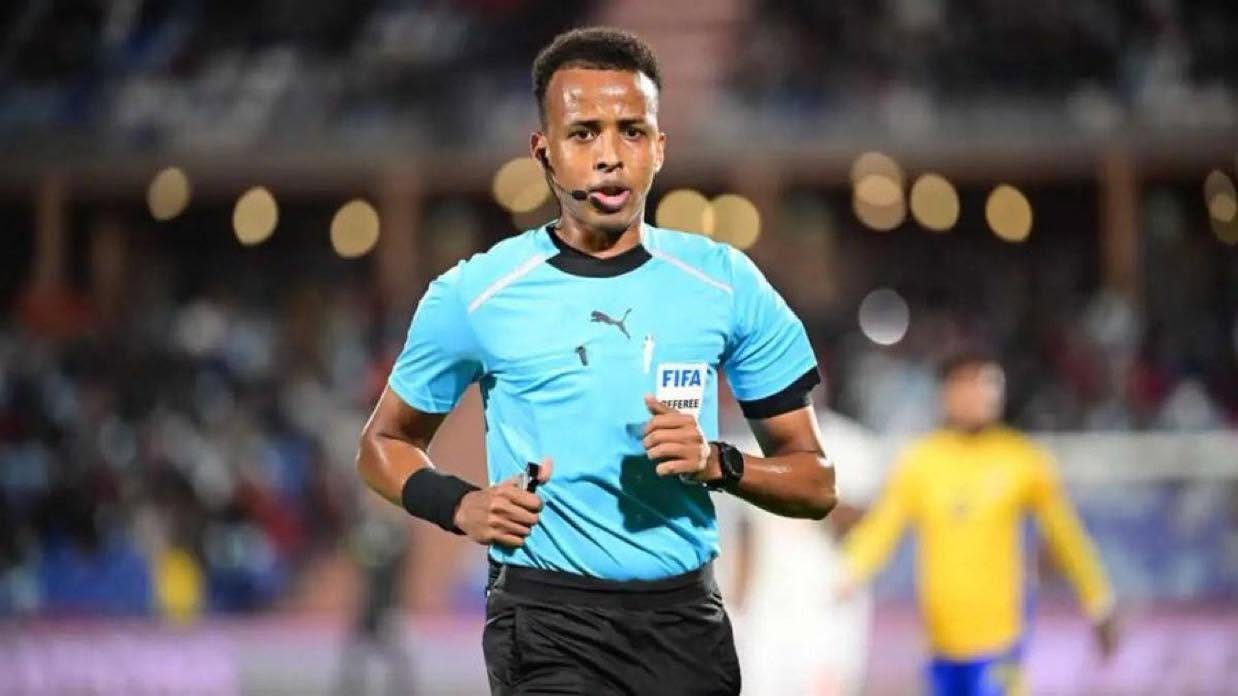
UEFA has appointed Somali referee Omar Artan to officiate the UEFA Super Cup between Paris Saint-Germain and Aston Villa, which is to be played in Salzburg on 12 August.
The high-profile assignment is a notable mark of confidence in Artan from European football’s governing body.
It comes shortly after Artan was refused entry by a FIFA World Cup host country on political grounds, despite holding official accreditation tied to his match duties. An Iraqi photographer, also accredited, was turned away in the same manner.
The contrast between UEFA’s appointment and the World Cup refusal throws the earlier incident into sharper relief, and keeps live the concerns it raised over the consistency of access protocols for accredited personnel and over compliance with tournament regulations.
FIFA orders Haiti to redesign jersey over Battle of Vertières artwork
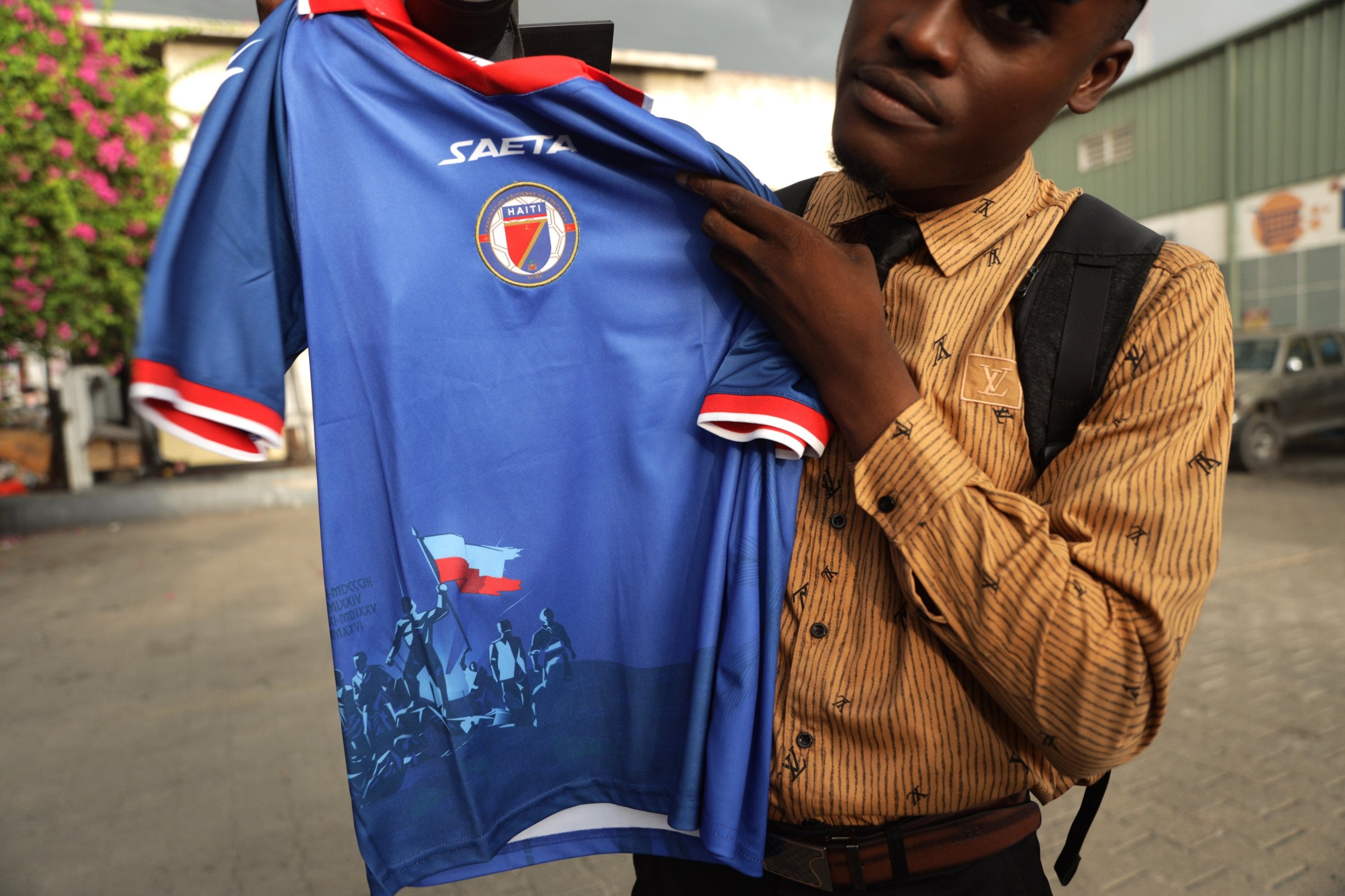
FIFA has instructed kit supplier Saeta to modify the design of Haiti’s national team jersey after objecting to its original artwork.
The shirt depicted the Battle of Vertières of November 1803, a decisive engagement in the Haitian Revolution that led to independence on 1 January 1804 and the founding of the world’s first Black republic.
Saeta said the design was intended as a tribute to Haiti’s independence struggle and national heritage.
FIFA ruled that the imagery constituted a political message and required modifications under competition regulations governing team apparel.
The decision has renewed debate over FIFA’s interpretation of rules on political expression, and over where historical symbolism ends and political messaging begins.
Infantino Invokes Host-nation Sovereignty Amid Governance Questions
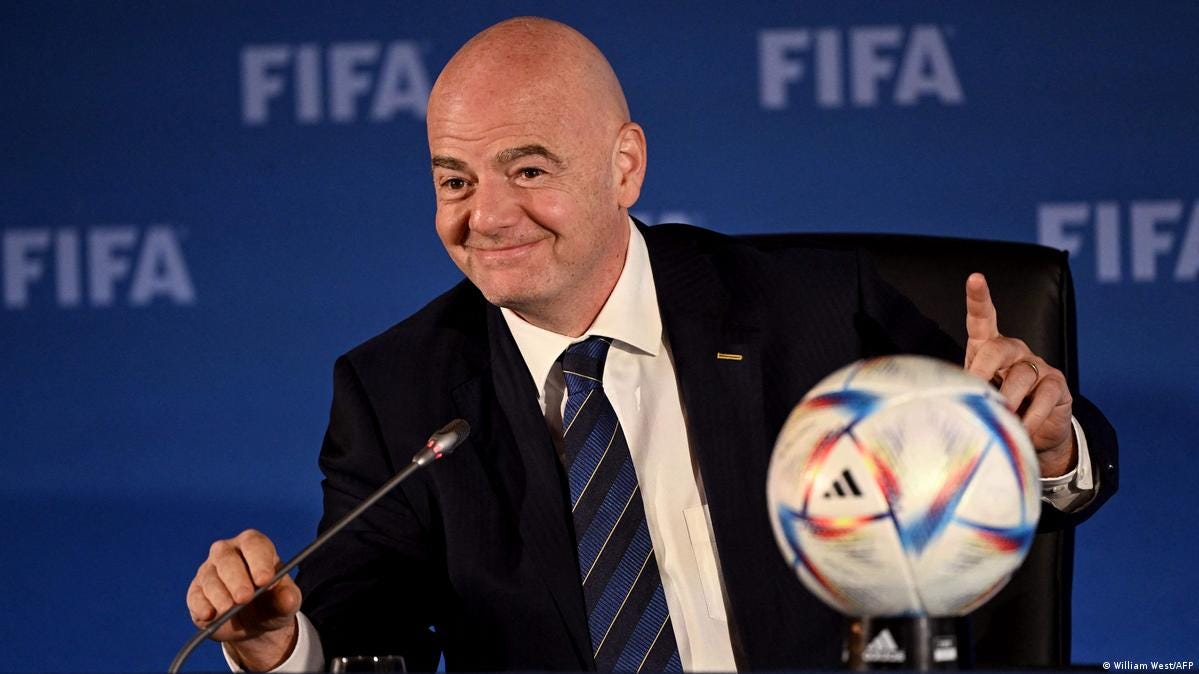
FIFA President Gianni Infantino has faced questioning from a BBC journalist over the governance and operational control of the tournament.
Asked whether he was embarrassed by recent developments and whether he had lost control, Infantino suggested it would not be appropriate for FIFA to dictate whom a host country admits to its territory.
FIFA’s president pointed to the sovereignty of host nations over entry policy while defending FIFA’s role in organising the competition.
His remarks have drawn fresh attention to comments he made in 2017, when he said that a country to which people could not gain access would be unsuitable to stage a World Cup.
The contrast between that position and current circumstances has intensified scrutiny of FIFA’s governance approach.

