


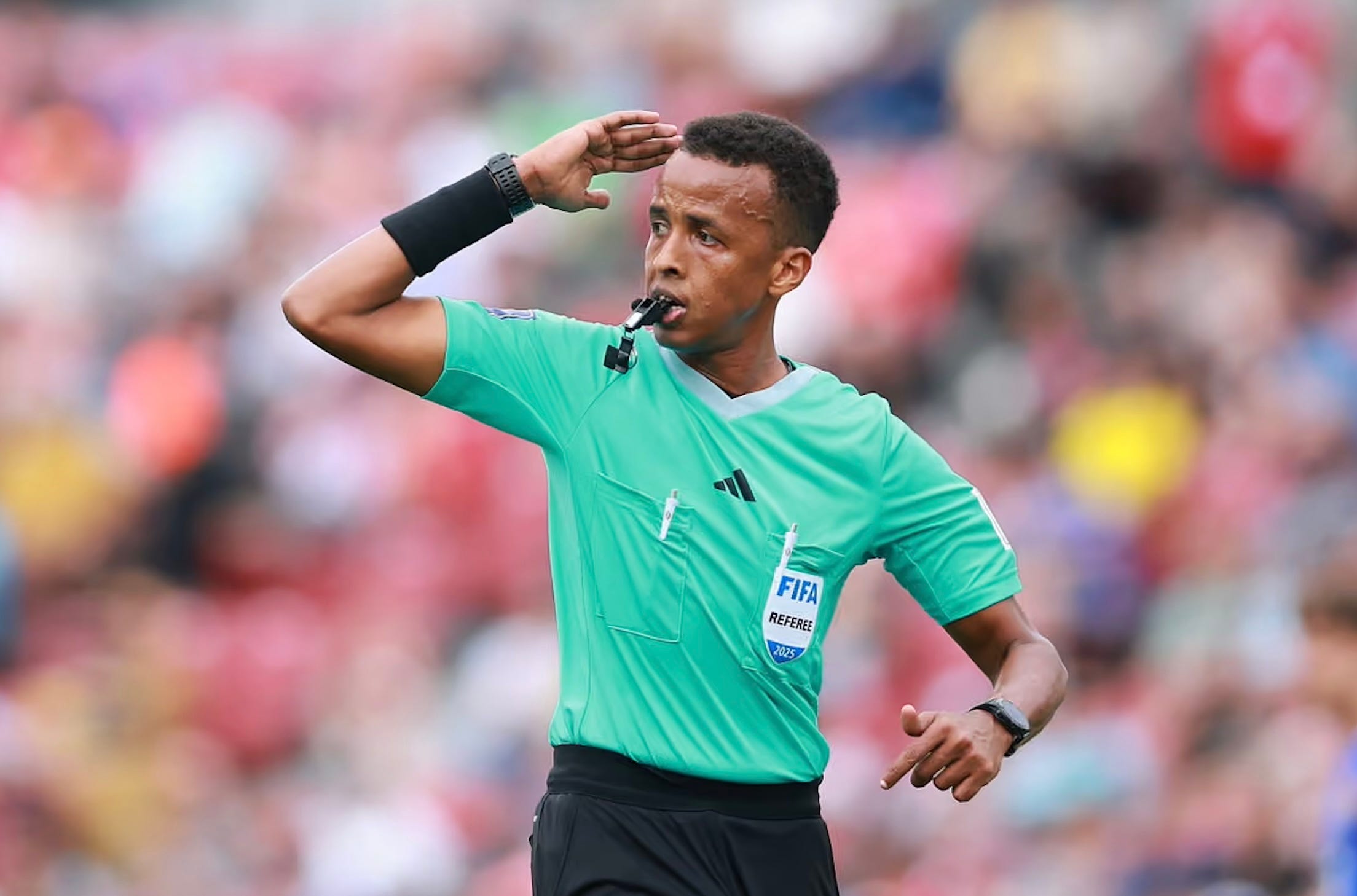

So, the story of that Somali referee. Where best to start it? Well, he had completed the paperwork, had the visa, had with him in his luggage the documentation of a career that speaks for itself.
And his was the career. And it began with him refereeing matches in a country still rebuilding after decades of conflict. All the way, it took him high up to the status of national icon, first Somali official ever selected for a World Cup.
Commendable. But none of it mattered on Saturday 6 June, the day when Omar Abdulkadir Artan landed at Miami International Airport on a connecting flight from Istanbul.
It didn’t matter simply because Artan was back on a plane to Turkey, eleven hours later, his World Cup effectively over before it even began.

The official explanation—to which we will return later—eventually arrived, but it explained almost nothing.
U.S. Customs and Border Protection (CBP) said in a skimpy statement that Artan had been denied entry because he was “determined to be inadmissible due to vetting concerns.”
What those concerns were, CBP did not say.
Hard therefore for Artan to know clearly what they were.
The Somali sports official told the New York Times he had been questioned for eleven hours about why he had travelled to the United States and about Somali politics and the militant group al-Shabab.
He told the paper he had shown his interrogators his FIFA credentials and photographs from his refereeing career. All to no effect.
“I think that they have a problem with my country,” Artan speculated, understating his case, playing down the fact that he had nothing to hide and nowhere to hide it. And how could he have had, indeed?
The fellow had been named Africa’s best male referee in 2025, had become in January 2024 the first Somali to officiate at the Africa Cup of Nations, and had been selected as one of FIFA’s 52 referees for the 2026 World Cup after what FIFA itself described as a three-year vetting and selection process.
Artan held a diplomatic passport. He held a very valid visa, issued by U.S. authorities the week before he travelled.
It was quickly evident to him that the CBP was operating on the basis of a foregone conclusion.
The CBP wasn’t checking to make sure his documentation was in order. They had him marked, and the checking was just a matter of going through the motions. A formality.

Grave Anomaly
What followed Artan’s expulsion was not delayed clarification. It was a sequence of contradictions in an unbroken exercise of confusion, of obfuscation.
First in that sequence came the vague gesture toward gravity. The performance of solemnity in the matter.
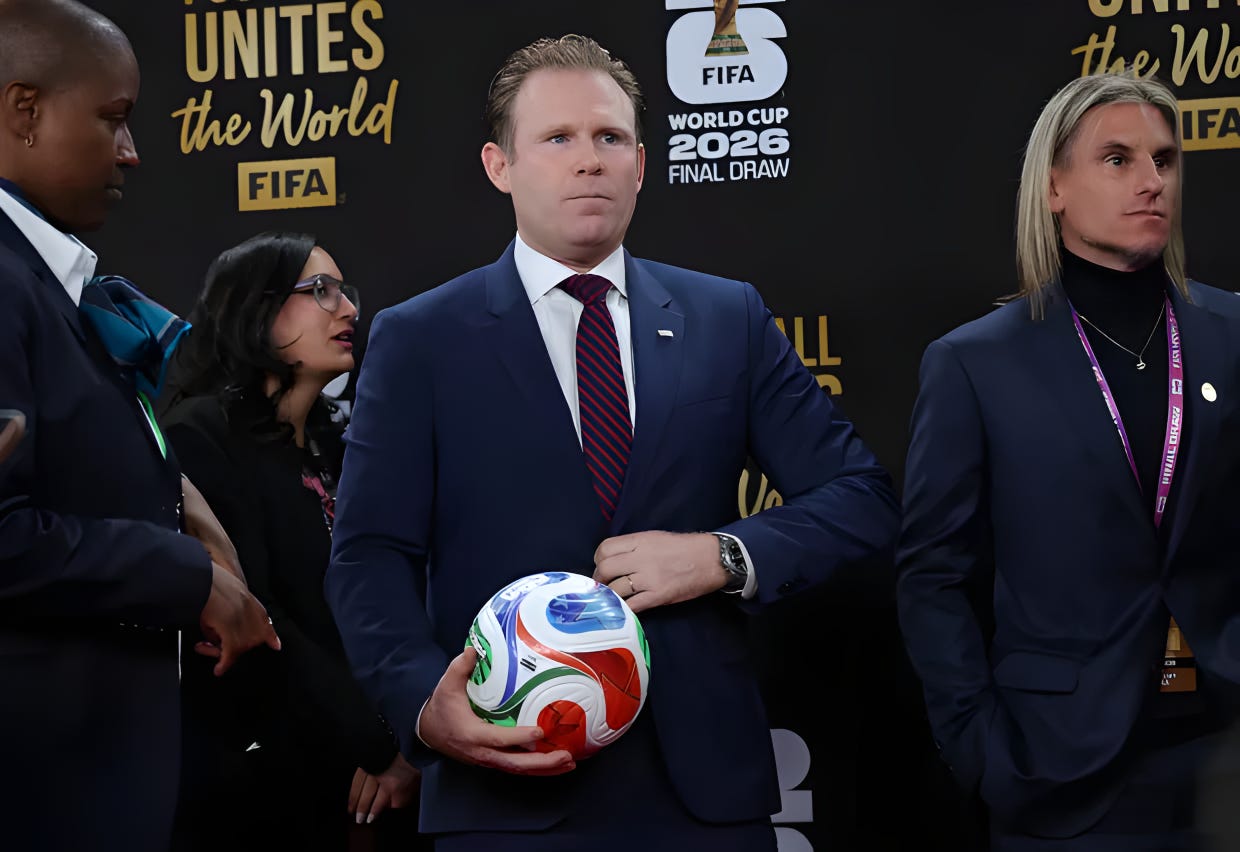
Andrew Giuliani, executive director of the White House’s FIFA Task Force, told reporters that Artan had been denied entry for “very good reasons,” declining to specify what those reasons were.
“Anyone who is communicating with bad actors that plan harm against the United States of America are not gonna be admitted entrance,” Giuliani said.
Then, speaking to CBS News, he sharpened the allegation: Artan had been in contact with “some very bad people,” and the communication occurred immediately before he set out for the United States.
A separate, anonymous administration official told ESPN that the referee was refused admission due to “association with suspected members of terror organisations.”
No evidence for that claim has been produced. CBS News reported plainly that the administration has yet to release any set of documented facts to support the incriminatory finding.
And so, a man was sent home from the doorstep of the tournament that was supposed to define his career, on an allegation serious enough to imply terrorism, and the country making that allegation can simply decline to show its hand.
And that is the anomaly at the centre of Artan’s story. Of course, mistakes and expulsions are not rare at busy airports in any ordinary day, let alone during a global tournament.
But here, the anomaly rests in the fact that an accusation grave enough to end a career was made and then left to hang, unproven and unexplained, as though the saying of it were sufficient.
Now, if Artan isn’t in cahoots with al-Shabaab or any other terror organisation, one should look for the true motives of his discourteous treatment in what officials had left unsaid.
Travel Restrictions
Somalia sits on a list of 39 countries facing US travel restrictions ranging from partial limits to outright bans under the current administration.
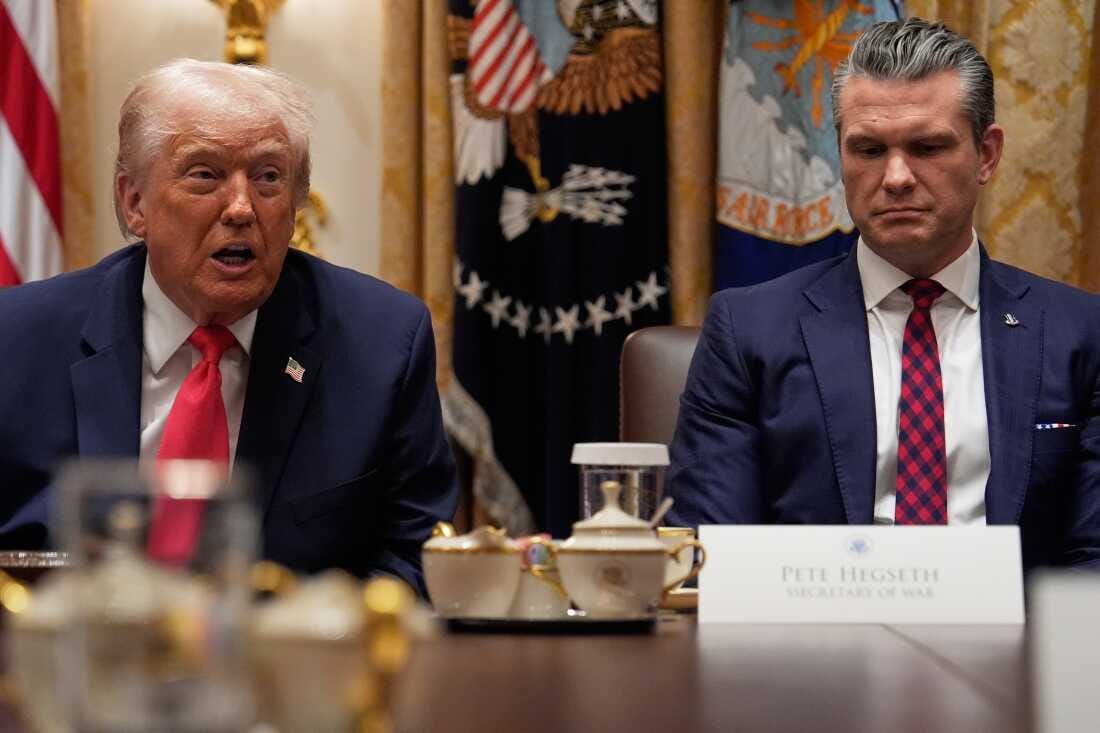
President Trump has a documented history of hostility toward the country specifically. Trump, as Al Jazeera and others reported, targeted both Somalia and the Somali-American community with inflammatory rhetoric, at one point calling the community “garbage.”
Against that backdrop, rights advocates did not see an isolated vetting failure. The Council on American-Islamic Relations, reacting directly to Artan’s case, was made obvious and was prosecutorial in its rebuke.
“Our nation should not ban anyone from our shores simply because of their race or their ethnicity,” said the Council. “That’s especially true of a coach or referee or anyone else coming to participate in the World Cup.”
International sports lawyer Khayran Noor told Al Jazeera that human rights organisations and advocacy groups have repeatedly raised concerns regarding immigration enforcement practices and the treatment of migrant communities in the US.
Asked the obvious question that no official answer addressed, a Somali member of parliament, Ilham Gasser, chose to expose with bluntness: if Artan truly had terror links serious enough to bar him, why were those concerns not identified during the visa process he had already completed?
A relevant question that goes beyond Artan’s case, showing a pattern of a kind: Iraq’s forward Aymen Hussein was held for hours at Chicago O’Hare; his team’s photographer was turned away outright. All of that was somehow anticipated.
A coalition of roughly 90 human rights organisations had warned FIFA months before the tournament that non-citizens in the United States, or those expressing political opinions the administration does not share, faced heightened risk of denial of entry, detention, or deportation.
The coalition described conditions in immigration detention facilities as “cruel” and “inhuman.” And Artan’s case was simply the one with the highest profile and the least plausible deniability—a man invited by the sport’s own governing body, accredited, vetted, and turned away anyway.
Which raises the bigger question that should have been asked of football’s governing body long before it was asked of CBP: what, exactly, had FIFA promised on Artan’s behalf or on behalf of anyone else in a similar situation?
Broken Assurances
The promise was specific, and it was made years in advance as part of the bidding process for the 2026 tournament, in compliance with FIFA’s own guidelines.
They required host governments to commit to what one legal analysis describes as a visa-free environment or facilitated visa procedures applied without discrimination by nationality for players, officials, media, and fans.
The U.S. government, for its part, gave FIFA assurances years ahead of the tournament that “eligible athletes, officials and fans from all countries around the world” would be able to attend.
A referee accredited by FIFA to officiate at the tournament is, by any reasonable reading of that commitment, exactly the kind of person it was designed to protect.
When the moment came to enforce it, FIFA did not enforce it. And the organisation’s statement on Artan’s case was a curious study in cavalier detachment:
“FIFA is not involved in host country immigration processes, including visa adjudications, and has been informed by authorities that Mr Artan’s status will not be changed at present,” the statement said.
“In line with previous FIFA events, a host government ultimately determines who receives a visa and who is admitted into their country.”
President Gianni Infantino, asked directly about the case, called it “unfortunate” and added: “We are not the kings of the world who can rule over governments and police forces. We are a sports organisation.”
It is a strange thing for the president of a sports organisation to say about a referee his own organisation spent three years selecting. It is a stranger thing still set against FIFA’s own published commitments.
Flexible Doctrine
Since 2016, FIFA’s Statutes have included Article 3, which stipulates that FIFA is fully committed to respecting human rights and to meeting its responsibilities under the UN Guiding Principles on Business and Human Rights.
The commitment exists because FIFA was shamed into adopting it; shamed by the Ruggie report that produced it.
The report was commissioned, as Human Rights Watch has documented, under pressure following corruption revelations and serious human rights abuses during preparations for the 2018 Russia World Cup and the awarding of the 2022 World Cup to Qatar.
FIFA pledged, ahead of this tournament specifically, that the 2026 World Cup would be different from those two. It adopted the UN Guiding Principles, published a Human Rights Policy, and said this would be the first World Cup with a genuine human rights strategy.
The pattern, in other words, is not new. Well, it is the pattern.
Qatar made promises about labour conditions and FIFA’s own human rights committee later concluded the organisation had “a responsibility” to compensate the families of migrant workers who died building World Cup infrastructure — compensation that has, to date, not been paid.
Russia hosted a tournament that doubled as a platform for the Kremlin while a crackdown on civil society continued around it.
Each time, the explanation offered was a variation on the same theme: football and politics do not mix, and FIFA is a sporting body, not a political one. Each time, the doctrine has proven flexible enough to permit almost anything except the one thing it might cost FIFA something to enforce.
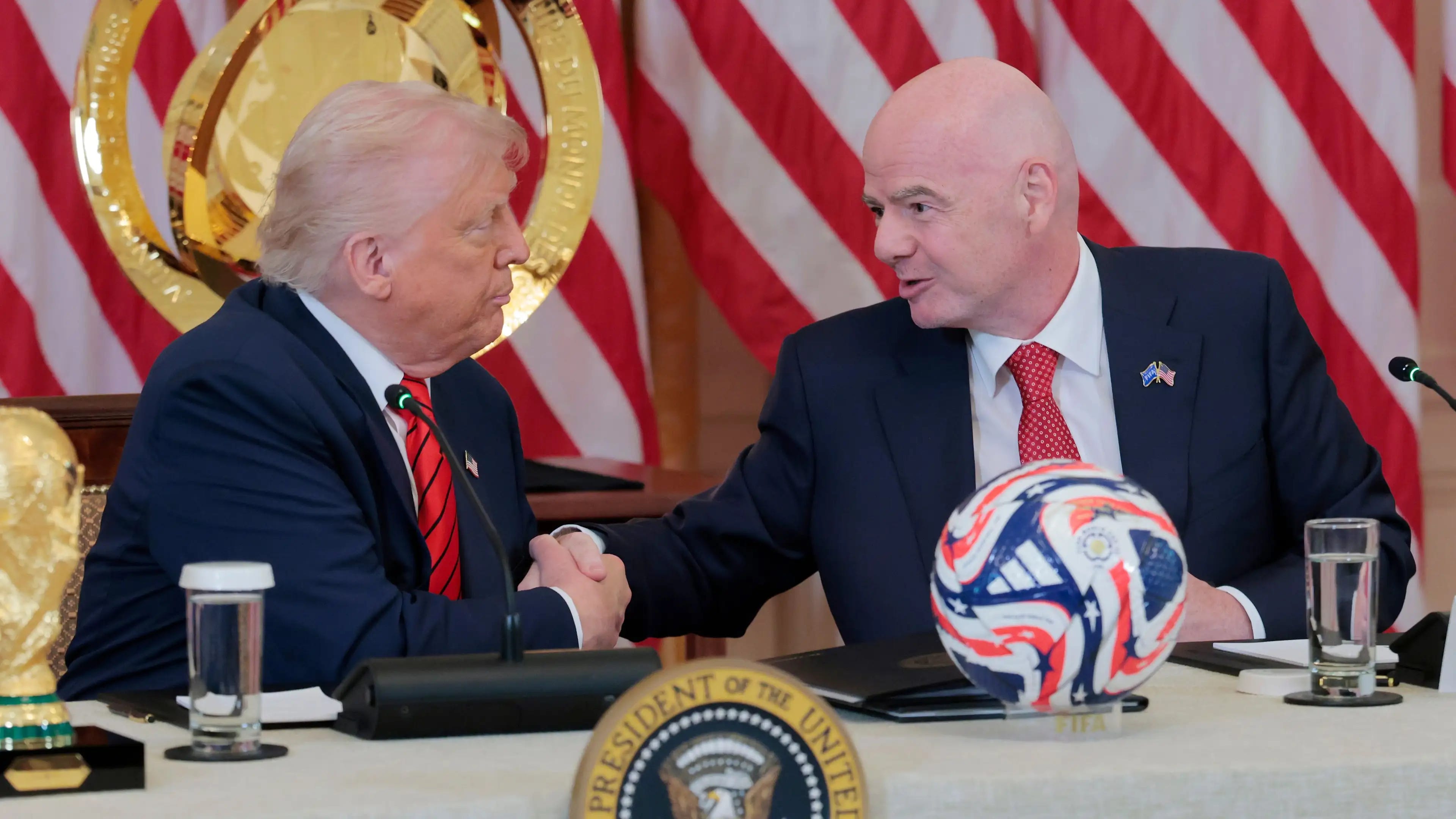
That flexibility looks rather different when set against Infantino’s own conduct over the preceding year. He has, in the words of one investigation, made being close to Trump a top priority.
Infantino lavished the U.S. president with praise, trophies, and a medal, and made pilgrimages to Mar-a-Lago and to the Trump National Doral golf club. And in August 2025, he presented Trump with a gold replica World Cup trophy in the Oval Office, calling it “for winners only.”
That gesture. One senior football official—granted anonymity to discuss the dynamics—described it as a snub of the idea that the trophy belongs to the sport rather than to any individual.
At the official December draw in Washington, Infantino presented Trump with a newly invented honour, the FIFA “Peace Prize,” which Human Rights Watch later described in a headline as FIFA’s “sportswashing peace prize.”
Defending the closeness of the relationship at a meeting in Northern Ireland, Infantino said plainly: “I think it is absolutely crucial for the success of a World Cup to have a close relationship with the president.”
Crucial enough, it turned out, that when an accredited referee from a country the president has called “garbage” was detained for eleven hours and sent home on an unproven terror allegation, the closeness produced nothing.
Not a phone call. Not a public objection. Not even, in the end, an explanation of why FIFA’s own pre-tournament guarantee of fair treatment for officials evaporated the moment it was tested.
Harder Than Outrage
FIFA might have stayed quiet. But Omar Artan did not have that luxury, and chose, instead, something harder than outrage.
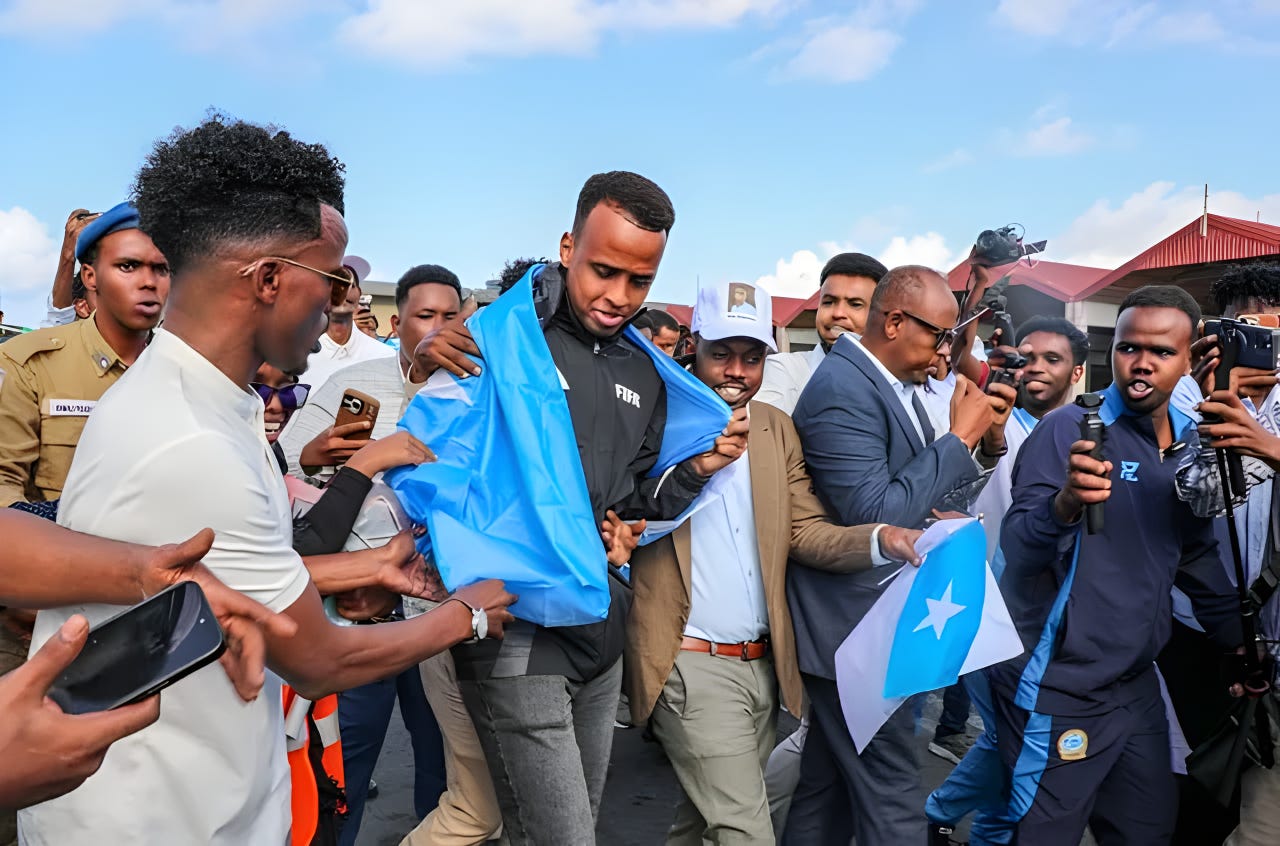
Two days after he was put on a plane back to Istanbul, the referee landed in Mogadishu to a welcome that NPR described as resembling a hero’s reception.
It was so large that, as NBC News observed, although Somalia is not competing at this World Cup, the scenes at the capital’s airport looked like the country had won the trophy itself.
The Somali Sports Ministry, soaked in the moment, expressed “deep regret” over his treatment; the Somali Football Federation pledged its full support; and, as one widely shared social media post put it, thousands filled a Mogadishu stadium simply to receive him.
What Artan said when he finally spoke in public carried none of the bitterness the moment would have justified.
“What happened has happened and it was fate,” he told reporters on arrival. “I am grateful for the support FIFA gave me.” To his own federation, he had already struck the same note days earlier:
“Despite the circumstances, I am in a positive mood and I am focused on the next challenges in my refereeing career. I would like to thank FIFA and CAF for all their support and I promise to keep my refereeing levels up as I concentrate on the future.”
And to the young Somalis watching a man who had been turned away at the very threshold of his life’s biggest assignment, he offered not despair but instruction:
“I will attend the next World Cup. We should strive for our country and defend it. We should never be disappointed. I love my country, and I encourage young people to continue pursuing their goals.”
There was no shout in any of it. No demand for an apology, no accusation levelled back at the country that had detained him for eleven hours and offered no reason. And it is precisely that absence of bitterness that did the most damage to the official story.
A man who had genuinely done what the anonymous administration source implied—associated with people plotting harm against the United States—does not, as a rule, respond to his exposure by thanking the people who exposed him and urging children to keep dreaming.
Artan’s composure was not merely dignified; it was evidentiary. It made the unproven allegation against him look smaller every time he declined to dignify it with anger.
It made the racial reading of his treatment—articulated plainly by CAIR, implied by the Somali parliamentarian’s unanswered question—look correspondingly larger. He did not need to argue that the decision was unjust.
His refusal to be embittered by it argued the point for him, in the court that actually mattered: international public opinion, where FIFA’s silence and the administration’s unproven claims were being weighed against a man behaving exactly as someone who has nothing to hide would behave.
Quite Revenge
Artan’s case will be remembered, in time, as one entry in a longer ledger. It sits alongside the documented heavy-handedness of immigration enforcement toward undocumented migrants of colour under the current U.S. administration.
It sits alongside the cases—reported across multiple outlets during this same period—of U.S. citizens caught up in mistaken-identity enforcement actions, and alongside an administration that has, separately, advanced the claim of a “white genocide” in South Africa.
White genocide? An inflammatory framing that inverts the actual history of apartheid so completely that it functions less as policy than as provocation. But that might be a digression.
But here is the point. An accredited football referee, expelled from the world’s largest sporting event on an allegation never substantiated, fits a pattern that critics did not have to invent. They only had to point at it.
But the more precise vindication—the one that did not require political argument at all—arrived from within football itself. Days after the United States sent him home, Europe’s governing body did the opposite.
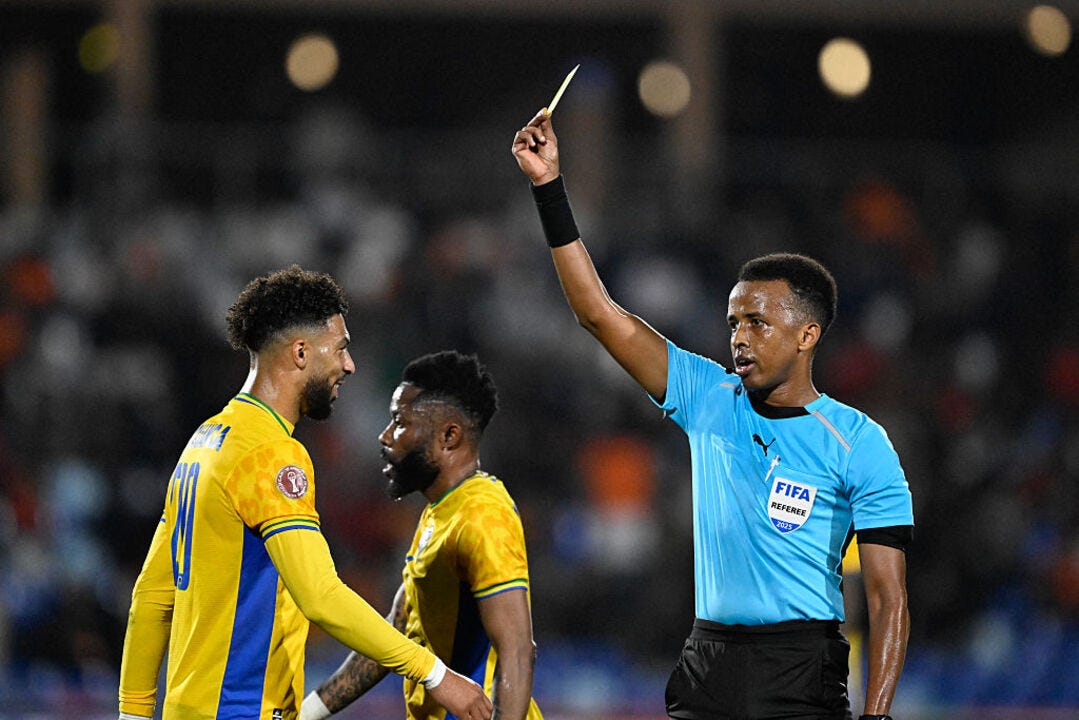
UEFA announced it had appointed Artan to officiate the 2026 Super Cup final between Paris Saint-Germain and Aston Villa, in Salzburg in August—the European confederation’s own marquee fixture. And UEFA President Aleksander Ceferin did not hedge.
“Omar Artan is an excellent young but already experienced referee, who has proven himself at the highest competition level of the Confederation of African Football,” Ceferin said.
“Football is made to connect people, and UEFA wants to show its respect to Omar and his outstanding officiating skills, which had earned him such a prestigious nomination.”
Set the two developments beside each other and the contrast does the arguing: One government, citing unproven and unreleased intelligence, decided that a vetted, accredited match official could not be trusted to set foot in the country. And one continental confederation, weeks later, decided that the same official was trustworthy enough to be handed one of European football’s biggest fixtures.
The vindication was not symbolic in the diminished sense of the word—a consolation prize, a participation medal.
It was the sport answering, in its own currency, the question the United States had refused to answer in any currency at all: is this man, in fact, fit to officiate football’s biggest stages?
UEFA’s answer arrived within days.
Washington’s has still not arrived.
Ultimately, Omar Artan will not officiate at this World Cup. As he said, he intends to be at the next one, and given what he has already done, there is no obvious reason to doubt him.
What he has already secured, before that next World Cup arrives, is something less measurable than an assignment and considerably harder to take away.
And it is that the public record now shows a man who was accused without evidence, expelled without explanation, and met that treatment with a composure his accusers never had to demonstrate themselves.
That, in the end, is the quiet revenge. Not anger returned for anger. Just a man, asked to prove he belonged, who simply kept being exactly who he already was. Meanwhile, he let everyone else’s behaviour speak for itself.
