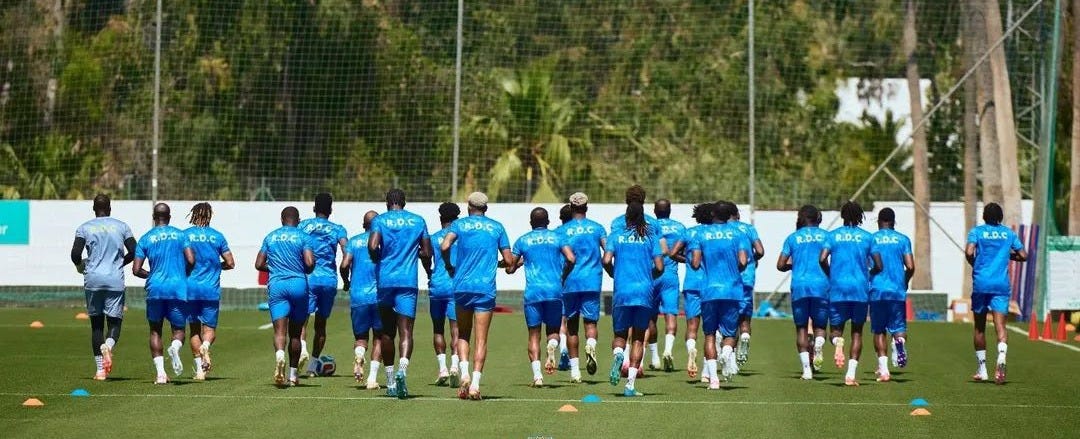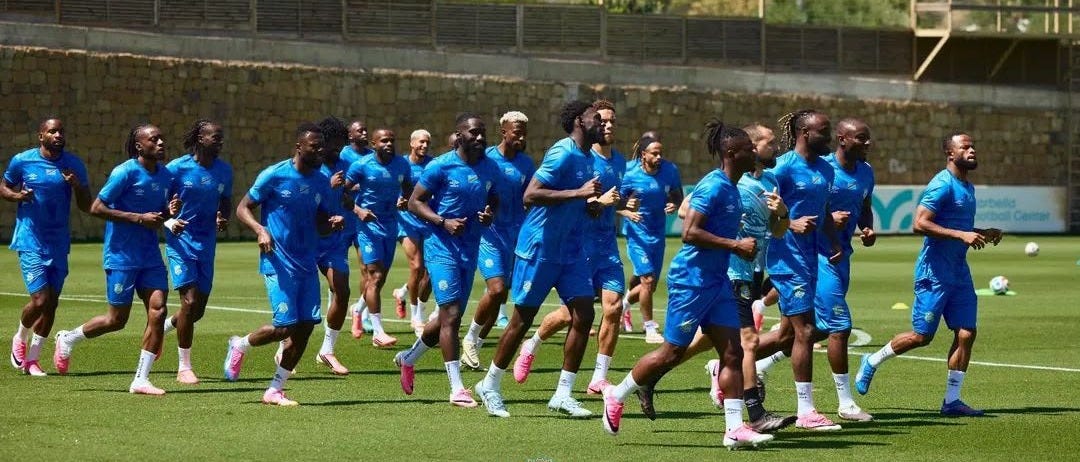

More than half a century after their only previous appearance at football’s biggest tournament, the Democratic Republic of Congo will return to the FIFA World Cup carrying the hopes of an entire nation.
Ranked 45th in the latest FIFA World Rankings, the Leopards arrive in North America determined to prove that their return to football’s biggest stage is no mere fluke.
It is the culmination of decades of waiting, rebuilding and believing that one day the Leopards would again take their place among the world’s elite. That moment has finally arrived.
For supporters across the country, this qualification for the 2026 tournament represents far more than a sporting achievement.
More than 50 years later, a new generation has the opportunity to write its own chapter in Congolese football history.
The Leopards’ return to the global stage ends one of the longest absences in World Cup history and has reignited excitement throughout a football-mad nation.
For many supporters, merely seeing the Congolese flag represented among the world’s best teams is a source of immense pride.

The Desabre Revolution

Much of DR Congo’s resurgence has been credited to head coach Sébastien Desabre.
Since taking charge, the French tactician has overseen a transformation in both results and mentality. Under his leadership, the Leopards have become a disciplined, organised and resilient side capable of competing against Africa’s strongest nations.
Desabre has built a team founded on collective effort rather than individual dependence, creating a culture that emphasises unity, tactical discipline and belief.
His greatest achievement came in guiding DR Congo back to the World Cup, ending a wait that had stretched across generations.
Players to Watch
At the heart of the squad stands captain Chancel Mbemba. The experienced defender has become one of the most respected leaders in African football and will be central to DR Congo’s hopes of competing against elite opposition.
In attack, much attention will focus on Yoane Wissa, whose pace, movement and finishing ability make him one of the team’s most dangerous players.
Arthur Masuaku provides experience and versatility from wide positions, while Meschack Elia’s speed and creativity offer another attacking outlet capable of troubling opposing defences.
Together, they form the core of a squad determined to prove that DR Congo belongs on football’s biggest stage.
Unlike some of Africa’s traditional heavyweights, DR Congo arrive at the tournament carrying relatively little external pressure.
Qualification itself has already been celebrated as a historic success.
However, recent progress has raised expectations among supporters, many of whom believe the Leopards are capable of more than simply making up the numbers.
Advancing beyond the group stage would rank among the greatest achievements in the nation’s football history and further validate the progress made under Desabre.
Across Africa, DR Congo are viewed as one of the tournament’s potential surprise packages.
Group Stage Challenge
The Leopards have been drawn into Group K alongside Portugal, Colombia and Uzbekistan.
Their campaign begins against Portugal on June 17 before meetings with Colombia on June 23 and Uzbekistan on June 27.
Portugal and Colombia enter the tournament with greater international pedigree, but DR Congo will believe they possess the organisation and determination required to challenge for qualification.
In an expanded World Cup format, opportunities can emerge quickly, and the Leopards will aim to seize every one of them, for the sake of the nation—as football occupies a special place in Congolese society.
From Kinshasa to Lubumbashi, the sport remains a powerful source of identity, pride and hope.
The return to the World Cup has united supporters around a shared dream: seeing the Leopards compete fearlessly against the world’s best and inspire a new generation of players.
After more than five decades away, DR Congo are finally back. Now comes the challenge of proving that their return is not the end of a journey, but the beginning of a new era.