
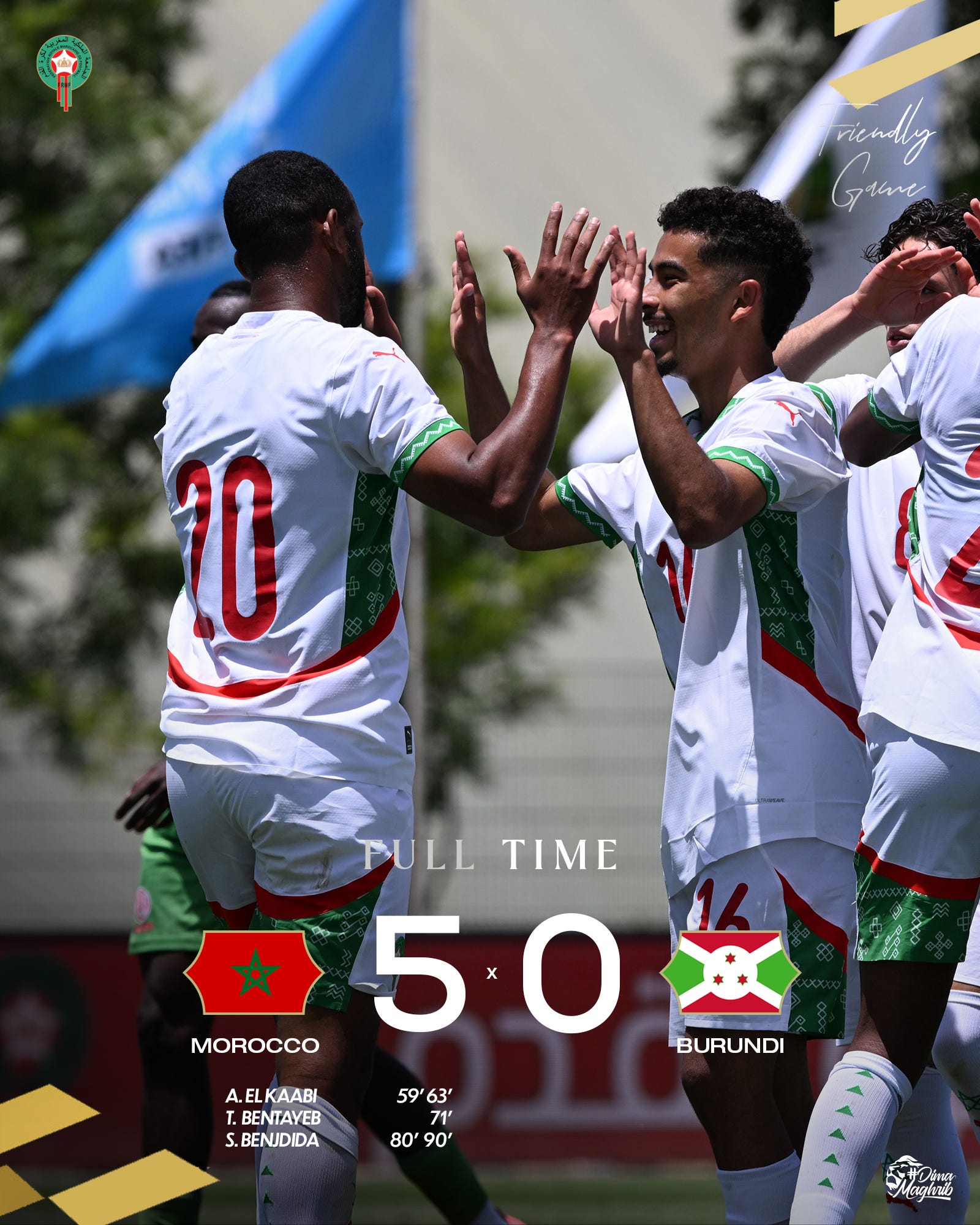
Morocco’s preparations for the 2026 FIFA World Cup have received a major boost following a convincing 5–0 friendly victory over Burundi and reports that highly rated teenager Ayyoub Bouaddi has chosen to represent the Atlas Lions over France.
The 18-year-old Lille midfielder is understood to have committed his international future to Morocco, further strengthening a squad already benefiting from a growing pool of Europe-based talent.
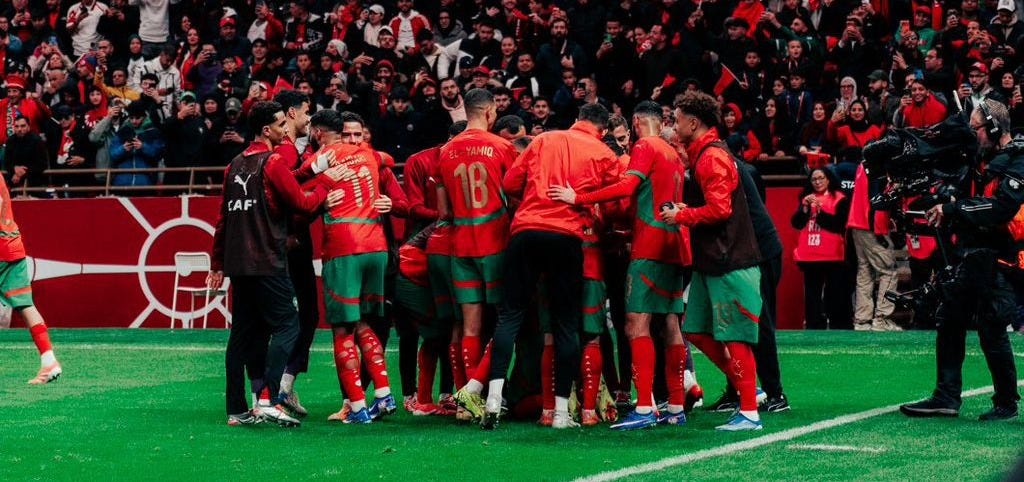
Morocco were held to a goalless first half before producing an impressive display after the break in the behind-closed-doors match at the Mohammed VI Football Complex.
Bentayeb and Youssef El Kaabi both scored twice, while Benjdida added a fifth goal. Sbaï and Maamma provided the assists as Morocco overwhelmed Burundi in the second half.
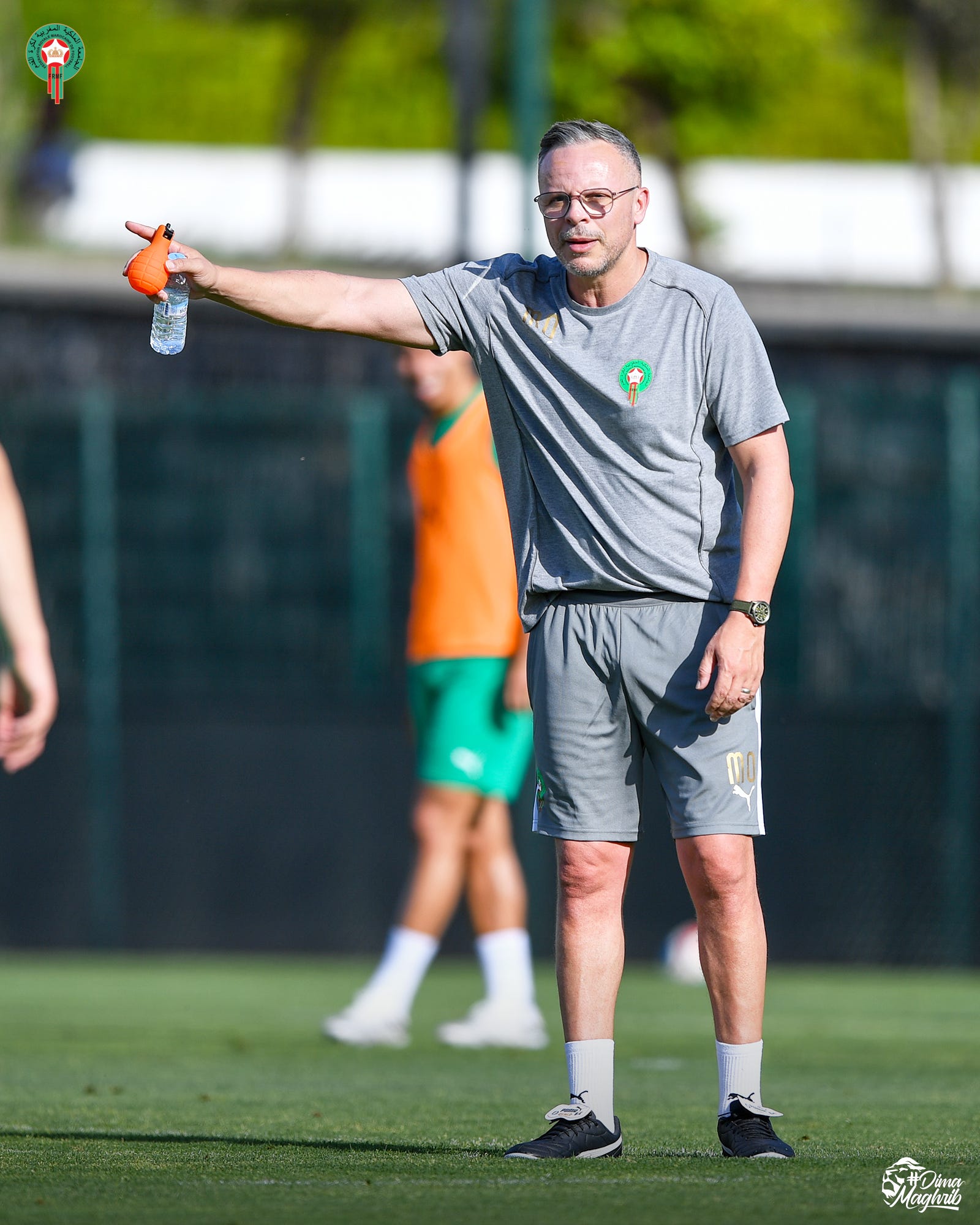
The match formed part of the team’s early preparations under head coach Mohamed Ouahbi, who took charge in March 2026 following the departure of Walid Regragui.

Further Attacking Quality
Morocco’s attacking options have also been strengthened by Brahim Díaz, who was among the standout performers at the most recent Africa Cup of Nations, finishing as one of the tournament’s top scorers.
His creativity and experience provide another major weapon for the Atlas Lions as they continue building toward the World Cup.
Morocco return to the World Cup in 2026 following their historic semi-final run in Qatar 2022, where they became the first African nation to reach the last four of the tournament.
This time, however, the Atlas Lions face another difficult challenge after being drawn alongside Brazil, Scotland, and Haiti in Group C.
Morocco will open their campaign against Haiti before facing Scotland and five-time world champions Brazil in what is expected to be one of the most anticipated matches of the group stage.
The clash against Brazil will provide a major test of Morocco’s progress since their breakthrough tournament in Qatar, while Scotland are expected to offer another physically demanding encounter.
Growing Expectations
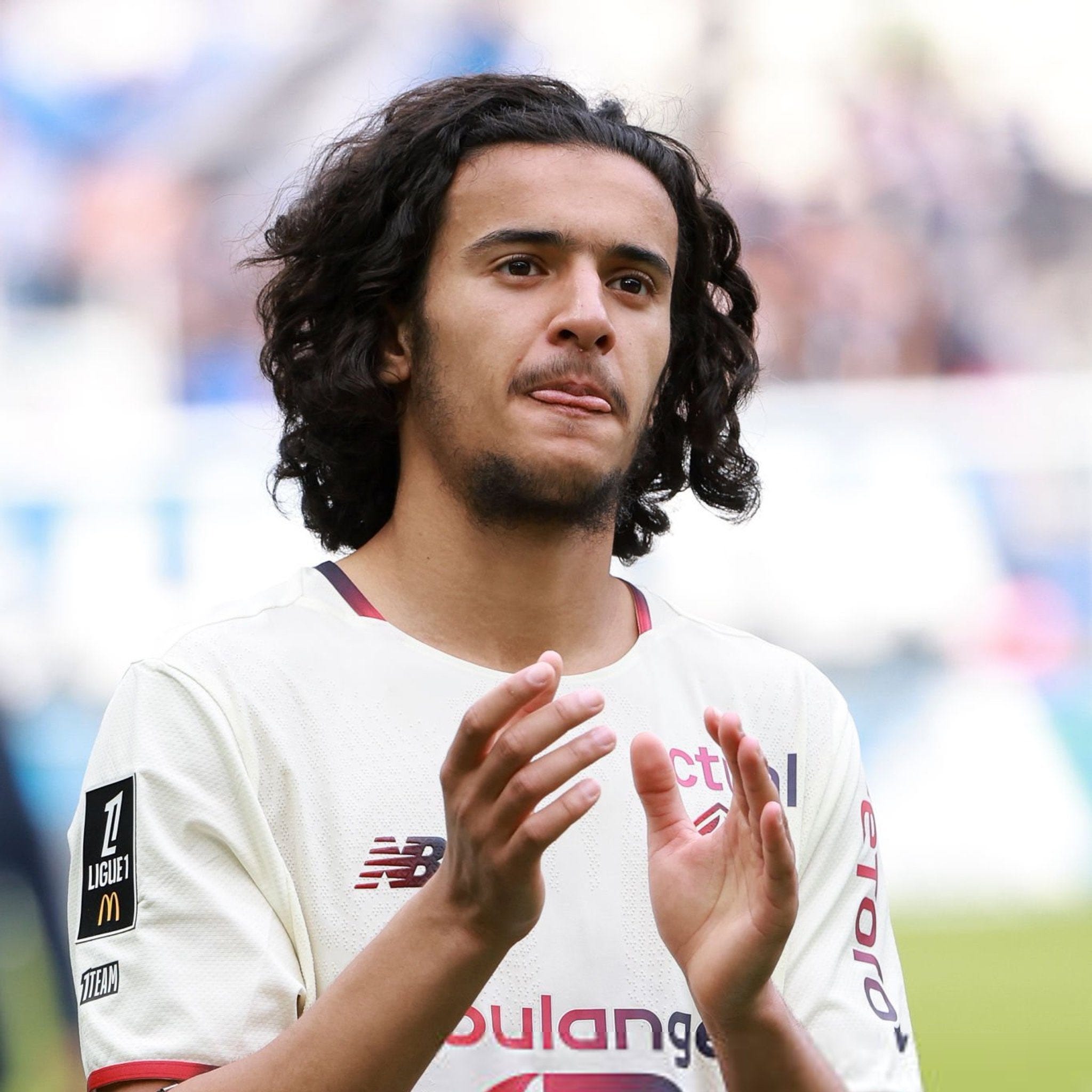

Bouaddi’s reported decision to represent Morocco highlights the federation’s continued success in attracting dual-nationality talent developed in Europe.
The move reflects the country’s long-term strategy of building a deeper and more competitive national team capable of competing consistently at the highest level.
Morocco’s growing influence in world football is also reflected in its role as co-host of the 2030 FIFA World Cup alongside Spain and Portugal, further cementing the country’s place on the global football stage.
With a World Cup semi-final already achieved, a talented new generation emerging, and established stars continuing to perform at the highest level, expectations surrounding Morocco are now higher than ever.
For the Atlas Lions, the challenge is no longer simply making history—but proving they can remain among football’s elite.