


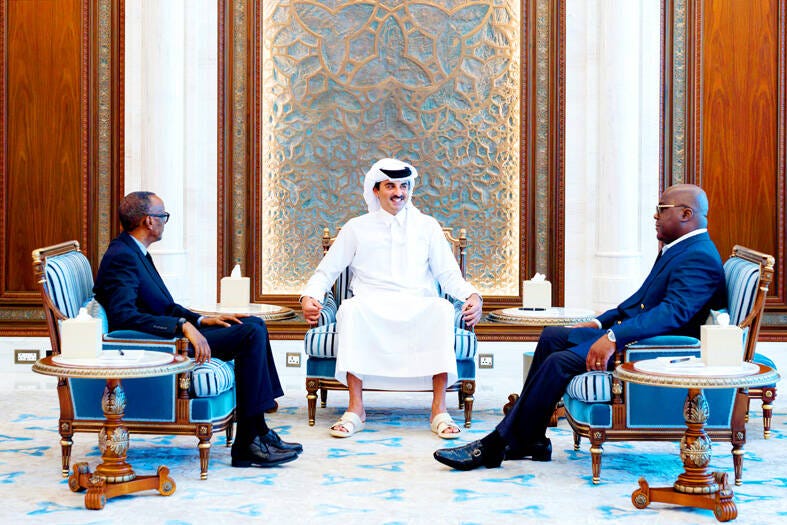

The recent agreement signed by the Government of the Democratic Republic of Congo (DRC) and the Alliance Fleuve Congo/March 23 Movement (AFC/M23) in Doha, the capital of Qatar, has been described by many observers as both tactical and deceptive. As Winston Churchill remarked during World War II,
“In wartime, truth is so precious that a bodyguard of lies should always attend her,” — Winston Churchill, Former British Prime Minister (1943).
Deception remains a fundamental and time-tested defensive — and offensive — strategy in warfare, used to enhance force protection, preserve combat power, and influence adversaries’ decisions. From ancient history to modern conflicts, its principles endure, evolving in tandem with technology and tactics.
During the American Revolution (Siege of Boston), American forces deceived the British by filling casks with sand to hide ammunition shortages under George Washington, who later became the first U.S. President. In World War II, Allied forces executed Operation Bodyguard/Fortitude, misleading Germany on the true location of the D-Day landing by employing dummy equipment and fabricated radio traffic, diverting their focus to Pas-de-Calais instead of Normandy.
Even today, deception remains central to conflict. In the Russia–Ukraine war, Ukraine has used decoys to waste Russian precision missiles and obscure the location of key assets. The ancient Chinese understanding of warfare, encapsulated by Sun Tzu, reinforces this reality:“All warfare is based on deception,” — Sun Tzu, The Art of War (5th Century BC).


The Insurgents’ Strategy of Buying Time
Across the region, many peace agreements have served less as pathways to reconciliation and more as time-buying strategies for insurgent groups. The 1985 Nairobi Agreement between Uganda’s military government under Gen. Tito Lutwa and the National Resistance Army (NRA) promised joint governance, a ceasefire, and integration of fighters. Yet the agreement collapsed due to mistrust, disagreements, and — most importantly — the NRA’s primary objective of seizing power, which it achieved two years later.
Deception has long been a weapon of war. From the Greek Trojan Horse to modern battlefield tactics, misleading the adversary has been a strategic art form to be studied, practiced, and adapted to evolving conditions.

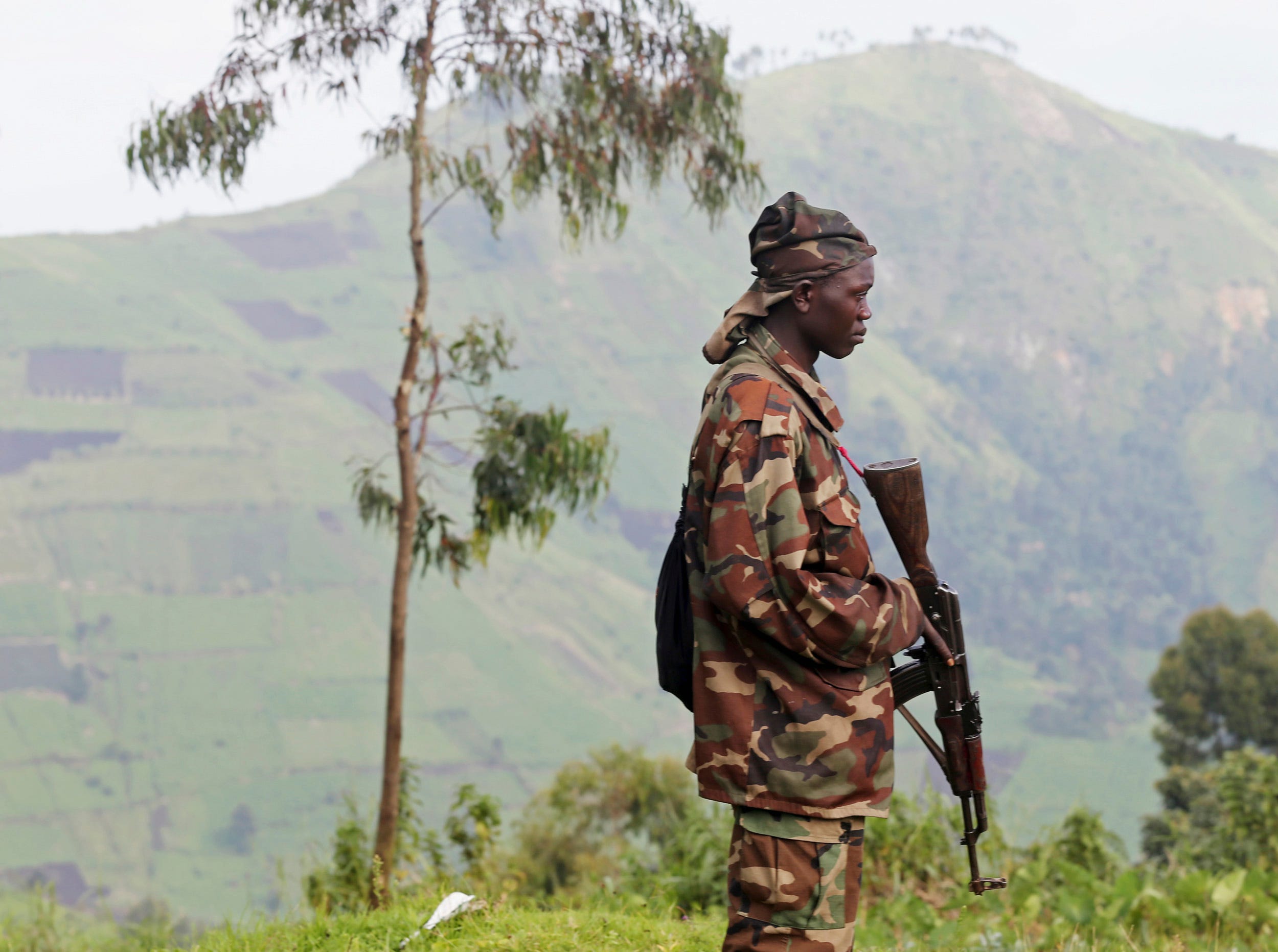
Kagame and the Metaphor of the Volcano
Recently, the President of Rwanda described Eastern Congo — particularly Goma — as a “volcanic area,” meaning a region where destabilizing rebel movements originate. Western military institutions have long taught deception as part of strategic doctrine. At Fort Leavenworth in 1947/48, deception was formalized in military curricula, including:
Returning to regional history, the 1993 Arusha Accord between the RPA/RPF and the Rwandan government sought to end the civil war and establish a broad-based transitional government. Despite its noble intentions, both sides were secretly preparing for renewed conflict.
The 600 RPA soldiers authorized to remain in Kigali by the end of 1993 reportedly increased beyond agreed levels, while the Habyarimana government simultaneously purchased new military hardware and expanded recruitment. What was presented as a peace process became, in practice, a period of strategic positioning — a prelude to the tragic escalation of violence targeting Tutsis and moderate Hutus, culminating in the 1994 genocide after President Habyarimana’s assassination on 6 April.

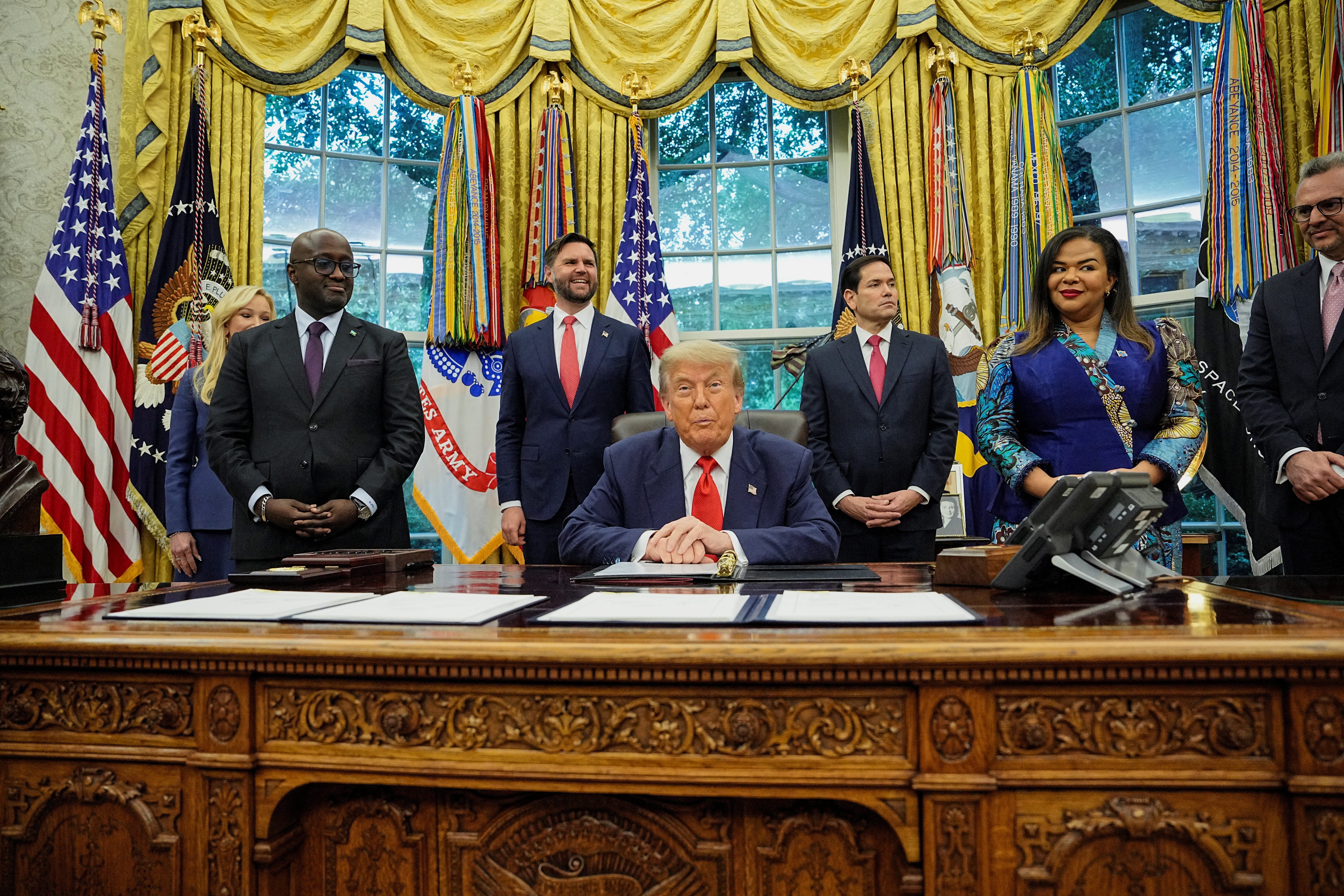
The Washington Peace Agreement: Old Wine in New Bottles
The Rwanda–Congo Peace Agreement, commonly referred to as the Washington Peace Agreement, scheduled to be signed on December 4th, 2025, at the White House under the watch of President Trump, appears to follow the pattern of earlier regional accords. A similar agreement was signed in 1999 in Lusaka under President Joseph Kabila. According to the United States Institute of Peace, the Lusaka Accord required Rwanda to withdraw its forces from Congolese territory, while Congo was obligated to dismantle ex-FAR and Interahamwe elements operating within its borders. These long-standing issues — mutual accusations of supporting hostile groups — remain central to tensions between Rwanda and Congo. The actors themselves also remain largely unchanged, giving the impression of “old wine in new bottles.”

Major Obstacles to the Peace Process
Several core challenges undermine the current peace agreement:
• M23’s Alleged Proxy Status:
Western governments and UN agencies accuse M23 of operating as a proxy force for Rwanda, raising questions about its ability to independently uphold the agreement.
• Rwanda’s Security Demands:
Kigali insists that Congo halt all financial and military support to the FDLR and remaining Interahamwe elements — groups implicated in the 1994 genocide and still active against Rwanda.
• Deep-Seated Mistrust:
Repeated failures of past agreements have eroded trust between the two nations, complicating the enforcement of any new terms.
• External Economic Interests:
Provisions involving U.S. access to critical minerals further complicate the geopolitical landscape, introducing actors whose priorities may diverge from regional stability.

A Fragile and Precarious Peace
It could be submitted that the current peace is ongoing, yet highly precarious and fragile — functioning more as a diplomatic process than a genuine resolution of conflict. Its durability depends not only on international pressure but on both governments addressing the root causes, acting on concrete commitments, guaranteeing Rwanda’s security concerns, and confronting the pressing humanitarian issues affecting civilians.
