


History rarely destroys nations through force alone. More often, it is the shocks they fail to anticipate—or fail to interpret—that alter their trajectory.
Such moments of rupture reveal less about the strength of those applying pressure than about the strategic maturity of those receiving it.
Collapsed Illusion
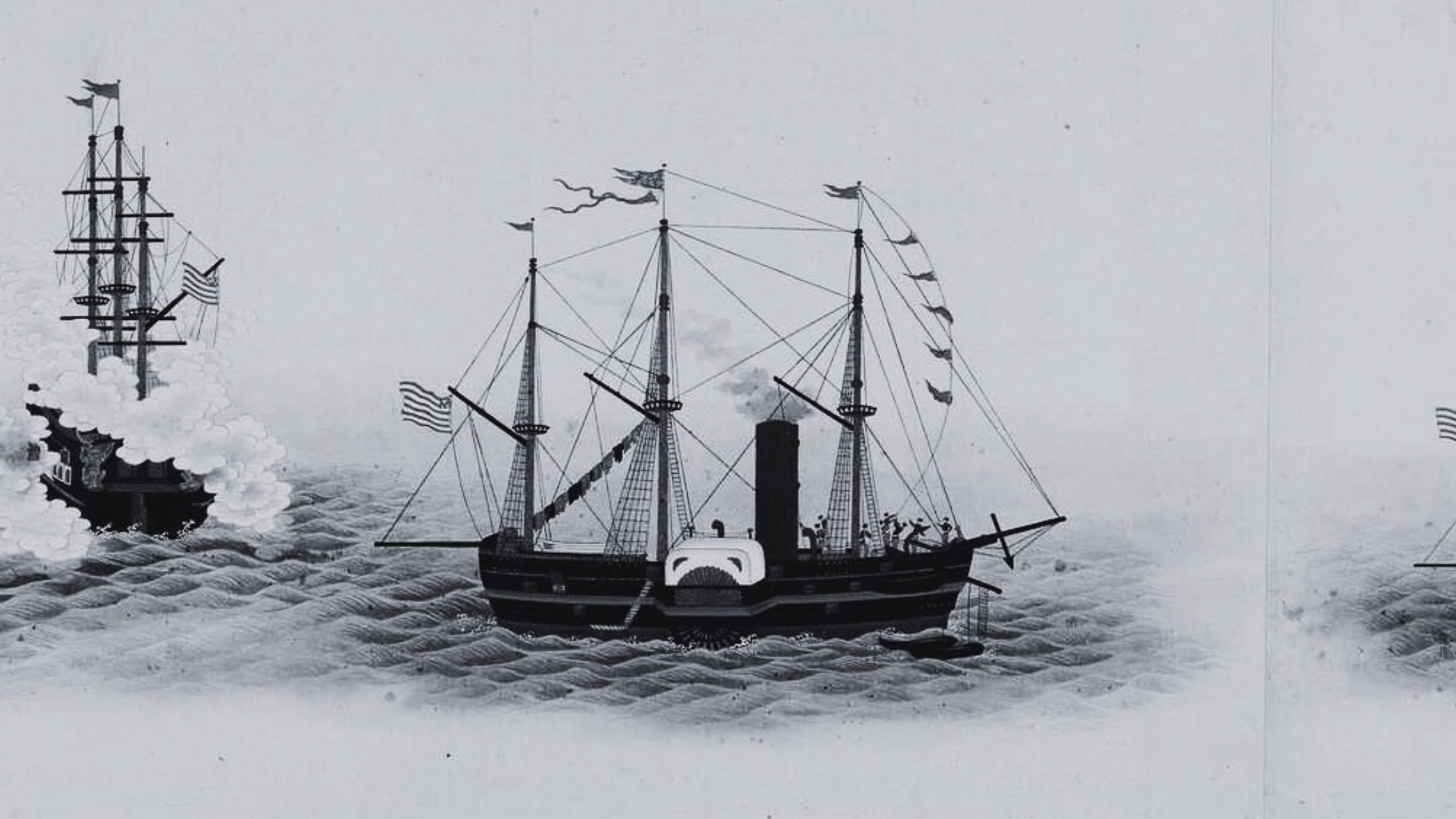
When American “black ships” appeared off Japan’s shores in 1853, they delivered a profound psychological jolt.
For centuries, Japan had lived under the belief that distance and isolation could shield it from the world’s turbulence. That illusion collapsed overnight.
Yet the shock did not produce panic, nor did it trigger reckless confrontation. Instead, Japan made a choice that remains exceptional in history:
It accepted reality without surrendering identity; it opened itself without dissolving into the outside world.
Behind that decision lay a crucial insight—that strategic patience can be a higher form of power, and that rigid resistance to change often leads more surely to decline than clear-eyed adaptation.
Japan’s transformation during the Meiji era was not a capitulation to foreign pressure, but a controlled recalibration of its place in the world.

Enduring Relevance
This lesson remains strikingly relevant. The most successful states are not those that avoid shocks, but those that absorb and interpret them wisely.
Strategic patience does not mean passivity; it means creating room to think, to evaluate, and to act with perspective.
Too often, nations confronted with disruption respond emotionally—mistaking pride for strength, or rigidity for sovereignty.
History suggests the opposite: survival and influence tend to favour those who adapt without losing their core identity.
Today’s global landscape is again marked by destabilising shocks. Leadership styles in several parts of the world have shifted toward unpredictability, towards abruptness, and open challenges to established norms.
While such approaches may project decisiveness, they also erode the frameworks that sustain international order.
Rules only protect when they are respected. Once ignored, their shield weakens for everyone.
This raises a pressing question: do states still possess the political, cultural, and psychological space to convert pressure into opportunity?
The Case for a Shift
Iran offers a striking example. Decades of sanctions, suspicion, and geopolitical rivalry have narrowed its room for manoeuvre and deepened defensive reflexes.
Engagement with the outside world is often framed domestically as concession rather than strategy.
Yet, Japan’s experience reminds us that even deeply closed systems are not condemned to remain so.
Transformation becomes possible when change is presented not as surrender, but as a means of preserving autonomy in a changing environment.
Historical parallels, of course, have limits. Commodore Matthew Perry represented coercive power, but also strategic clarity.
His objectives were defined; the pressure he applied followed a readable logic. That coherence gave Japan the space to choose transformation over endless escalation.
Outlook of Chaos
Today’s environment is arguably more dangerous—more chaotic. Stable frameworks are weaker, reactions are faster, and media cycles compress decision-making into moments.
Today, Power has become personalised, diplomacy theatrical, and crises instantaneous.
Under such conditions, long-term thinking—the oxygen of strategic wisdom—is increasingly scarce.
And without long-term thinking, neither durable peace nor meaningful strategy can survive.
Interpreting the Shock
The real lesson of the black ships is not about intimidation. It is about interpretation.
Shocks do not automatically lead to catastrophe. Catastrophe arises when societies fail to assign meaning to disruption.
One nation sees humiliation; another sees a warning. One hardens; another adapts.
At a time when regional tensions risk spiralling into wider conflict through miscalculation or pride, diplomacy urgently needs what it has been losing: restraint, historical awareness, and the courage to embrace nuance over spectacle.
Nineteenth-century Japan leaves us with a final reminder. True power does not lie in delivering the shock.
True power lies in absorbing it, navigating it, and emerging with one’s future intact.