



Ethiopia has defended its renewed military offensive in the northern Tigray region, accusing Eritrea of sending troops and heavy military equipment across the border while supporting Tigrayan rebels seeking to overthrow Prime Minister Abiy Ahmed’s government.
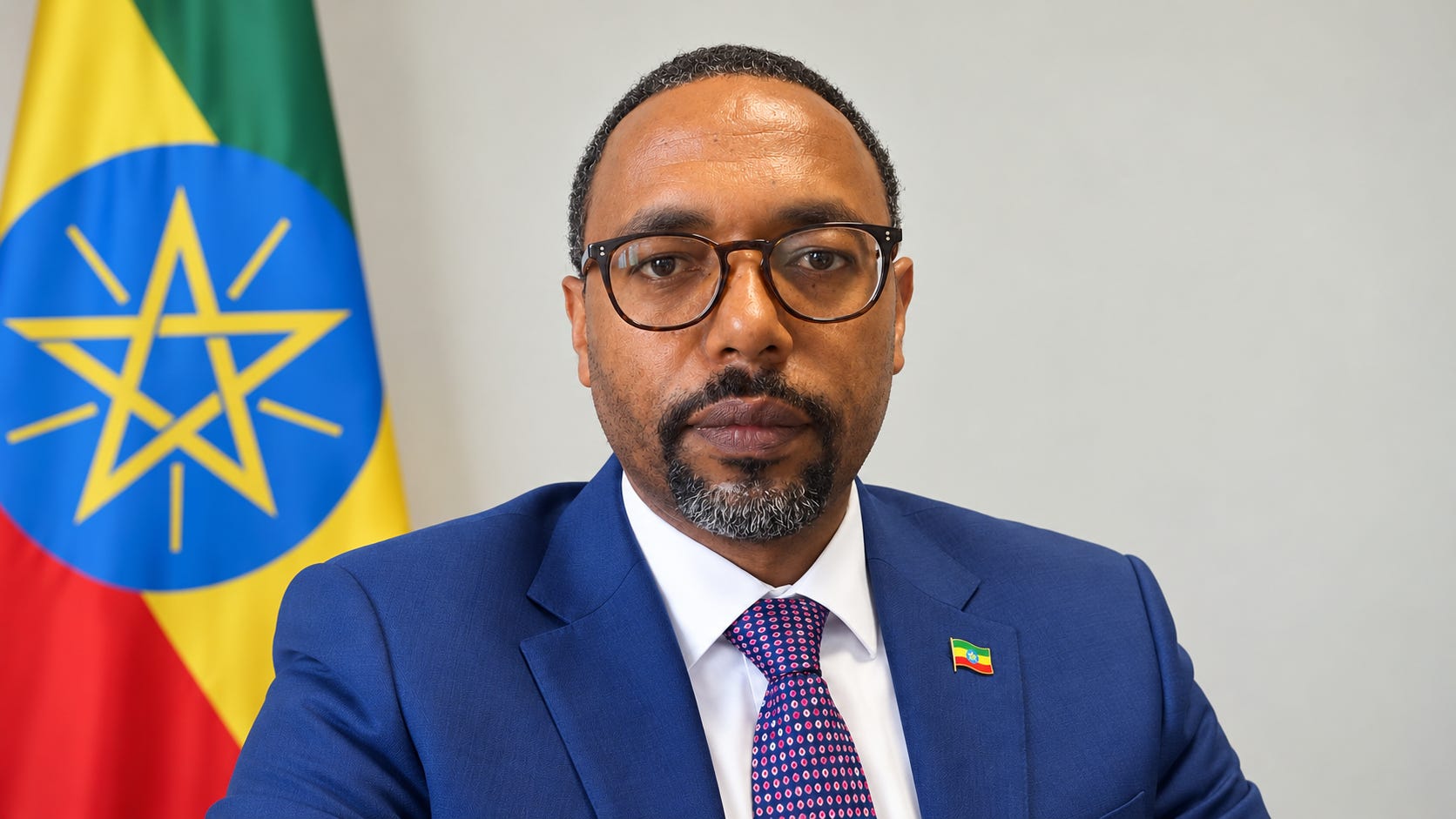
In a detailed written response to questions submitted by The African Gazette, Chargé d’affaires at the Ethiopian Embassy in Paris, Ambassador Sebsibe Bade Adbeb, said the federal government had exercised maximum restraint in the face of repeated provocations and remained committed to resolving disputes through dialogue.
The ambassador described the military operations as a legitimate response to attacks on federal forces and what he characterised as a foreign invasion of Ethiopian territory.
The accusations come amid growing fears that renewed fighting in Tigray could escalate into a wider confrontation involving Ethiopia and Eritrea, whose historic reconciliation in 2018 had raised hopes of lasting peace in the Horn of Africa.
Eritrea has denied supporting the Tigrayan rebels. Its government has not provided a response to the specific allegations contained in the ambassador’s written statement.
Pretoria Peace Agreement: Who bears responsibility?
The Pretoria agreement of 2022, negotiated under African Union auspices, ended two years of devastating conflict between Ethiopian federal forces and the Tigray People’s Liberation Front (TPLF).
Ambassador Adbeb maintained that the federal government had fulfilled its commitments under the Pretoria Agreement by restoring public services, rehabilitating damaged infrastructure and supporting the establishment of an interim regional administration.
According to the ambassador, banks reopened, telecommunications and electricity supplies resumed, and humanitarian assistance continued reaching communities affected by the war.
He accused hardline elements within the TPLF of refusing to disarm in accordance with the agreement and of interfering with humanitarian aid deliveries.
The ambassador further alleged that these elements moved against the interim regional administration in April 2026, formed alliances with other armed groups, and established military cooperation with Eritrea, in flagrant breach of the Pretoria Agreement's stipulations.
He said the latest escalation followed attacks on Ethiopian federal forces in September.
The battle for Mekelle
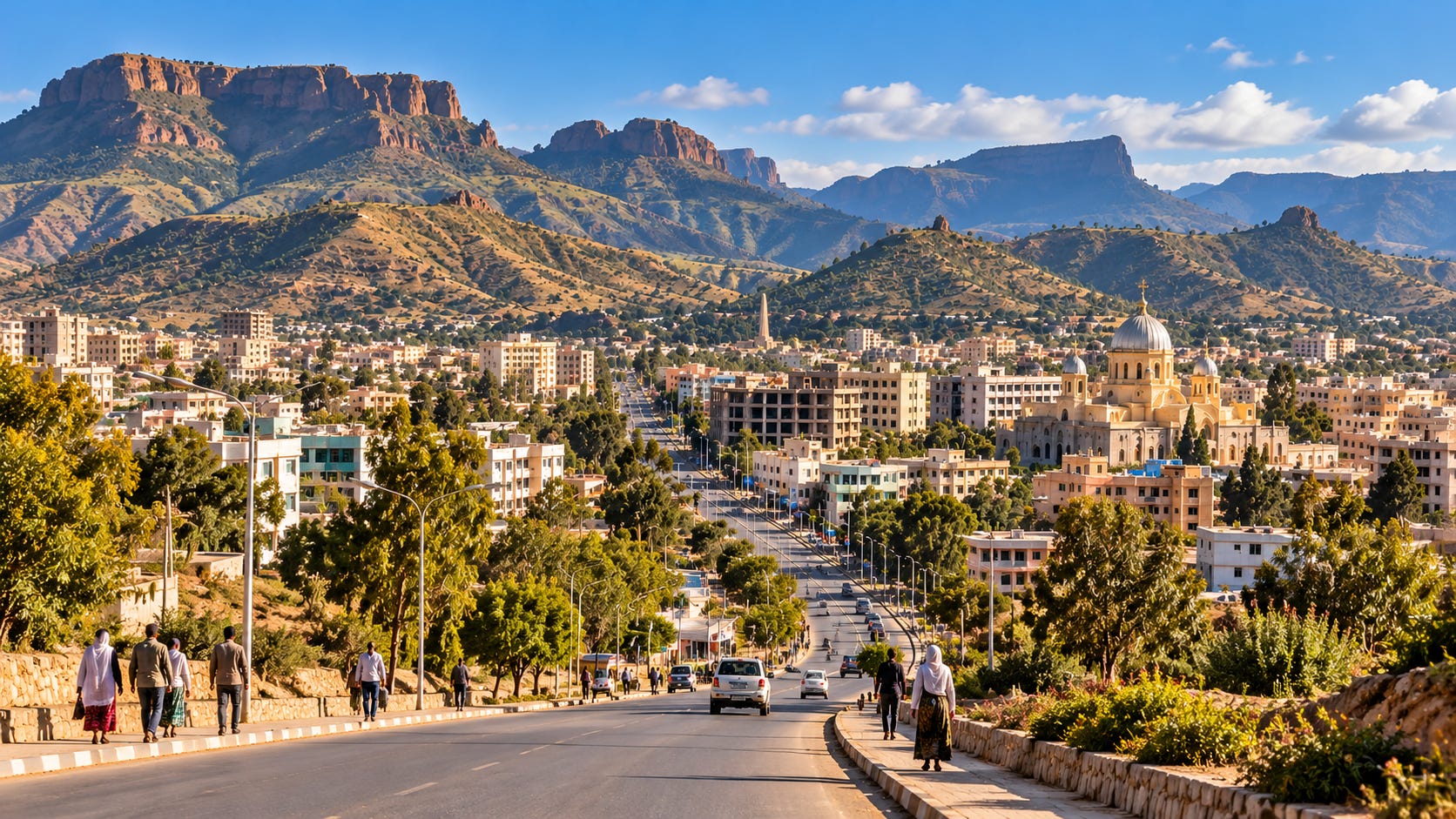
Ethiopian federal forces regained control of Mekelle, the capital of Tigray, in early October following a military offensive against TPLF forces.
Ambassador Adbeb portrayed the operation as a significant military success, saying government troops had inflicted substantial losses on their opponents and forced them to retreat towards the Eritrean border.
Independent reporting has confirmed that federal forces entered Mekelle after Tigrayan fighters withdrew, although the extent of battlefield casualties remains difficult to establish.
The TPLF has indicated that its withdrawal from the regional capital does not mean the end of its military campaign.
Following the operation, Prime Minister Abiy Ahmed appointed a caretaker administration to govern Tigray for six months, with a mandate to restore security, facilitate humanitarian assistance and prepare for regional elections.
The ambassador said the federal government remained focused on restoring normal life in Tigray and ensuring the delivery of humanitarian assistance.
Ethiopia accuses Eritrea of crossing its borders
The ambassador alleged that Eritrean forces, supported by heavy artillery and mechanised military equipment, had crossed into Ethiopian territory at several locations, including Rama, Sheraro, Badme and the Adigrat–Zalambessa corridor.
He also accused Eritrea of helping reorganise TPLF fighters who had retreated towards the border.
“The fact that Eritrean troops accompanied by heavy artillery and military equipment crossed deep into the Ethiopian territory in every direction in its northern border is undeniable,” the ambassador wrote.
He maintained that Eritrea’s involvement posed a direct threat to the country’s sovereignty.
Reports from international news agencies have indicated the presence of Eritrean troops inside northern Ethiopia, although the full scale of their deployment and the extent of their cooperation with Tigrayan armed groups remain difficult to verify independently.

Addis Ababa demands Eritrean withdrawal
Despite the escalating military confrontation, Ambassador Adbeb insisted that Ethiopia had repeatedly sought a diplomatic solution.
He said the Ethiopian government had invited Eritrea to engage in dialogue but had received no positive response.
“Now that the Eritrean forces remain in Ethiopia’s sovereign territory, Ethiopia demands that the Eritrean troops immediately and completely withdraw from its land and stop meddling in the internal affairs of the country,” he stated.
The ambassador also called on the international community to condemn what Addis Ababa considers an act of aggression.
He argued that Ethiopia’s military response was consistent with its right to self-defence under international law.
“What Ethiopia is doing is exercising its legitimate right to defend itself and its responsibility to protect its land and people from foreign invasion in accordance with international law. No more, no less.”
Economic cooperation or confrontation?
Landlocked since Eritrea gained independence in 1993, Ethiopia has repeatedly emphasised the economic and strategic importance of reliable maritime access.
Prime Minister Abiy Ahmed has advocated economic cooperation with Eritrea as an alternative to military confrontation, including the possibility of arrangements that could improve Ethiopia’s access to regional ports.
Eritrea, however, has expressed concerns about Ethiopian ambitions regarding the port of Assab and its implications for Eritrean sovereignty.
Ambassador Adbeb emphasised Ethiopia’s commitment to cooperation with neighbouring countries.
“Good neighbourliness guides the foreign policy of Ethiopia,” he wrote, arguing that the country’s prosperity was closely connected to the stability and development of its neighbours.
Humanitarian concerns and the danger of another war
Following the 2020-2022 conflict, thousands of people remain displaced, while humanitarian organisations continue to raise concerns about food insecurity, access to essential services and the safety of civilians.
Ambassador Adbeb said the federal government was continuing humanitarian relief operations and had made assistance to affected communities a priority.
He also claimed that residents of Tigray had welcomed the latest political and military developments.
The appointment of a caretaker administration in Tigray is a major step in bringing about peace and stability to the region and restoring public services, he added.
Can diplomacy prevent a wider regional conflict?
The African Union, which brokered the Pretoria Agreement, faces renewed pressure to help prevent another prolonged conflict in northern Ethiopia.
The deterioration in relations between Addis Ababa and Asmara has also raised concerns about the wider implications for the Horn of Africa, where longstanding rivalries involving Sudan, Egypt and other regional actors continue to complicate security and diplomatic relations.
Ambassador Adbeb reiterated Ethiopia’s willingness to pursue dialogue but offered no specific timetable for renewed negotiations.
For now, Ethiopia’s government appears determined to consolidate its military gains in Tigray while demanding the withdrawal of Eritrean forces from areas it says they have occupied.
The ambassador’s response makes clear that Addis Ababa considers its latest operations an exercise of national self-defence.
With armed conflict continuing and diplomatic relations between Ethiopia and Eritrea severely damaged, the prospect of a wider regional conflict remains a serious concern.
