


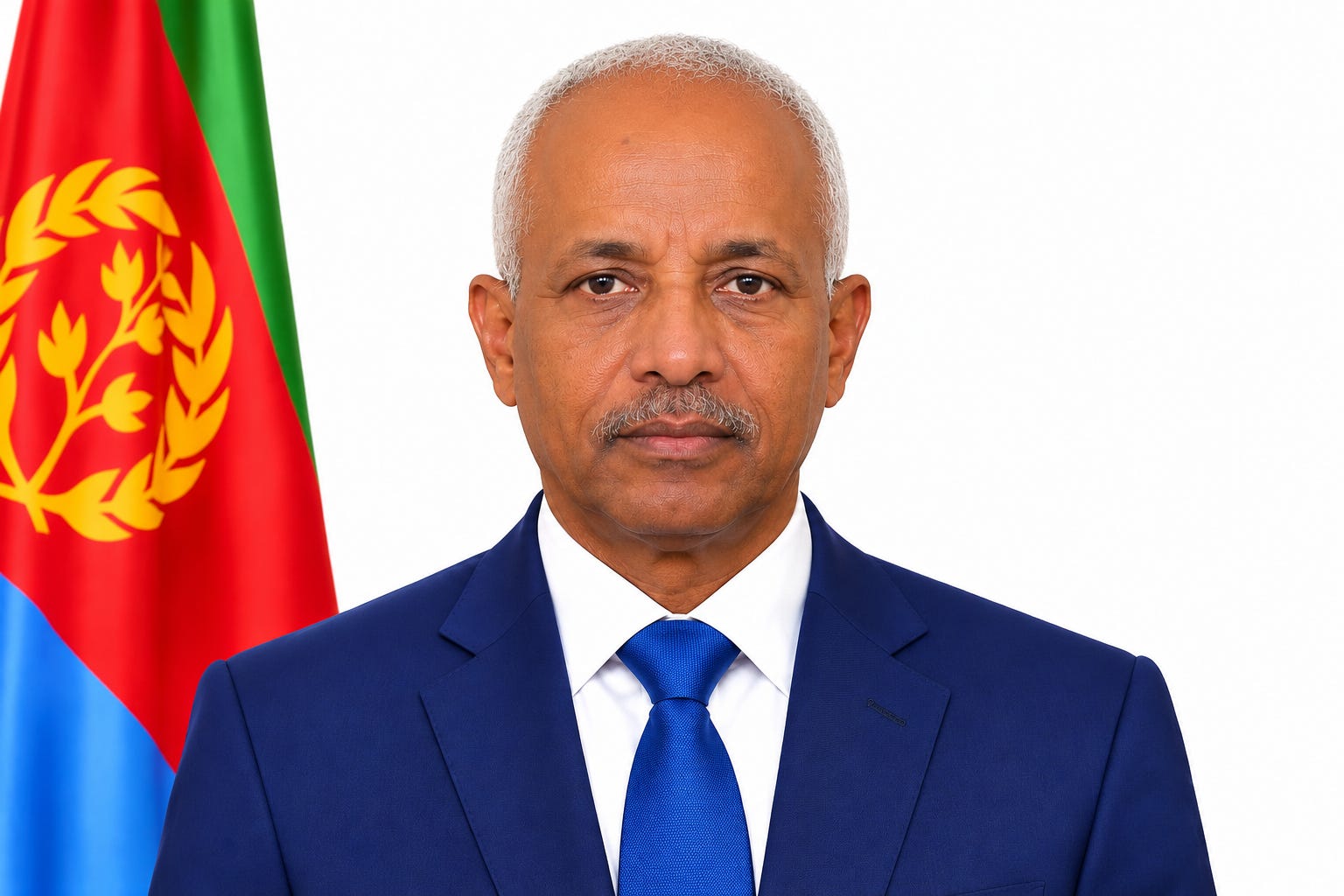

Eritrea has strongly rejected Ethiopia’s allegations that its troops have crossed into Ethiopian territory, accusing Addis Ababa of using what it describes as unfounded claims to justify an increasingly confrontational policy towards its northern neighbour.
In an official written response to The African Gazette, Yafet Zereou, Head of Political, Diplomatic and Media Affairs at the Eritrean Embassy in the United Kingdom and Ireland, challenged statements made by Ethiopia’s representative in Paris, Ambassador Sebsibe Bade.
The exchange comes amid renewed fighting in Ethiopia’s northern Tigray region and growing fears of another conflict between the two countries.
Eritrea denies crossing into Ethiopian territory.
Ambassador Sebsibe Bade had accused Eritrean forces of crossing the northern Ethiopian border with heavy artillery and military equipment.
“The fact that Eritrean troops, accompanied by heavy artillery and military equipment, crossed deep into the Ethiopian territory in every direction in its northern border is undeniable,” he told The African Gazette.
Eritrea categorically rejects that account.
“Neither the media outlets nor the Ethiopian government has been able to produce any evidence to back their claims,” Zereou responded.
He challenged Addis Ababa to provide precise geographical evidence of the alleged incursions.
“The fact of the matter is that the Ethiopian government, by accusing Eritrea of breaching its sovereignty, is trying to divert attention from its aggressive war-mongering rhetoric,” he said.
Zereou also questioned why governments with access to satellite imagery had not publicly demanded an Eritrean withdrawal in their recent statements.
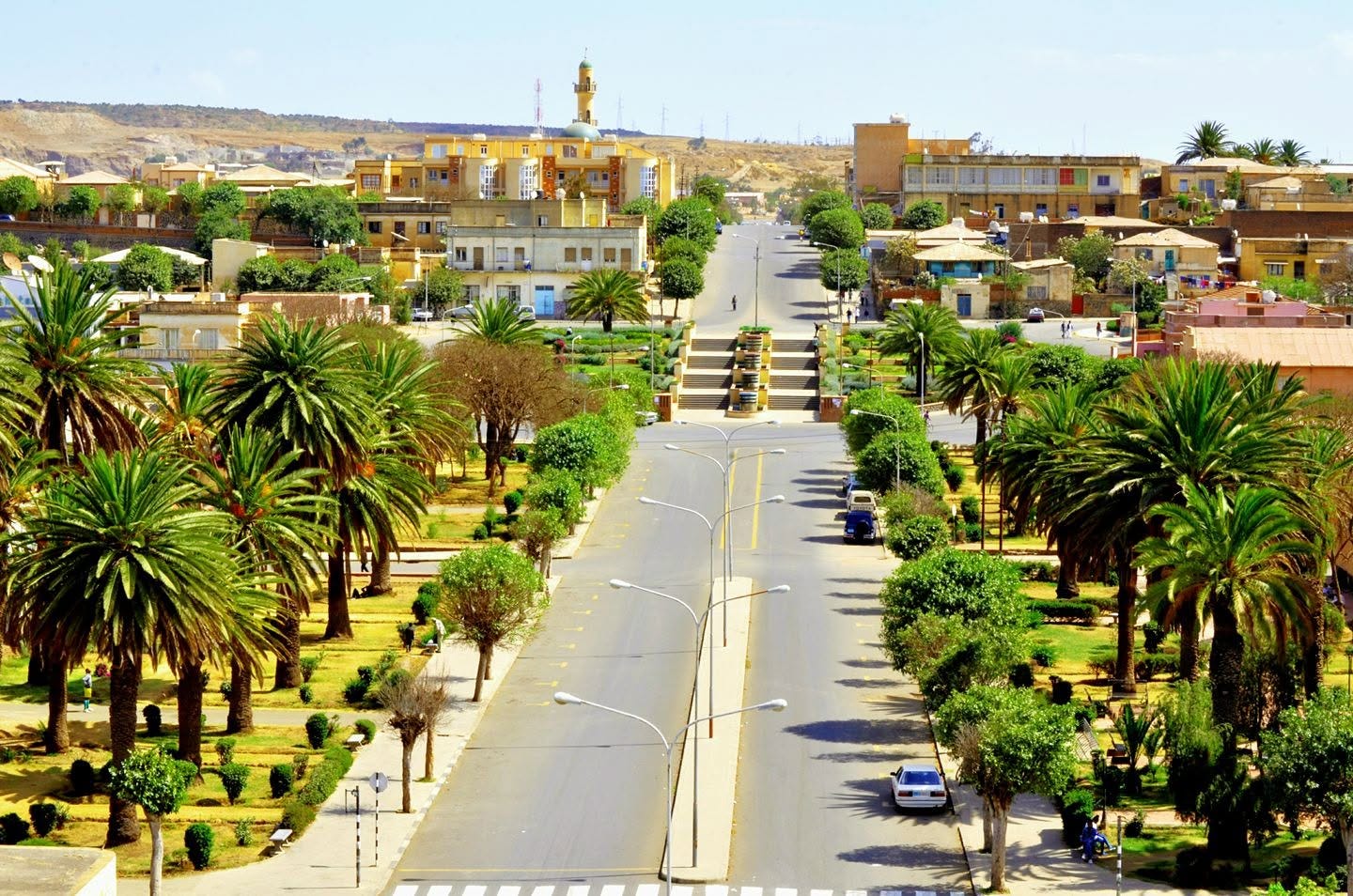
Eritrea invokes 2002 border ruling to reject Ethiopian territorial claims.
In a further statement to The African Gazette, Zereou accused Ethiopia of attempting to reopen a territorial dispute settled more than two decades ago by the Eritrea–Ethiopia Boundary Commission (EEBC).
He argued that Ethiopia’s allegations of Eritrean military occupation should be viewed against the commission’s final and binding ruling of April 2002, issued under the Algiers Peace Agreement signed in December 2000.
Zereou said Eritrea accepted the ruling from the outset, while Ethiopia resisted its implementation for nearly two decades before Prime Minister Abiy Ahmed’s government committed to implementing it in 2018.
According to Zereou, the areas Addis Ababa now describes as occupied Ethiopian territory had themselves remained under Ethiopian military control for years, despite the commission’s ruling. He maintained that Eritrean troops are stationed within Eritrea’s internationally recognised borders.
The EEBC ruling is final and binding under the Algiers Agreement. However, the commission’s historical determination does not, by itself, establish the location of military deployments today.
Tigray conflict: opposing accounts of responsibility
The Ethiopian ambassador accused hardline elements within the Tigray People’s Liberation Front (TPLF) of violating the 2022 Pretoria Peace Agreement, refusing to disarm and establishing military cooperation with Eritrea.
He defended Ethiopia’s military operations as a response to attacks against federal forces.
“What Ethiopia is doing is exercising its legitimate right to defend itself,” Ambassador Bade said, invoking international law.
The Eritrean representative did not address each allegation concerning the TPLF individually. Instead, he argued that the deterioration in bilateral relations was driven by Ethiopia’s own policies.
Zereou said the tensions were caused by “the incessant belligerence of the Ethiopian government” and its intention to acquire Eritrean sovereign territory “by hook or by crook”.
He maintained that developments inside Tigray remained an internal Ethiopian matter.
Could the tensions lead to another war?
Eritrea says it does not seek a military confrontation with Ethiopia but insists it will defend its borders if attacked.
“Eritrea has never considered military action as a means to resolve disputes,” Zereou said, adding that Asmara had consistently advocated dialogue and legal measures.
However, he warned that the government was “duty-bound to ensure the sovereignty of Eritrea and safeguard its territorial integrity in the face of any aggression.”
The Ethiopian ambassador similarly insisted that Addis Ababa’s military actions were defensive, not expansionist.
Both governments therefore present their positions as the defence of national sovereignty, while assigning responsibility for the tensions to the other.
Red Sea access: the central diplomatic dispute
The sharpest disagreement concerns Ethiopia’s ambitions for access to the Red Sea.
Ethiopia, which has been landlocked since Eritrea gained independence in 1993, argues that maritime access is essential to its economic development.
Ambassador Bade presented Ethiopia’s regional policy in terms of cooperation.
“Good neighbourliness guides the foreign policy of Ethiopia,” he said.
Eritrea disputes that Addis Ababa is seeking only commercial access.
Zereou accused the Ethiopian government of pursuing “sovereign ownership of Eritrea’s ports” rather than negotiating commercial arrangements.
He insisted that Eritrea had never denied Ethiopia legal commercial access to the sea.
“Eritrea has from the outset made it quite clear that it will never negotiate over its sovereignty and territorial integrity,” he said.
The Eritrean representative also ruled out meaningful negotiations while Addis Ababa maintained what Asmara regards as territorial ambitions.
“Therefore, there is no merit in engaging with the Ethiopian government, while it still maintains its aspiration to annex sovereign Eritrean territory.”
International mediation and prospects for peace.
Ethiopia has called for Eritrean troops to withdraw from areas it claims they have entered and has urged the international community to condemn the alleged incursions.
Eritrea, meanwhile, is calling on Ethiopia’s international partners to exert pressure on Addis Ababa.
“Ethiopia’s international partners have to impress upon the Ethiopian government the absolute necessity to abide by international law,” Zereou said.
He welcomed recent statements from international actors calling for respect for sovereignty and international law.
Despite the sharp diplomatic exchanges, Eritrea says it remains committed to regional stability.
“Eritrea will continue to work for regional peace, integrity, and development,” Zereou concluded.
The two governments remain deeply divided over the crisis's causes. Ethiopia demands an Eritrean military withdrawal, while Eritrea denies the alleged incursions and insists that Ethiopia abandon what Asmara considers its territorial ambitions.
With fighting continuing in Tigray, the dispute leaves significant questions about regional security and the prospects for renewed diplomacy unresolved.
