


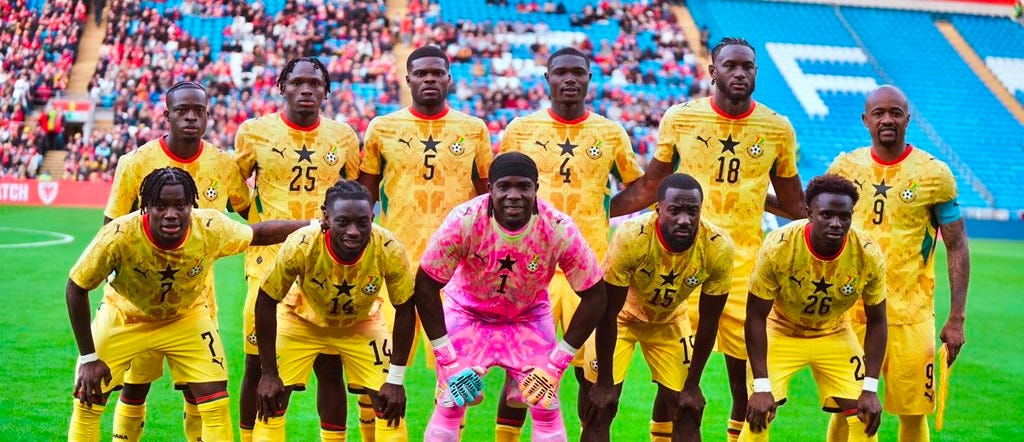

Ghana. A nation defined by one of the greatest near-misses in World Cup history returns to football’s biggest stage with renewed ambition, a new technical direction, and hopes of restoring its place among Africa’s elite. And for millions of football fans across Africa, Ghana and its Black Stars represent both pride and unfinished business.
Few African nations have produced as many memorable World Cup moments. Few have come as close to making history. And few still carry the emotional scars of a dream that slipped away so painfully.
Ghana remains one of Africa’s most recognisable football nations, carrying a proud history and a reputation for producing dramatic World Cup performances.
Named after the black star on Ghana’s national flag, the team symbolises ambition, resilience, and national pride. Since their World Cup debut in 2006, the Black Stars have remained a consistent presence on the global stage.
The 2026 tournament marks Ghana’s fifth appearance at the FIFA World Cup and a second consecutive qualification after Qatar 2022.

Identity Card
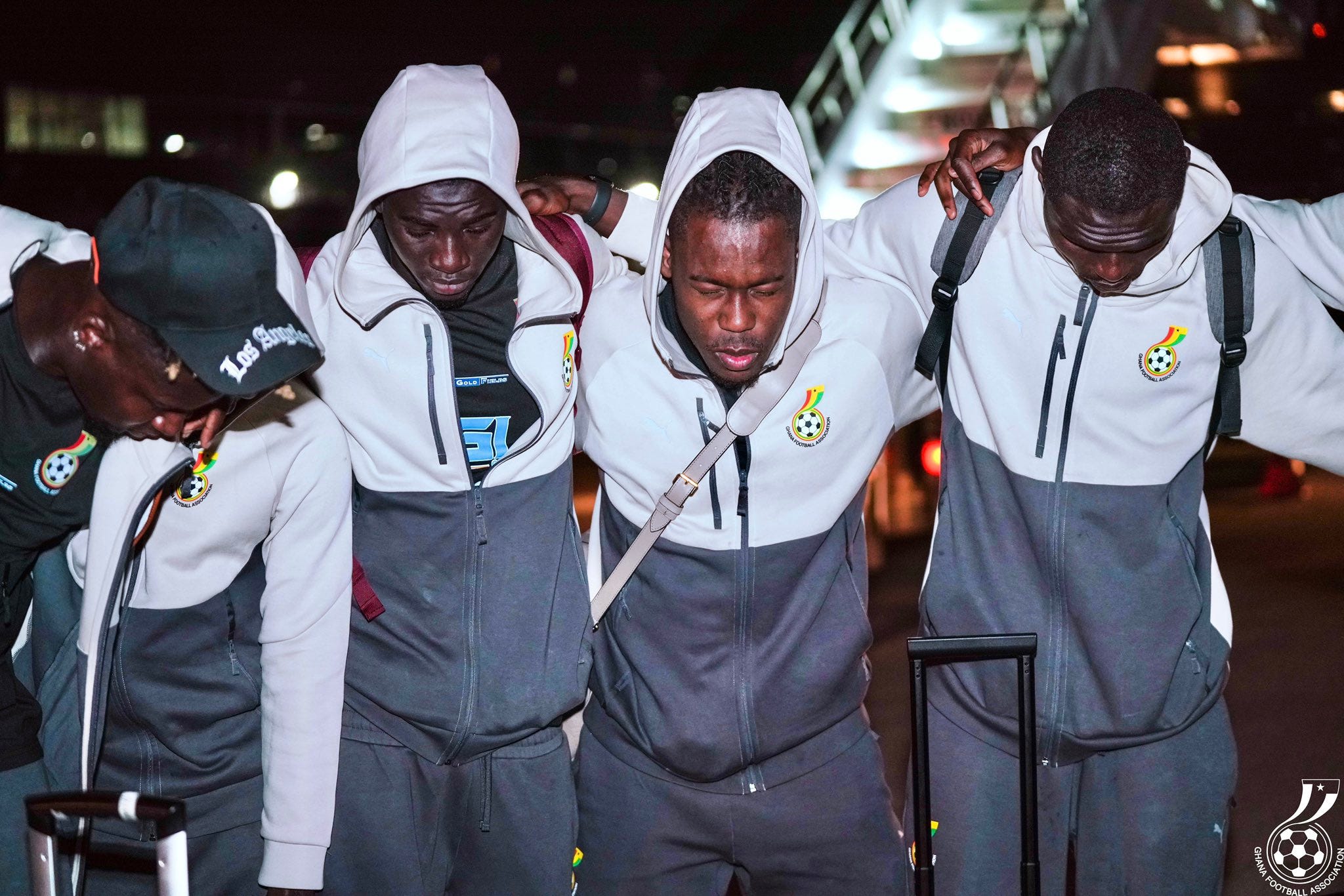
Nickname: The Black Stars
Federation: Ghana Football Association (GFA)
FIFA Ranking (June 2026): 73rd, latest FIFA ranking
Coach: Carlos Queiroz
Captain: Jordan Ayew
World Cup Appearances: 2006, 2010, 2014, 2022, 2026 (qualified)
The Road to North America
Ghana secured qualification for the 2026 FIFA World Cup through a strong qualifying campaign.
The Black Stars finished top of their group with a record of eight wins, one draw, and one defeat, edging out strong competition to secure their place at the tournament.
Jordan Ayew played a key leadership role throughout qualification, contributing important goals and guiding the team during crucial moments.
For Ghana, qualification represented more than achievement — it was a continuation of their World Cup journey and identity.
The Ghost of 2010
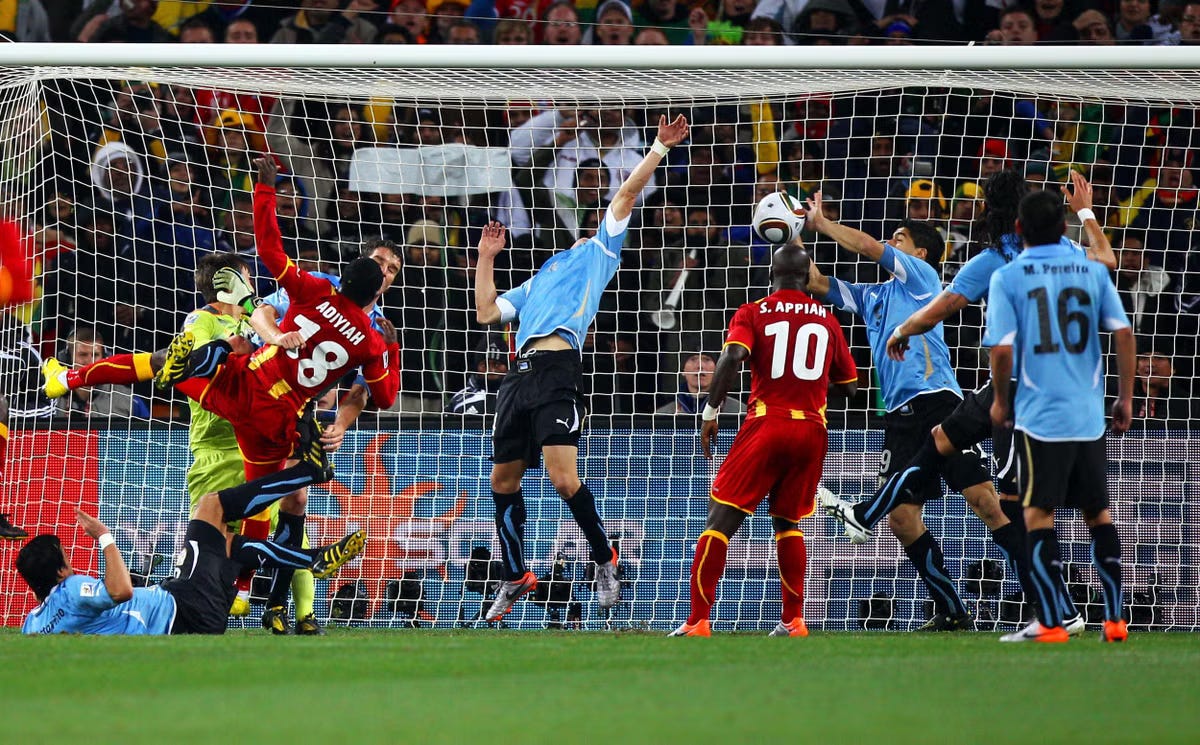
No discussion about Ghana at the World Cup is complete without South Africa 2010. It remains one of the most unforgettable chapters in African football history.
Led by players such as Asamoah Gyan, André Ayew, and Kevin-Prince Boateng, Ghana became only the third African nation to reach the quarter-finals of a FIFA World Cup after Cameroon (1990) and Senegal (2002).
Then came one of the tournament’s defining moments.
In the final seconds of extra time against Uruguay, a goal-bound header was stopped illegally on the line by Luis Suárez.
Ghana were awarded a penalty, but Asamoah Gyan’s effort struck the crossbar. Uruguay eventually advanced after a penalty shootout.
A place in the semi-finals—and football history—slipped away. A note for the annals, as it remains one of the most debated moments in World Cup history.
Technical Direction and Leadership
Ghana’s recent coaching setup has been shaped by transition and rebuilding.
The team has focused on discipline, structure, and tactical balance in preparation for major international competition.
The long-term objective remains clear: transform Ghana into a consistent knockout-stage contender at global tournaments.
Players Who Could Define Ghana’s Campaign
Ghana’s strength lies in a blend of leadership, experience, and attacking talent.
Jordan Ayew remains the captain and a central figure in the squad, offering leadership and international experience.
In midfield, Thomas Partey provides control, defensive stability, and experience at the highest level of club football.
In attack, Antoine Semenyo stands out as one of Ghana’s most dynamic threats, offering pace, power, and versatility.
Other important contributors include Iñaki Williams, Ernest Nuamah, and Kamaldeen Sulemana, who add depth and attacking variety.
The Squad Debate That Refuses to Disappear
Every World Cup cycle brings selection debates.
Several high-profile Ghanaian players were left out of the final squad, sparking discussion among supporters.
Among the notable absentees was Mohammed Kudus, ruled out due to injury concerns during the final stages of preparation.
Other experienced and emerging players, including Mohammed Salisu, Alexander Djiku, Tariq Lamptey, Joseph Paintsil, Derrick Kohn, Ibrahim Sulemana, and Majeed Ashimeru, were also not included.
The depth of talent left out reflects the growing competition within Ghana’s player pool.
A Tough Road Ahead
Ghana’s World Cup journey begins in Group L alongside England, Croatia, and Panama.
The opening match against Panama could play a decisive role in determining Ghana’s chances of reaching the knockout stages.
England enter the group as strong favourites, while Croatia bring significant tournament experience and consistency.
For Ghana, success will depend on discipline, organisation, and efficiency in key moments.
Can the Black Stars Shine Again?
The World Cup has often brought out Ghana’s most memorable performances.
From the Round of 16 in 2006 to the heartbreak of 2010, the Black Stars have consistently shown they can compete on football’s biggest stage.
Now, with a new cycle and a refreshed squad identity, Ghana have another opportunity to shape their story.
The challenge is significant. The group is demanding. The expectations remain high. But Ghana have never been strangers to defying expectations.
As the Black Stars step onto the fields of Toronto, Boston, and Philadelphia, belief will once again follow them.
Because in football, history is never guaranteed. And Ghana’s World Cup story is still being written.

