


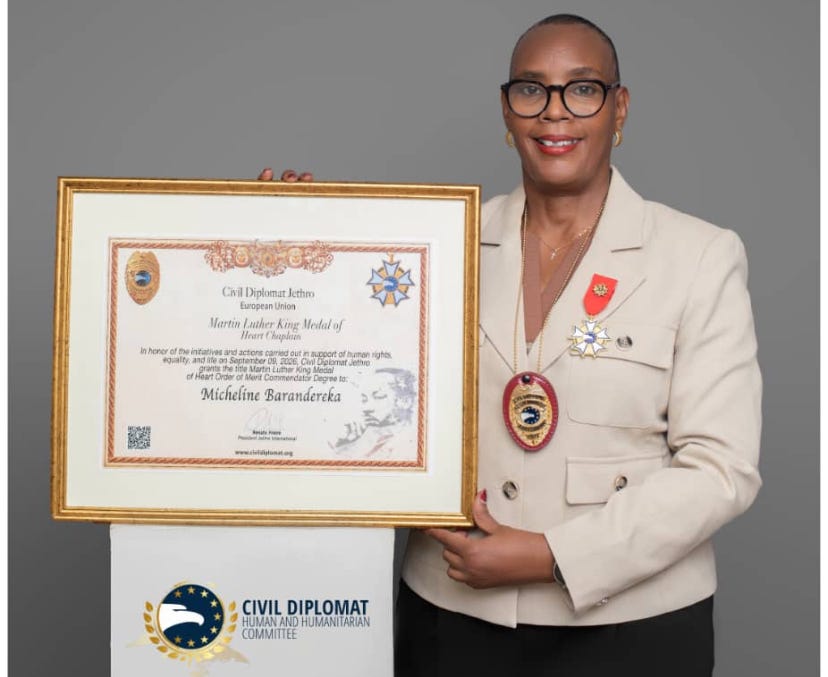
Burundian community development advocate Micheline Barandereka has been awarded the Martin Luther King Jr. Medal by Jethro International, a recognition she says belongs not only to her but also to the rural communities at the heart of her work.
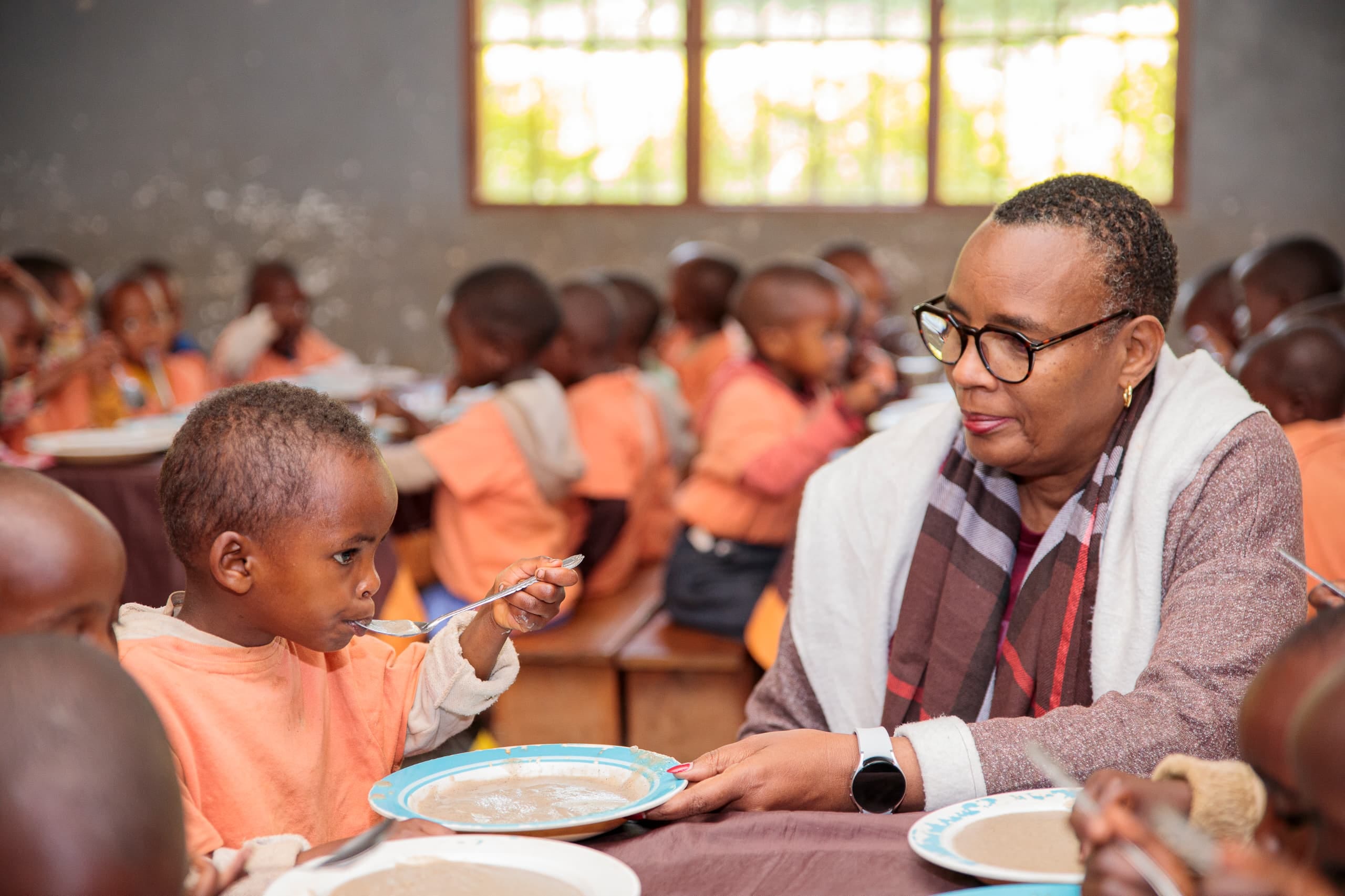
Barandereka, who heads Shekinah Centre in Burundi, has spent years working with rural families on education, access to clean water and healthcare, women’s economic empowerment and the education of girls.
For her, having that work recognised internationally carries particular significance.
“This is international recognition, not only for me, but also for Shekina Centre and the work that we are doing,” she told The African Gazette.
The award recognises Shekinah Centre’s work with rural communities in Burundi, where the organisation has sought to address problems that are often interconnected: poverty, limited access to education and healthcare, lack of clean water and the economic vulnerability of women and their families.
Barandereka sees a direct connection between that work and the legacy of the American civil rights leader whose name the medal bears.
“Dr Martin Luther King was committed to civil rights, but he was also committed to fighting poverty and economic inequality,” she said. “It is in the same spirit that Shekina is fighting social and economic injustice and inequality.”
One area she singles out is girls’ education.
In rural communities, she said, girls can still face obstacles that prevent them from attending or remaining in school. Shekina Centre works to keep girls in education while helping women build greater economic independence.
For Barandereka, the two are closely connected. Improving the position of a child within the family and giving women the means to support themselves can change the prospects of an entire household.
That belief was one of the reasons she became involved in rural communities in the first place.
“What pushed us was the choice to work for others, to transform lives and to have an impact on others,” she said.
She describes it as a form of leadership inspired by King’s example: leadership that is measured by what changes in people’s everyday lives.
From savings to a piece of land
Among the stories Barandereka remembers most clearly is that of a woman who was struggling to feed her children.
The woman had children in school but no land of her own to cultivate. Through a Shekinah Centre initiative that brought women together in savings and credit groups, she began putting money aside.
Eventually, she saved enough to acquire land.
Today, Barandereka says, the woman can grow food for her family and sell part of her harvest to pay for other necessities.
“I no longer need help to feed my children,” Barandereka recalled the woman telling her. “I can harvest and feed my children, and I can sell part of my harvest to buy other things that I need.”
It is a story that has stayed with her.
The family no longer faces the same struggle to find food, she said, while the children have been able to continue their education in better conditions.
The battle over women’s land rights
But economic independence can bring another problem into view: who actually owns the assets women work to acquire?
Barandereka says land ownership and inheritance remain major challenges for rural women in Burundi.
She described cases in which women have worked, saved their own money and purchased land, only to encounter resistance when they try to have their names included on the title deed.
In some households, she said, husbands insist that property should be registered solely in the man’s name rather than in the woman’s name or jointly in the names of both spouses.
“This is a struggle that we are still fighting,” she said.
She has nevertheless seen signs of change.
Some husbands, she said, are now accepting that their wives’ names should appear on land titles, something she regards as an important step.
But the underlying issue remains.
“These plots of land were bought with money that the woman herself saved,” Barandereka said. “She is the one who worked to buy the land. But when it comes to registering the title, the woman can still be excluded.”
For Barandereka, that is why the work recognised by Martin Luther King Jr. Medal is far from finished.
The award may provide international recognition, but the measure of progress remains much closer to home: a girl who stays in school, a mother who can feed her children from her own harvest, and a woman whose name finally appears on the title to land she bought herself.
A very special day at Shekinah Center! Congratulations to @Micheline BARANDEREKA on this well-deserved recognition! 🏆👏